While the current state of the world – extreme environmental degradation, rising authoritarianism and now war – threatens to overwhelm our minds, there is a silver lining, and that is the replay of the 1970s oil crisis. Then we earnestly conserved energy, advanced renewables and adopted more environmentally friendly living habits. Although some benefits were preserved, excessive resource extraction, consumption and waste have since grown to reach their present astronomical level. So much “progress” measured by GDP growth has not made us happy, but where should we go? How should we even define the “good life”? The growing back-to-nature movement upholds Indigenous ways as the alternative to current intensive technology, the two of which are the extreme poles of a continuous range of possible human cultures. These should be assessed by the degrees by which we may affirm or deny our life by practicing them.
A debate goes on over the question of what, by nature, is man? At a minimum, we find that humans are eminently adaptable, able to live, like vermin or roaches, in the most deplorable conditions. A more fruitful way of framing the question is What is human life? This brings us to the spectrum of cultures to which that of Indigenous people belongs and for whom the world is a living continuum that unites them with their environment. Ecovillages and regenerative communities represent movement toward them, and although they are much more sustainable than the present larger culture, they remain far from the most primitive model. An intermediate experience between the poles is that of Henry David Thoreau which he describes in his celebration of simplicity entitled Walden.
As he lived a short distance from Concord, Massachusetts in the mid-eighteen forties, the author was no survivalist, for he purchased supplies, sold some produce, visited neighbors and interacted with a variety of folks passing through on and around Walden Pond. While his writing consists largely of reflections on his experience of communing with the place and diverse things in it his principal theme is expressed in the words “Simplicity, simplicity, simplicity!” The simple life for him captured the innocence of nature and connected him with his main roots in the earth. One and a half centuries of environmental degradation later Thomas Berry updated Thoreau’s sentiments, writing, “The natural world demands a response that rises from the wild unconscious depths of the human soul.”
The varieties of human experience represented by the three models – Indigenous, Walden and domination by technology – are degrees of attention to life ranging from the most relaxed to the most contracted. For the first presents a continuous world in which individual things are not strictly separated from each other and the subject is aware of and acts as an indivisible part of universal life. In the second the world is experienced as composed of a multitude of different yet interrelated living things such as those Thoreau described in detail, revealing his intimate awareness of their very lives through intuitions of their individual essences and essential relations with each other and himself.
He dwelt among things, in contrast with modern life in general where we are conscious chiefly not of things but of appearances. From direct awareness of the world’s volume in primitive consciousness to the selection of particular essences we move to a basically two-dimensional screen displaying images. More intense cerebral activity further shrinks these to virtually extensionless mental entities, allowing some people to live to a large degree with “their head in the clouds.”
A way to understand this hierarchy of modes of consciousness and things is offered by the philosophy of early twentieth-century philosopher Henri Bergson. For him matter and mind differed only in their degrees of spatial and temporal extension as both were manifestations of a universal substance in which these attributes were indivisibly combined. He stressed the self-evident fact of experience that sense perception is extended in three dimensions and that it directly unites a subject with an external object. The body is one center of action among others in a continuously extended universe, and while he noted organic unity between members of some species and different ones displaying symbiosis, he stopped short of recognizing the full ecological structure of nature which we now accept as innumerable nested and intersecting living wholes. This understanding makes the body both an individual and an organic part of so many increasingly extensive lives of which the most comprehensive is the whole biosphere that is the material base of each individual life. Being an individual as well as parts of larger wholes gives us multiple identities, and, having a unique measure of free will, we can choose the identity in which we wish to act in given situations. This reality is revealed in our common moral dilemmas: Do we act in the interest of some group to which we belong or the environment or just ourselves? In other words, Do we act as our largest, intermediate or smallest selves?
Our actions arise from intentions relative to our different identities which condition our experience with, for example, the broadest intentions of the Indigenous person producing their unified experience. This contrasts with the experience of modern people that is composed of images of countless separate and distinct objects.
A person’s life can be represented by the figure of a cone, at the different levels of which they may chiefly dwell. Its base is the whole universe that is their most extensive and fullest life, while higher levels are successive reductions of that life – actions and modes of life driven by more narrow intentions that literally shrink its spatial extension. About mid-way up the cone is the level of Thoreau’s existence at Walden where he directly touched the local life around him in his activity and consciousness in a way that was a significant reduction of Indigenous life but still much fuller than civilization today.
As matter and mind differ in the degrees of their extension in time and space, the most reduced life is the least extended, and it is at this extreme where much of our lives are lived today, especially in so much information technology which is particularly immaterial. Our intentions are embodied in our physical selves which are extended through our tools that serve limited purposes. Using a tool restricts our intention, as a hammer can drive a nail but it can’t do anything else, least of all serve the good of the world. Conversely, our intention restricts the function of the tool – until now, with artificial intelligence which can make its own decisions independently of us.
Our lives are presently lived close to the apex of the cone, extremely limited in spatial extension, intention and life content, at a very far remove from the fullest most universal life. AI represents the apex point that breaks free from our intention and the cone of life. This is not to say that it isn’t subject to the elementary forces of nature, but, like Frankenstein’s monster, it is no longer our abject slave.
Before the latest Middle East war climate change was enough of a reason to reject fossil fuels, and this reason is now amplified by more war for oil. Our lives are so shrunken by modern culture that increasingly sickens our bodies with AI now driving the proliferation of data centers that pollute and threaten people’s water and electricity supplies. We need to resist them while also digging in to conserve all natural resources. Returning to Indigenous life tomorrow is not an option, nor can we go squat in the woods like Thoreau, but we can seek a large measure of simplicity and the joy that it brings by growing gardens and building regenerative local communities.
Although he disdained men’s hubris, Thoreau seemed to tolerate the environmental exploitation of his time, expressing no fear of escalating, much less apocalyptic degradation, which is precisely what we now face. I liken AI to a point which is a tipping point and, I hope, also a turning point as people rise up against data centers in their communities.
It is further like the golden head of the giant statue in Nebuchanezzar’s dream related in the book of Daniel. Below its head of fine gold were its chest and arms of silver, its trunk and thighs of bronze,its legs of iron, and its feet partly of iron and partly of clay. As in the dream the king watched, a stone separated itself without any human hand, struck the statue on its feet made of iron and clay, and broke them in pieces.Then the iron, the clay, the bronze, the silver and the gold were all broken into pieces which became like the chaff on a threshing-floor in summer; the wind blew them away without leaving a trace.
Data centers are AI’s feet of clay that support the promethean edifice while progressively undermining it with their extreme environmental impacts that might bring modern civilization tumbling down soon.
Things thought too long can no longer be thought
For beauty dies of beauty, worth of worth.1
These lines of William Butler Yeats were published in 1939, the last year of his life in which decades of turmoil in his native Ireland were about to be succeeded by World War II. In our time we are aware that a great shift is underway with liberal democracy being dismantled by an authoritarian U.S. regime while climate change undermines the conditions for continued life on earth. Major cultural change is needed to restore our natural and human systems to health – change that we know cannot be return to the failed models of the modern age that have caused environmental devastation, genocide and extreme wealth inequality. Thankfully we are seeing a profusion of alternative designs, frameworks and worldviews being put forward aimed chiefly at achieving environmental and social sustainability as well as robust democracy. As actual conditions become worse, such visions seem increasingly utopian and thus impossible insofar as they lack reliable pathways to actualization. The majority of people need to act, but they remain largely unenlightened as to what they can and should do. A new understanding of the world and their life in it can guide them, and this is what this essay offers, drawing from our cultural heritage, especially the thought of late nineteenth- and early twentieth-century French philosopher Henri Bergson.
His work contains several brilliant and extremely timely insights on the nature of time, consciousness and the unconscious, materiality and immateriality, life and non-life. He supports his metaphysical ideas with extensive scientific evidence taken from the physical, biological and social sciences of his time that to a large degree are upheld by our common everyday experience. As his thinking is traced from Matter and Memory through Creative Evolution and The Two Sources of Morality and Religion it is found to lead into Aristotle’s essentialist ontology, adding ecological and true temporal dimensions to that ancient Greek philosophy. The expanded Aristotelianism that results is not only more consistent with common sense but particularly fitting to guide moral action today.
I therefore summarize Bergson’s philosophy, then point out where it fails to accurately represent common experience and Aristotle’s system succeeds. Synthesizing the two I proceed to lay out a new vision of the world and direction for human action. Following the tradition of commentators approaching the French philosopher’s thought from diverse angles, I have chosen to center my exposition on Becoming, which I write with a capital B.
The core truth of Bergson’s work is that the present is and the past is not. He therefore describes the world as continually coming into being anew and passing away into the past in every present moment which is not instantaneous but rather temporally extended in what he calls “duration.” This position is radically opposed to the basic scientific conception of time which is that it is a series of extensionless instants that are represented on time/distance graphs. It is also opposed to the ancient Greek view of time as an eternal present. For Bergson Becoming is the universe which is not only temporally extended but also spatially “extensive.” Becoming is therefore substantive and “possesses something akin to consciousness, something akin to sensation.”2
Becoming is immediately known in the act that he calls “intuition” wherein we relax our attention to the distinct images in our experience, becoming conscious of the ever-renewed present and its passage away into the past.3 In intuition the apparent distinction between subject and object dissolves; images become indistinct and variable, and we are aware of them passing into memories through which the past is prolonged into the present. Within this spatially extensive and temporally extended intuition multiple indistinct and variable qualities are also experienced as being interpenetrated by memories. This phenomenon is evident in normal experience in which we look at some object, observe the passage of time and then realize that our image of the object has become to some degree a memory and no longer just an immediate present perception. Usually we are not conscious of subtle changes in things’ appearances, only noticing change at a certain threshold, and this is a matter of daily experience as, for example, natural light continually changes the colors of objects that we see as remaining the same over intervals.
For Bergson the universal Becoming contains extensive and qualitatively different but not distinct qualities that constantly change in a kaleidoscopic manner as they continually come into being and pass away into the past. He conceives material objects after Faraday’s definition of the atom as “a center of force.”4 Their materiality consists in the continual repetition of their pasts within Becoming, with this repetition constituting the determinism of their action.5 He calls the human body a “center of action”6 that occupies a “zone of indetermination.”7 Material things including the body have diverse “rhythms” of duration8 which are the frequencies with which they repeat their pasts.
Matter and Memory explains experience in these terms first descending to an elementary cosmic level. Here we conceive entities like bodies or configurations of energy in constant flux with each one conditioning and being conditioned by all the others.9 While they do interact with actual contact between them, they also virtually act as, for example, by exerting gravitational force upon each other. Bergson asserts that that all these entities produce “images” which are reflections back to them of their virtual action upon others.10 In the case of gravity, one entity’s gravitational force has a distinct effect upon another entity which then figures in the latter’s effect upon the former. This is the reflection which for Bergson defines the image. It is the intersection, so to speak, of the two entities’ virtual action upon each other.
He opens Matter and Memory with the statement that the body is surrounded by images and is itself an image.11 While he goes on to considerably elaborate this claim, it brings to our attention a self-evident fact of experience that remains essential to his whole philosophy which is that experience isn’t in the body, but rather the body is in experience. As intuition reveals and energy physics affirms, the body isn’t a discrete thing but is indefinitely extended in the world, ultimately influencing every part. Further, because consciousness is inherent in the substance of the world, such influence accounts for the production of conscious perceptions within that substance outside the boundaries of the body. According to Bergson we are not immediately aware of the images surrounding us because they are dispersed and discontinuous. Consolidating them into the images of our familiar experience is the work of our attention and memory.
Virtual action for the body concerns the fulfillment of its organic needs12 which involve moving among and affecting external objects. So the images it perceives are reflections of such virtual action that especially distinguishes objects as separate and determines their spatial qualities13 including their distance away from the body, indicating where it might touch and grasp them as well as how far it must move to come into contact with them. Virtual action may immediately become actual as with the amoeba which, upon touching some object reflexively performs some action upon it.14 Perceiving images of objects at some distance from the body creates a delay in the response which enables the subject to choose whether or not to carry it out and also to review alternatives.15
The body therefore contains an elaborate sensori-motor apparatus to translate perceptions into motions. Its materiality consists in the repetition of its past or habitual functions which Bergson calls “bodily memory.”16 Virtual actions are the projection of bodily memories into the body’s environment that are determined by its present attitude.17 As they are reflected by surrounding objects they form images that initiate motions in the senses that continue through the nervous system and may finally issue in some muscular action. He calls such immediate perceptions “pure perceptions”18 that occur in the present moment which has minimal duration.
Images of pure perception unite the body with its object and provide a momentary intuition of its particular quality.19 Discussing pure perceptions Bergson descends to the micro scale and has them displaying a high level of flux, coming into being and passing away moment by moment. He offers the example of color as it is scientifically understood as electromagnetic radiation, identifying the periods of its duration with its frequency, from which he infers that the temporal continuity of our normal experience does not come from pure perception. Instead, a continuous series of memory images comes forth to overlay and merge with pure perceptions, contracting their high frequency or rapid rhythm of duration into the body’s much lower frequency or slower rhythm, producing what he calls continuous intuitions of apparently solid and enduring objects.20
Bergson distinguishes bodily memory from image memory. In the course of its Becoming the body continuously accumulates its past, and this is a matter of common knowledge. Everything that happens in and to the body is preserved by it for the remainder of its life, taking the form of marks such as scars and habits or the ability to reproduce past actions. We consciously memorize lessons in order to repeat them at a later time, but singular actions are also preserved, initiating or compounding habits that are built over time from similar but not identical experiences. Learning to drive a car exemplifies this process.
Image memory is the preservation of every conscious perception that one has ever had, and it too continually accumulates not in the body but rather in what Bergson calls “the past” which in Matter and Memory he initially describes as being of a spiritual nature.21 Image memories from the past re-enter the present to overlay pure perceptions that are momentary and indefinitely spatially extended, converting them to temporally continuous present conscious images with definite spatial extension.22 Through this process the flux of Becoming is solidified into the stable images of our normal experience.
Phenomena are frozen in this manner in order to permit the body to survey their multiplicity and choose which of the virtual actions embodied in them that it wishes to actualize.23 The past in which memory images dwell contains what Bergson calls “planes of consciousness” with a hierarchy in which all memory images exist at multiple levels from the most particular to the most general.24 We commonly identify things in our experience as being of certain kinds, and this is the effect of projecting general memory images onto them. Memory images literally merge with pure perceptions, so in such instances we actually do see the object’s particular qualities, but vaguely as our perception passes quickly into action. At the opposite extreme is the recognition of certain individuals in which our particular memory images of them are applied.
Choosing a course of action may entail closer examination of the objects before us. Coming to the fork in a trail, I initially see the two routes, and I pause to compare their different conditions, specifically looking for likely features such as puddles of water, fallen logs and big rocks. I thus bring forth generic memory images of these objects that overlay the pure perceptions of the scene. Progressively detailed memory images can be called up and projected, as I wonder if the small dark object on the rock is a snake or if the motion in the puddle is water rising from a vernal spring. After my study of the scene reaches a satisfactory conclusion I choose to continue my hike on one or the other paths.
Situated in between the coming and going of pure perceptions and memory images is the body. Its attitude determines the virtual actions that produce pure perceptions that, while being overlaid with memory images, send impulses through the body’s sensory-motor system, finally issuing in some physical movement. Studying the scene sets up a circuit in which the virtual action becomes increasingly exact, hence the memory images and ultimately the bodily motion. Such exactitude is reflected in the extremely complex structure of the sensori-motor system that receives the myriad impulses and translates them into potentially infinitely diverse physical actions. This system functions as the body’s switchboard whose level of complexity determines the extent of its freedom of action.25
The first step in achieving such freedom is the ability to freeze the flux of becoming in temporally continuous and definitely extended images. Becoming is not extended but rather extensive, so in our perception it becomes spatialized;26 we seem to see things laid out side-by-side in an homogenous space. Also, the continuous projection of memory images onto pure perceptions produces the appearance of events succeeding each other in an homogenous time. Our experience is therefore like cinematography – a series of still photographs rapidly projected onto a spatially extended screen.27
This manner of perceiving the world plus the great variety of physical motions possible for the body and finally the extent of freedom to choose actions adds up to immense ability of the body to act on and control external objects. In Matter and Memory Bergson treats this in evolutionary terms, casting the human course as progress in freedom. In Creative Evolution he adds further intelligent functions to our repertoire that have given rise to our science and extraordinary technology. He asserts that our ability to temporally and spatially expand and contract images goes far beyond present perceptions and that our deliberation includes calling up not just matching but also associated memories. This function permits us to visualize things that are not present, freeing our intelligence from the conditions of present time.28 Our intelligence is further liberated by language, the words of which are signs,29 as well as ideas which we form by picturing our acts of forming images.30 With language and ideas our intelligence can operate in nearly total independence from material conditions.
Bergson’s account of perception began with a description of an extended material body surrounded by spatially extended images. While they dwell in the past memory images are temporally and spatially unextended, then they expand in these dimensions when they re-enter the present. Because Becoming is extensive rather than extended, portions of it literally expand and contract, displaying a range of degrees from virtually pure extended space to virtually pure unextended spirit. Matter and mind do not however differ only in degree, for consciousness is an original indivisible component of Becoming which is otherwise of a physical nature. Therefore Bergson eventually admits that memory images don’t abide in some separate past or spiritual realm while in the state of maximum reduced extension but are simply inactive.31
Nothing in his universe is ever reduced to zero spatial extension, and I observe that much “thinking” consists in silently talking to oneself, an activity that involves subtle motions of the mouth which for him are nascent speech.32 In normal perception memory images not only regain extension but they also merge with pure perceptions, forming “intuitions” in which, as in the immediate intuition of Becoming one both lives and beholds it, the subject enters into the object. He further says that sense perceptions form the nucleus of experiences in which unmixed intuitions of objects form the fringe,33 suggesting the possibility of directly entering into those objects through acts of sympathy.34 In other passages he describes certain intellectual acts of creation as originating in indivisible intuitions. A philosopher, for example, first has an intuition of an entire philosophy which they subsequently bring into material form in words. They may revisit their intuition as they give it a rational verbal presentation, seeming to separate manifold threads within it.35
In Matter and Memory Bergson treats Becoming as unitary, ever-changing and existentially absolutely creative. Insofar as portions of it do not change over time but repeat their pasts they constitute matter and are therefore deterministic. While the body thus has a material nature it also has a measure of freedom. His succeeding book Creative Evolution first distinguishes organic and inorganic portions of Becoming and identifies the élan vital as the absolutely creative and novelty-producing animating force that runs as so many lines through deterministic inert matter.36 As space is the extreme of extensity, the élan is the extreme of inextensity, and he calls it “supraconsciousness.”37
The élan animates perception which represents its manner of operation. Embodied, it exerts itself against matter in an effort to extend its creativity and increase its freedom, with the effect being the course of evolution. Its impetus divides like a sheaf38 into so many lines in the two main directions of instinct and intelligence,39 and breaking through matter absolutely creates absolutely novel forms of life embodied in that matter. Bergson likens the process to a firework rocket shooting into the sky that then burns out and becomes cinders falling to the earth.40 For after the initial burst, the new life form subsides into inertia, continuing to exist as an organism that functions in an habitual manner.
The élan advances along so many continuously branching lines, creating ever-more diverse, complex and free species but also reaching some dead-ends and sometimes even moving in reverse. Ultimately the universe is indivisible, so novel creation isn’t limited to particular species but extends into their surroundings, thus there is co-evolution both of whole organisms41 and their parts. Bergson offers as an illustration the evolution of the eye whose vision requires the coordination of multiple parts and functions and also represents the progress of a single original component of the élan distributed over diverse lines of evolution.42 He compares the action of the élan to an invisible fist pushing up through metal filings, the evidence of which is only their re-arrangement.43 The élan is the vital principle of organisms that otherwise consist of matter, so as an evolutionary force it is like an entire fireworks display in which new rockets continue to shoot through the cinders falling from old burnt-out ones.44
Instinct is one of the two pathways that it has followed, producing organisms with marvelous abilities in the form of bodily memories. Their mode of consciousness is intuition, which is direct awareness of the natures of external objects with which they are intimately and reciprocally related.45 Bergson notes that there is no absolute division between plants and animals nor even humans and nonhuman animals, with the differences being a matter of degree, and where the lines meet on a continuum.46 Nevertheless human intelligence does constitute the extreme in free action.
By nature humans expand their physical capacity by tool-making,47 and, distinguishing inorganic matter from living bodies, he proceeds to describe such matter as suited for the propensity of human intelligence toward geometry.48 While matter is only extensive and not extended strictly according to its representation by geometry, our intelligence treats it that way and, along with our ability to regard time as a series of instants, has produced our incredible technology. Generally within the evolutionary process the élan pushes against the natural resistance of matter, but human intelligence has succeeded in reshaping the nature of matter to serve its own purposes. Because of the ultimate reciprocity in nature the world now to a considerable extent reflects the character of the human species.
While treating evolution in Matter and Memory Bergson seemed to wish to avoid any hint of teleology, suggesting that the human body and its freedom simply constitute a channel for the creativity of Becoming. The élan vital, in contrast, is very clearly teleological, and the philosopher’s shift also appears in his replacing the word “attitude” with “intention” 49 to express that which determines its particular virtual actions and therefore perception.
The natural world is spatially and temporally continuous and contains myriad natural communities, and one of the marvels of instinctive animal life is insect colonies in which its members are not fully individualized but are organic parts of the whole.50 In his final book The Two Sources of Morality and Religion Bergson extends this model to human communities. The solidarity of primitive communities he says is a matter of instinct in which the group functions as a single organism, continually repeating its habits and its past.51 Such groups sharply distinguish between their own members and outsiders, giving rise to inter-tribal conflict and eventually war.52
Having lived through the Franco-Prussian War and World War I and preparing the book for publication in 1932, war was very much a concern for him. He had, in fact, been recruited by France’s Prime Minister in 1917 to approach President Woodrow Wilson and persuade him to bring the U.S. into the Great War for the defense of France and its allies, a mission which he successfully accomplished. While he had portrayed the élan vital as a force for progress, what he later saw around him was not progress but rather prospects of annihilation. So he turned again to the élan to seek redemption.
Natural human communities, he said, were closed like insect colonies, ever-repeating their pasts, as after they had achieved some measure of intelligence with the evolution of consciousness, the progress of the élan halted in them. In his final book Bergson repeats the characterization of the creative force as supra-conscious and therefore now spiritual.53 Historically it has been manifested in particular spiritual leaders who embody the love of all men and disseminate this love to others54 – figures such as Christ and the Buddha. Societies that assume this spirituality become open and thus channels for the élan to continue its progress.55 For the most part such universal love becomes institutionalized in religious rituals, that is, habits, but Bergson stresses that true spirituality is intensely active with the ceaseless performance of humanitarian acts of love. In this regard he contrasts the more active and outer-oriented Christian faith with more passive and inner-oriented Eastern spiritualities.56
Spirit is embodied in matter, whose nature is inertia, so even with the arrival of enlightenment, humans continue to tend toward the habits of closed societies. Bergson therefore expressed hope for international bodies such as the League of Nations but also remarks that the human population in the early 1930s had grown too large and was a key factor in conflicts.57 He therefore advocated not only population reduction but also a shift away from the global industrial economy to small communities engaged mostly in local food production.58 As this is today’s vision of the ecological civilization,59 Bergson may now be recognized as a prophet for our time, not only for this prescription but also much of his ontology and epistemology. I therefore turn to assess what he got right and where he fell short in offering a system of philosophy which can effectively guide us today.
In the first place, his characterization of time is absolutely correct. It is neither the series of temporally unextended instants assumed by modern science nor an eternal present in which things move about like actors on a stage as Plato and Aristotle assumed. Rather, the universe is Becoming – continually absolutely coming into existence in every present moment and, over that moment of duration or interval, passing away into the past. While Bergson declines to use the word “creation,” I agree with Leibniz’ basic conception of continual creation,60 adding duration to it. For me, Becoming is the continual absolute creation of the universe in every present moment which is not instantaneous but has duration. At every such succeeding moment the universe is created absolutely anew which means not just different from preceding moments but also containing some absolute novelty. Bergson speaks of kaleidoscopic change, but absolute novelty precludes mere rearrangement of previous contents. At every successive present moment its novelty is integrated into the re-creation of the immediate past. Thus as every successive incarnation of the world is new, the past is continually preserved within it, and this is a continuous process in which the past accumulates in the present like a snowball. This is in fact our common understanding of time – every present moment is new, but past experience is always retained in them.
The retention of the past in the present is memory, and Bergson is also absolutely correct in recognizing the re-entry of the past into the present, which is nothing but the activation of memories that are otherwise retained in an inactive state. This is particularly evident in the case of bodily memory, for what is retained isn’t an action such as performing a dance step one has learned, but the ability to reproduce it. Our bodies contain countless bodily memories like this, thus my act of sitting activates my bodily memory of that function while my bodily memory of standing remains inactive.
As he asserts, image memory is different and must be understood in relation to actual present perception. In this last matter Bergson is basically right in locating present sensory images, particularly visual ones, where they really are, which is outside the body. Our visual perception is three-dimensional, and my images are over there, at a distance from my body and approximately in the places of the objects of which they are the images. This is a self-evident fact of experience.
He is also correct in stating that images reflect potential action of my body. The universe is ultimately indivisible and continuous, so the separation of the images of things in our perception is effected by our attention that draws outlines around them, so to speak, indicating where we might touch or grasp them. Likewise with perspective; it indicates how far we must move our bodies to come into contact with objects. Finally the kind of images that we perceive is determined by our nature and interest, for we can’t imagine an ant, for example, seeing the things that we see and in the same way.
Bergson has images being formed by the reflection of our virtual action back from external objects, and to some degree this is correct. In the continuous universe the body is not really separate from its environment, so its influence does extend beyond its body and affects external things. The same is true of the object, so it follows that the influences conjoin in what for him is the image. It also follows that the influence that forms the image to some extent prefigures bodily action determined by a present intention, for we literally observe perceptions passing into actions.
The philosopher’s trouble, in my view, comes with how he deals with memories contained in present perceptions. Our bodies obviously possess the ability to somewhat recreate past perceptions, and to some degree memory images do interpenetrate and overlay present perceptions. Interpenetration is displayed in the very duration of perception in which we observe present images passing into conscious memory images, especially in inattentive perception. Overlaying is evident when we misread or mis-hear words and generally when we seem to see things that aren’t there – the camouflage of an animal for example or a stranger whom we first seem to recognize as an acquaintance. While memories do enter present perception, they don’t do so on anywhere near the scale that Bergson says they do.
For him scientific understanding is derived from the spatialization of duration through the overlaying of pure perceptions with memory images and is therefore artificial. Yet he applies the reductionism of the sub-atomic physics of his time to explain some elements of his system in micro terms. Thus his characterization of the world as composed of images alludes to a world of sub-atomic entities in constant flux, and he defines colors as forms of high-frequency electro-magnetic radiation. The consequence of these assumptions is that pure perceptions are momentary and conscious attention must impart its own content, continuity and duration to them in order to produce the stable images of normal experience. This it does with a flood of memory images re-entering present perception from the past to fairly submerge the actual present content.
Apart from his problem of applying a model that he has dismissed as artificial, this account doesn’t even accurately represent our normal experience. Our lives are carried on at a macro, not micro level, and our relationships with things are mostly at our own scale. As there is continuity between our bodies and our surroundings so our durations are synchronized. Our experience consists of continuous images of continuously existing though changing things that do include memories and reflect our potential action on those things. Especially inattentive experience may give it a somewhat cinematographic quality, but this is not the norm.
The seeds of a more plausible version are contained in Bergson’s own work. Intuition of duration, he says, places us immediately within it as we simultaneously live and observe it by relaxing the tension of our consciousness. Pure perception is also intuition in which we are merged through the image with its object. He even calls common perception “intuition” as it is the condensation of innumerable pure perceptions and activated memory images into our rhythm of duration. What is most revealing, however, is his comment that such sensory perceptions form the nucleus of experiences in which immediate intuitions of external things form a fringe. He suggests the possibility of intuiting these entities directly through acts of “sympathy” which is the normal mode of instinctive consciousness.61
While he casts his epistemology in micro-terms, his ontology treats macro phenomena, for he has the body being a highly organized center of action that obviously interacts with other macro phenomena. It doesn’t search for subatomic entities, but rather food, at the most primitive level, in the form of fruits, fish and game. Creative Evolution reinforces the reality of concrete organized entities up, down and across the great chain of being, and Bergson acknowledges their spatial continuity as this is understood by the science of ecology. He rather sharply distinguishes between organisms and inert matter, but this is ultimately a difference of degree. Present understanding basically affirms the Gaia hypothesis, so Becoming may be regarded as universal life.
Creative Evolution describes organisms which are matter animated by particular strands of the élan vital and are therefore Aristotle’s essences62 updated in light of ecological understanding and reframed to acknowledge the true nature of time revealed to us by the French philosopher. What follows is my synthesis of the thinking of these two philosophers which is driven by the desire to create a new philosophy for our time that serves our current urgent needs. Along with its clearly teleological character, it follows the Greek in maintaining that things can only be explained to the degree that they permit explanation.63 Thus it falls far short of science and Bergson’s scientism, but it includes vital content that science lacks – specifically a satisfactory account of consciousness and practical moral direction.
Expanding Aristotle’s essentialism to accommodate ecology first involves recognizing collective essences to which individual ones belong, and these exist on so many levels – families, communities, habitats, ecosystems and ultimately the biosphere. The individual therefore possesses multiple identities in which it functions in these various capacities. As for Aristotle form is function,64 an individual is functionally extended into objects around it – beyond the boundaries of its body – and this is how sensory images come to be outside the body. For Bergson they are formed by the intersection, so to speak, of the subject’s and object’s virtual action, which in Aristotelian terms means the functional conjunction of the subject qua seeing and the object qua visible or the joint actualization of these two potentialities that forms the image. Unlike the French philosopher’s multi-step process, the latter interaction is immediate – the image simply comes into being, and this is what we observe in our common experience.
Bergson expands the content of images to include in addition to generic visual qualities memories and the subject’s intention which are present in their essence and therefore enter into the image. While Aristotle locates visual images in the eyes,65 he asserts that we intuit the essences of things in a process consisting of the actualization of their forms that potentially exist in the mind.66 The French philosopher also has us intuiting things’ Becoming in the fringe of the nucleus formed by the image. In point of fact we do intuit the Aristotelian essences of things while we perceive their sensory qualities, both approximately in the places of their objects. Our body is surrounded by visual images and intuitions that form a three-dimensional space of consciousness, and this represents our functional conjunction as a conscious subject with external objects as objects of consciousness. This is a simple and irreducible function of our essence.
While Bergson in Creative Evolution has things manifesting the universal animating force within them by striving to create and break free of matter’s determinism, Aristotle accepts the self-evident teleology of organisms which is to carry on their organic functions and perpetuate their lives into the future.67 This they do as individuals and also as organic parts of the multitude of wholes of which they are parts. By nature therefore human animals strive to live well as individuals and as parts of communities, ecosystems and ultimately the biosphere. Indeed they strive for not just adequate individual and collective lives, but perfection in all of them.
Aristotle attributes failure to achieve perfection to material deficiencies in things,68and these extend to human education. While the will to live exists in Bergson’s organisms it does not include an aim for excellence, and humans furthermore possess general freedom to choose their actions. Over the course of evolution they have advanced in the direction of science and technology for the purpose of controlling nature.
The means of such progress is their intelligence that operates far beyond the function of present perception that offers choices for action, since every sensory experience, according to Bergson, is preserved as a memory image which can be re-activated for the purposes of remembrance and recombination to produce new visualizations. Such images literally expand and contract as they merge with extended external present images or assume a more “mental” or interior character, ultimately becoming entirely un-extended as they pass into unconsciousness or inactivity.
While we actually see images of things spatially expand and contract as we move closer and farther away from their objects, and their passage away into memory extinguishes both their spatial and temporal extension, we have no other direct evidence that images behave as Bergson says. Instead, images come into consciousness already having some extension. We do observe, however, images passing into actions and actions passing into images, which is understandable since we are ultimately an indivisible Becoming with a certain nature.
Thus at every present moment, which has duration, we, as part of the total Becoming universe, are created anew with absolutely novel content being incorporated into the immediately preceding content which continually accumulates like a snowball. Conjoining with external objects to produce images brings one’s entire past to bear on this act which is particularly determined by our intention. Beyond survival and desire for freedom, Bergson has little to say about the intentions embodied in our perceptions. These are in fact myriad and highly specific, therefore I don’t just see different colored shapes that indicate how I might touch and handle things. Rather, my perception embodies my desires to see and act upon specific kinds of things. For example, at the market I want to buy Gala apples, so I pass by the other varieties that all have apple-shapes and colors, resting my eyes on the display of Galas. I further look at each one, searching for bruises on them in order to pick some without blemishes. Doing this reveals that I have a sense of an ideal apple which for Bergson is an idea defined as a picture of my act of forming the image of the apple.
Our experience of things isn’t limited to perceiving their sensory qualities, as I immediately know what things are in intuitions of their essences. For me apples aren’t just round and red objects but rather fruit which I might eat, and this quality or nature of theirs which I am aware of is not visible. Along with sensory memory images, memories of intuitions are preserved in our substance, and we can re-activate them along with image memories. Remembering a person we know, for example, isn’t just like retrieving a photograph of them – their image, rather we recall them – their essence – in the memory of an intuition.
Things have manifold essences, and our intentions are directed at particular natures or identities among the several which they possess. We relate to and literally experience other people in various capacities – family member, fellow citizen of our community, living organism and so on – while specifically acting in corresponding capacities.
That the universe consists of innumerable nested and intersecting lives is the fundamental truth of ecology which Aristotelian essentialism must accommodate. Each human being is essentially an individual and an organic part of all of these larger whole essences and by nature acts to serve them all, indeed with the intention of achieving their perfection. This natural function is subject to corruption by human cultures which are so many habits obstructing our freedom to judge situations and choose courses of action that fulfill our manifold intentions.
Each person has their entire past experience to draw upon in such decisions. As their own past snowballs so does that of the world, providing us with human and natural history as resources. Applying the tools of science to these has given rise to the idea of the ecological civilization, which represents the object of our universal intention that guides free action. Obviously a certain kind of education is required to arrive at this ideal and, most importantly, to furnish awareness of steps to be taken to actualize it.
Holding the ideal while possessing some practical knowledge and past experience shapes one’s present conscious experience, so situations are literally revealed as opportunities to act in pursuit of the goal. Human life is complex, and we presently fall far short of the ecological civilization on every front, which is to say in regard to all of the nested and intersecting wholes of which we form parts. Our culture’s overall conflict with nature involves our social arrangements which are ultimately our greatest resource for making change, as one person can’t do it alone.
Although Aristotle didn’t recognize collective essences, he regarded the family as a natural unit.69 He also famously said, “Man by nature is a political animal,”70 and declared that the philosopher-king was the highest fulfillment of human nature. There has never been a perfect monarch, and history has moved on to democracies in which all the citizens are the sovereign. By nature therefore in a democracy, people’s highest and primary identity is as citizens. It is especially in this capacity that we see that people have fallen gravely into inertia and that mass citizen action is the solution to our current crises.
The universe is a Becoming in which every present moment is brand-new, also incorporating all of the past into itself. Every part participates in the universal Becoming, either in creating the new or preserving the past by persisting in inertia. Individuals’ single actions to advance the ideal generally move the needle a miniscule amount before they ripple away into space and the past. While persistent targeted individual action compounds and has greater impact, substantial change requires significant numbers of people organized to take effective steps towards the goal.
In his final book Bergson identified the élan vital as the single animating force in the universe which in the last stage of which he knew brought forth a spirit of the love of all men. Now in our time the élan has created yet another spirit – that of the love of all living things – and it is spreading among people. Some folks are becoming imbued with it but generally remain unclear as to exactly what they should do, while others are yet untouched but still know that something is terribly wrong with the world.
For Bergson we are immediately aware of creation in acts of intuition, as in the poet’s indivisible intuition of a poem that proceeds to materialize into words and in this form becomes an enduring part of human culture.71 William Faulkner’s famous words “The past is never dead. It’s not even past”72 has been amended by a more recent author with “All of us labor in webs spun long before we were born, webs of heredity and environment, of desire and consequence, of history and eternity.”73 So as history furnishes circumstances it also provides infinite resources that may re-enter the present as memories supporting the actualization of present intentions.
There is a zeitgeist or, more precisely, a series of them over the course of history, and they are embodied in both people and their enduring works that include philosophy. People know that the modern age is about over, but what comes next? We’re definitely at a fork in the road with one way being that of authoritarianism, extreme wealth inequality and environmental, especially climate devastation, with the other being robust democracy, social justice and environmental regeneration. Philosophy serves to present a worldview defining what the world is and people’s role in it and, above all, providing motivation for people to act in a certain way. The worldview that is passing away includes liberal democracy as well as a vision of unending progress in science and technology that delivers ever more material benefits to humanity. With both of these ideals failing, it’s evident that to effectively embody the zeitgeist a new philosophy must work in practice; in fact this is the primary criterion by which it is to be judged.
Therefore I have laid out a system that incorporates the thinking of two classic philosophers that people who believe in the myth of progress are likely to dismiss as outdated at best or wrong at worst. But Becoming renews the past; in fact brings it back to meet the present. I point out that participatory democracy dates back to Aristotle’s Athens, Rousseau’s Geneva and colonial American town halls. Science undoubtedly has benefits but must obviously be controlled. The ancient Greek virtues for which people were said to strive were courage, wisdom, temperance and justice. Practicing them involved determining the “right measure” of the thing in question in the given circumstances. Aristotle called such judgement in common affairs “practical wisdom” and “political wisdom” in public affairs,74 while for Plato the right measure constituted the justice of a matter.75
As the applications of science must therefore be subject to limits so should its cultural dominance, for it is the fundamental philosophy or ideology of the modern age. Although people expect science to explain everything it spectacularly fails in at least two areas, for it has no satisfactory explanation of consciousness, and its sole moral concept is progress. My philosophy doesn’t aspire to explain everything but rather adheres to Aristotle’s view that we can only explain things to the extent that they permit such understanding. Otherwise it excels in defining moral action, supplying a method for identifying productive opportunities and finally, providing the motivation to take effective action.
My synthesis of Bergson and Aristotle has the élan vital coursing through an otherwise material world, animating things that are basically the Greek’s essences in their full ecological nature. This “matter” is previous creations of the élan that have lapsed into mostly repeating their pasts or states of inertia which display material determinism. The French philosopher’s work presents a chain of being crowned in Creative Evolution by humans with their promethean technology and in Two Sources of Religion and Morality by spiritual leaders who disseminate the love of all men. This last product of the élan arose in response to humanity’s historical spread beyond closed tribal communities that brought ever-greater conflict and war. I assert that the élan has now brought us yet another spirit – the drive toward the ecological civilization – and this in response to the present human and environmental polycrisis.
Allowing for minor flaws due to the material in which they inhere, Aristotle’s essences attained in his time the perfection of their form to a significant degree and provided humans with accurate intuitions of them. Now we are living amid the wreckage of nature by technology and of the political order by corruption caused primarily by money in politics. As essences are forms in matter, their functions are subject to breakdown and failure, reaching the point at which their forms become extinct and they pass into matter like living bodies passing into dead ones.
Looking out onto the carnage we remain equipped with our individual pasts along with all of human and natural history. This is the matter with which the élan will clothe itself, so to speak, in its incarnation in our time. Insofar as matter is inertial and therefore deterministic, the élan literally seeks openings, opportunities to pass, as Bergson says, through its meshes to create forms that, though embodied in that matter, constitute progress in the direction of the ecological civilization. Holding that ideal as our intention we embody the élan in its present course to the extent that we act, for it is such purposeful action that upon ceasing no longer creates and advances but marks time with the continual repetition of the past.
We all know that our individual lives are indivisible with the rest of the world, and this can produce a terrifying sense of imprisonment. Some people are obviously better-situated to channel, so to speak, the élan than others, and they must take the lead. Ultimately it must become the active force in all people, so we must continually look for and actualize opportunities to talk to people, give them ways to become engaged and build the movement for the ecological civilization. The need is urgent and the time is now, for although now is the only time that is, we create in every present moment the past, that is, the world that all future humans and nonhumans will inherit forever.
At the end of Creative Evolution Bergson considers if and how we might directly experience the élan vital and humbly concludes that the process of writing his philosophy is that experience.76 In more popular terms Ursula Le Guin wrote, “You cannot buy the revolution. You cannot make the revolution. You can only be the revolution. It is in your spirit, or it is nowhere.”77 The present incarnation of the élan, which is life itself, is being manifested by a multitude of people being immediately aware of their unity with the environment, cultivating intuitive consciousness, co-creation and interbeing, engaging in regenerative agriculture, technology, economic practices and community building, rewilding bioregions, advancing resilience and degrowth, revitalizing civil society with resistance and generally exercising their agency as free human beings seeking to achieve excellence in their own lives and those of all the nested and intersecting lives of which they are living parts. Philosophy aims to articulate the zeitgeist of the philosopher’s time, to provide a lens through which people can view the world and a focal point for diverse energies as well as to verify Victor Hugo’s conviction popularly rendered as “More powerful than all the armies in the world is an idea whose time has come.”78
Notes
William Butler Yeats, “The Gyres,” In Last Poems and Two Plays (Dublin: Cuala Press, 1939), 5.
Henri Bergson, Matter and Memory, trans.N.M. Paul and W.S. Palmer, (London: George Allen & Co., LTD, 1913), 239.
Henri Bergson, An Introduction to Metaphysics, trans.T.E. Hulme, (London: MacMillan and Co., Limited. 1913), 8-11.
Bergson, Matter and Memory, 265.
Ibid., 297.
Ibid., 29.
Ibid., 23.
Ibid., 269.
Ibid., 5.
Ibid., 6-7.
Ibid., 1.
Ibid., 30.
Ibid., 30.
Ibid., 79.
Ibid., 19.
Ibid., 197.
Ibid., 93.
Ibid., 26.
Ibid., 68.
Ibid., 80.
Ibid., 313.
Ibid., 80.
Ibid., 178.
Ibid., 222.
Ibid. 57.
Ibid. 125.
Henri Bergson, Creative Evolution, trans. Arthur Mitchell, (London: MacMillan and Co., Limited, 1911), 322.
Ibid., 190.
Ibid., 166.
Ibid., 167-8.
Bergson, Matter and Memory, 181.
Ibid., 168.
Bergson, Creative Evolution, 52.
Ibid., 186.
Ibid., 251.
Ibid., 263.
Ibid., 275.
Ibid., 104.
Ibid., 141.
Ibid., 264.
Ibid., 154.
Ibid., 101.
Ibid., 100.
Ibid., 262.
Ibid., 187.
Ibid., 13.
Ibid., 146.
Ibid., 48.
Ibid., 47.
Ibid. 175.
Henri Bergson, The Two Sources of Morality and Religion, trans. R. Ashley Audra and Cloudesley Brereton with the assistance of W. Horsfall Carter, (New York: Henry Holt and Company, 1935), 1.
Ursula LeGuin, The Dispossessed: An Ambiguous Utopia, (New York: Harper & Row, 1974), 301.
Victor Hugo, The History of a Crime: The Testimony of an Eye-Witness, trans. T. H. Joyce and Arthur Locker, (New York: George Routledge & Sons, 1877), 413.
The case for limiting human population in order to maintain the natural resources upon which it depends was powerfully made for the public by the Club of Rome’s 1972 report The Limits to Growth. Yet forty years earlier French philosopher Henri Bergson promoted the same idea along with returning to simpler living centered on agriculture in his final major work Two Sources of Morality and Religion. That position is remarkable as evolution is a central theme in his work in which the human species is portrayed as the supreme product of natural history. Growing up in France during the Franco-Prussian War and then living through World War I however made Bergson realize that something had gone wrong.
His philosophy is not a unified system but rather in his last three books represents the world and human experience in terms of four sciences as they existed in his time: neuropsychology, evolutionary biology, anthropology and sociology. Accordingly Bergson successively defines the universe first as Becoming, then creative evolution and finally spirit, all of which are in fact facets of the same absolutely creative universal life. Having arrived at the extreme point of evolution with the application of intelligence to material nature, he advocated that we next turn to the scientific study of spirituality. I consider this an absolute Hail Mary move that can be replaced with a much more practical program.
Before concluding with this disappointing prescription Two Sources of Morality and Religion makes some currently valuable points. Following the social science of his day it asserts that human society is instinctively small and local – essentially tribal. Humanity overcomes the character of this “closed” society when the force of creative evolution, the élan vital, produces an individual animated by universal life and love who then disseminates this spirit to the rest of the population. Bergson thus explains Christian religion minus the myths of incarnation and salvation – relics of closed society – which clothe it. The spirit of Christianity, which is the love of all men, animates the open society in which creative evolution continues on its course.
Bergson’s élan vital creates the universe, but not uniformly, for most of what it creates proceeds to lose force, repeating its past in every new present moment of time. Such static entities are matter which form hurdles for the life force to surmount. The philosopher’s metaphor for this process is a fist pushing through a mass of metal filings, acting as a separate force that determines their arrangement.
Animal evolution has proceeded on two paths – instinct in the lower ones and intelligence in humans which has become ever-more technological, bringing us to the present moment. Human evolution has been on a tear, so to speak, making relentless technological “progress.” The universal spirit has solidified into established Christian religion with parallels in some Eastern spiritualities. These two varieties, Bergson asserts, are based in mysticism, with the major difference being that Western mysticism is dedicated to action while Eastern forms are more passively inner-oriented. He asserts that true mystics are intensely active, being fully animated by the universal spirit that is the élan vital. Now, despite the historical emergence of universal spirituality and its spread, people are increasingly drawing together into closed societies whose very nature it is to exclude and even wage war against outsiders.
Bergson published Two Sources of Morality and Religion in 1932 as Nazis were coming into dominance in Germany. The U.S. is facing a similar threat today plus growing climate breakdown. As in past major historical upheavals, a spiritual revival is underway, but it is evident that Bergson’s answer to our material challenges is no solution at all.
Although each of his books examines the world from different angles like the blind men describing the elephant, there is a whole animal that all of his works reveal to us and which furnish a sounder response. His principal theme is freedom, and he explains how the apparatus of human consciousness has evolved to progressively increase the scope of our freedom which is nevertheless subject to abuse. In his works prior to Two Sources he denied evolutionary teleology, stressing that the myriad lines of evolution often come to a halt with some even reversing direction. Still, as the past accumulates and is carried forward into the present, remnants of past forms of life are always preserved as potential resources for later ones. This notion is shared by the systems theory of evolutionary biology’s view of DNA transmission.
Conscious life for Bergson is a matter of projecting virtual past actions onto external objects which create images that reflect the subject’s potential action on those objects. Ultimately the past of our individual lives and that of our species provides the material for our consciousness and the actions which proceed from it. In the present crisis we need to make optimum use of this gold mine of resources.
The Enlightenment’s myth of progress rests on Newton’s First Law of inertia – that bodies ceaselessly move in a rectilinear path unless deflected from it by an external force. With his later teleological thinking Bergson assumes this basic concept, but his earlier view was the correct one. Progress through time is not continual improvement, rather there are also standstills, backtracking and regression.
Many of our ills are attributed to the modern culture of the last four centuries, but another very significant historical development was the earlier shift away from the ancient Greek principle of the right measure that is neither too much nor too little. For Aristotle determining the right measure was the goal of his practical wisdom and political wisdom which ideally select the golden mean. For Plato the right measure was the harmonious ratio between things which constitutes justice. Therefore health, the properly coordinated functioning of all the parts, is the justice of the body, virtue the justice of the soul and harmony of its parts the justice of the state.
Bergson stresses that the universe and consciousness are temporally and spatially continuous, containing an infinite multitude of different but not discrete qualities. Distinct perception consists of a series of memory images laid over the continuum, creating a cinematographic-like experience of rapid succession of still images. Everything related to quantities in our experience is derived from this function which is external to the fundamental nature of Becoming and life. The philosopher’s account of these consequently excludes consideration of quantity.
Elsewhere I have described freedom in service to the world as consisting of maximum use of past experience to identify and fulfill opportunities for positive action in the present. However, one major thing was missing from it: right measure. Thus I look out into my garden and see that my foxgloves are wilted, so I fill the can with water to pour on them. But how much? In the climate change-induced heat wave and drought mandatory water conservation has been ordered; some precipitation is forecast for later in the day; the roots are shallow, and jumping worms have destroyed the organic material in the soil. So I have to make a decision: how much water should I pour on my foxgloves? In nearly everything we do we make a decision as to how much – How high do we set the oven? How long do we cook the food? How much clothing do we put on? and so on. In all of these decisions we seek the right measure.
I have contrasted the Enlightenment notion of inertia with the Greeks’ principle of right measure or justice. Surveying our historical resources, it’s clear that it’s time to revive the last. Natural history isn’t linear; organisms just make the most of their resources to sustain their lives. Bergson emphasized care for all humanity, but equal regard for the environment is implicit in his work as he affirms the continuity of nature.
In past works I have urged acting with the intention of advancing the ecological civilization. However, as we desperately resist the “flood the zone” strategy, we must deal with immediate matters, prioritizing justice – peacefully protesting against injustice, contributing to mutual aid and upholding the principle of right measure.
Extreme wealth inequality is a great factor in all of our troubles. The motto for our movement should be Bernie Sanders’ “Enough is enough.” At the 2025 May Day rally in Philadelphia he said that the oligarchs weren’t satisfied with their billions. “They want it all!” One of the most effective Resistance tactics so far has been the boycott of ABC over Jimmy Kimmel’s firing which supports Arundhati Roy’s claim “The system will collapse if we refuse to buy what they are selling.” Engaging in the Resistance is hard, but one thing we can all do that will serve it and the planet is to double down on conserving resources, especially energy. Limit car trips; eat less or no meat; replace the lawn with a garden; buy much less stuff and finally, have conversations with people about how we must act now.
At this time of rapidly rising authoritarianism and environmental destruction many people wonder what they can do and if the action they take has meaningful impact. In the past resistance has succeeded when very large numbers of people join it, so while we know what has to be done we struggle with how to make it happen. People imagine that Americans are free, but in fact, to borrow Rousseau’s words, they are everywhere in chains that are mostly self-imposed. For they accept the classical liberal definition of freedom which is the right to do what one wants so long as it doesn’t infringe on the same right of others. While the classical political theory has government protecting the general good, that part was abolished by neoliberalism, and now we’re back to every man for himself, the war of all against all and might is right. Rousseau was correct: we are born free, but we need to understand what it means to live free.
First, what does it mean to live? We are not biological atoms but individual organisms that form parts of countless intersecting and nested organic wholes that by nature include communities, ecosystems, the biosphere and ultimately the universe. Our lives are in fact continuous with the rest of the world, and this is demonstrated by our perception being composed of images existing approximately in the places of their objects outside the image of our bodies. This is a self-evident fact of experience at the bottom of our immediate consciousness of unity with our environment.
That the body is in experience rather than experience being in the body is central to the philosophy of Henry Bergson which has inspired my new world view. His thinking also provides crucial insight into the nature of our freedom that can move us forward today. The image of the object I see in front of me is indeed “out there” approximately in the place of the object, and further, it reflects the potential action of my body determined by my present intention. This is another self-evident fact of experience: not only does the image indicate where I can touch the object, how far I must move my body to come into contact with it, but also how it may fulfill my intention. Thus I can look at a rock and see it as something to leave alone or to pick up and use as a hammer or a missile.
My body is surrounded by images, all reflecting potential action and therefore choices for me to freely make. It is a center of action in a continuous spatially extended universe, existing in the present moment that is but which is forever passing away into the past which is not. The world is a Becoming, continuously created at every moment of time with absolutely new content being integrated into the recreated immediate past. This is another self-evident fact of experience: every experience in our lives accumulates in our bodies, as likewise natural history and human history accumulate in the world. William Faulkner put it succinctly: “The past is never dead. It’s not even past. All of us labor in webs spun long before we were born, webs of heredity and environment, of desire and consequence, of history and eternity.”
Our present experience consists of past actions virtually projected onto present objects in our environment, indicating how we may apply those actions to them to fulfill our present intention. Intentions therefore are crucial: do we want to perpetuate the status quo or do we want change? Moreover, what is the nature of the change we want, and how do we proceed to bring it about? Our prospects are drawn from our accumulated experience that includes individual past actions, things and events we have witnessed plus knowledge we have directly received from others and indirectly from books, print and electronic media. While our intention determines which past actions we might possibly reproduce in the present situation, we freely choose the particular one that we actually carry out.
Our freedom is therefore the ability to choose between multiple courses of action indicated by the images we perceive that represent objects around our bodies. Broader and greater experience and knowledge increase our freedom, and so does the scope of our intention. As we are individual human beings and parts of so many intersecting and nested organic wholes, living fully means acting with the intention of serving our own lives and those of these many other wholes that include families and communities. Fully living free means applying ample resources to choosing actions that serve the total purpose.
We act in the present moment, applying our past experience to ever-new conditions – continuously. As each moment passes away into the past experiences accumulate in the body, adding to the stock we can apply in the future, and this is compounded with persistent purposeful action. Meanwhile the impact of our action accumulates in the world and likewise compounds as we persevere and does not just ripple away into space or past time. As we act we literally contribute to the continual creation of the world not only for the present but also for the future wherein the past and the present will be forever preserved.
As for compound impact, it is orders of magnitude greater when large numbers of people act persistently with a shared purpose. Relentless effort alone however doesn’t achieve the desired objective. Options for action must continually be assessed to determine if they are or are not working, which is to say that we must continually exercise our freedom to most fully live free.
For the person who asks, “How do I begin?” the answer is just do something and let your action snowball. Aristotle said that one becomes virtuous by practicing virtue. Although nature has been severely degraded, it’s not dead yet, and, as living beings, we by nature serve the world as I have described. Indeed, this is our natural desire. Therefore as we act, not only does our capacity for acting grow, but so does our intention, that is, our desire to achieve our objective which is ultimately the ecological civilization. Nature is not indifferent to us, for by nature all things strive to serve themselves and each other, so as we act universally we leverage natural forces.
Focusing on life and nature, we are tempted to exclude the political order, but I maintain with Aristotle that man is by nature a political animal. Laws are essential parts of our lives as political animals that can aid us in living fully or seriously restrict us. At this time we urgently need to preserve our fundamental freedoms that are being rapidly eroded, but we must also recognize the ways in which government has created and sustains our life-denying political economy. For the most part people have no choice but to work in enterprises that are destructive to the environment, exploit and harm people. Fully living by serving ourselves and all the organic wholes of which we are parts and making the maximum use of our freedom to do this requires a political order that supports it. Pursuing the ideal in the political arena creates the very conditions that make its realization possible.
So the immediate need is for people to come together as citizens to defeat authoritarianism and secure protection for people and the planet while laying the foundation for the ecological civilization. Acting with a shared purpose people remain individuals who must employ their intelligence and abilities, most simply by regarding other people as fellow-citizens, talking to and engaging them in the movement.
Our lives are multi-dimensional, and insofar as we act in some of our natures but not all or as members of identity groups opposed to the natural order we are unfree. Also acting in ignorance or irrationally is unfreedom. Supreme unfreedom is not functioning as individual rational agents at all, as Zygmunt Bauman said, not like swimmers but rather plankton.
Today’s crisis is total, threatening us on all fronts – our individual well-being, our democracy and every aspect of the environment. It is the continuation and extreme expansion of the challenge of the civil rights movement about which John Lewis said, “Ours is the struggle of a lifetime, or maybe even many lifetimes, and each one of us in every generation must do our part. And if we believe in the change we seek, then it is easy to commit to doing all we can, because the responsibility is ours alone to build a better society and a more peaceful world.” As full-spectrum resistance engages all of our natures and faculties it is a world-historical opportunity to live free.
In this time of growing authoritarianism that aims to escalate the impacts of climate change I recently hosted my fourth John Lewis national day of action on the anniversary of the passing of that voting rights hero. His words “When you see something that is not right, not fair, not just, you have to speak up. You have to say something; you have to do something” are now resonating with many people. Still, a good number of them don’t know what they can or should do, also wondering if what they do will make a difference. This essay is written as a guide for people to find what they can and should do and how to make effective choices. Elie Wiesel wrote, “Neutrality helps the oppressor, never the victim.” The YOLO (you only live once) attitude is untenable, for as our present crisis proceeds beyond its first crucial stage, Lewis reminded us, “Our children and their children will ask us what did you do?” In the face of the Trump administration’s efforts to erase Blacks and their history veterans of the Black struggle in America are rising to Lewis’ challenge: “We must never ever give up, we must never ever give in, we must keep the faith, and keep our eyes on the prize.”
Having earlier celebrated Juneteenth, also known as Freedom Day, we think of freedom from slavery, racial discrimination and now increasingly freedom of speech, the press and more fundamental rights. Yet when confronted with the need to act so many people say, “I can’t,” because they feel bound by material or social constraints. To the Enlightenment’s ideology of material determinism have been added newer doctrines of market and social determinism which define people as components of the “system,” lacking true moral autonomy. Yet human freedom of the will is obviously indicated by ecological science, for we have utterly failed to comply with the natural order. Our freedom is therefore a double-edged sword which we can use for good or evil, and in what follows I will explain how we may most positively live free.
In previous writings I have maintained that freedom consists in breaking out of narrow identities and acting multidimensionally to serve one’s own natural interest along with those of the nested larger natural wholes of which they are parts. These wholes have been treated as organisms of progressively greater scale that ultimately function in a unified fashion in accordance with the fundamental principle of ecology. Such functioning is purposeful, and this fact has led me to revive major elements of Aristotle’s teleological philosophy in which things function in an eternally cyclic manner.
Although that philosopher was acquainted with fossils, evolution had no place in his system. His was in fact an exception to the pattern of human culture that typically contains myths and theories of natural and human history. The Enlightenment introduced the idea of progress which was later developed by others including Darwin with his theory of evolution and Marx’s dialectical materialism. In 1907 Henri Bergson put forth a particularly radical view in his book Creative Evolution that drew out the full implications of his earlier insights into the true nature of time. Bergson brought attention to self-evident facts about time and our experience of it that are key to understanding and realizing human freedom.
The central fact of time is that the present is, and the past is not, as Fleetwood Mac declared in the lyrics, “Yesterday’s gone. Yesterday’s gone.” Yet we find in our experience of time, specifically of its duration upon which Bergson concentrates in his 1896 Matter and Memory, that the present is prolonged into the past. That is, our consciousness of time is of an interval in which ever-new content is experienced as progressively passing from present perception into memory.
For him the universe is no kind of thing or things but rather an extended Becoming which creates the present anew at every successive moment while prolonging the present into the past in moments of duration. Within the total continuously extended Becoming the human body is, like all other objects, a center of action that conditions them all while in turn being conditioned by all of them. Ultimately changing in a kaleidoscopic manner at every moment, the action of these centers mostly repeats the past, functioning in an habitual manner. Thus the past is preserved in them as present repetitions of that past in which have accumulated the modifications of all past moments. This accumulation Bergson calls “bodily memory” and accounts for every action of the body that is performed more or less automatically without thought, reflection or deliberation.
A second kind of memory consists of memory images such as my visualization, now in 2025, of the house where I lived in 1958 and which no longer exists. At each moment of Becoming, Bergson contends, my present images pass away into the past which is a separate realm in which they remain throughout my life. From there they re-enter present experience to supply content, structure and duration as well as to render it actually conscious.
Bergson’s scheme is very unusual, but it follows from the fundamental fact that the present is, and the past is not. While I accept his basic view of freedom, there are some points of his which can be amended to provide a better and more timely interpretation. I therefore present a summary of his position, after which I put forth my own.
Becoming is immediately experienced in intuition, a particular experience of extended indistinct qualities over a brief interval in which present content is perceived to fade into the past, becoming memory that subsequently interpenetrates present perception. It therefore exhibits duration which is the prolonging of the present into the past. In intuition one both observes and lives Becoming – the continual creation of the universe anew at every present moment that passes into the past and re-enters the present as memory that interpenetrates it. Becoming is thus a self-evident fact of experience.
While Bergson’s Becoming universe is in no way physical, it is rather analogous to the universe understood according to field theory. His objects are centers of action with particular qualities that lack spatial boundaries, ultimately like electromagnetic fields that are all co-extensive with the whole universe. At rest, so to speak, they exert “virtual action” upon the objects around them which may pass into real action. To illustrate, as I sit under an apple tree, a particular apple exerts its “virtual” gravitational action on me which becomes real action when it falls and hits me.
Similarly, the body, a center of action, radiates virtual action which, when it encounters external objects, is reflected back as images of the body’s virtual action upon those particular objects. Again, the comparison with gravity is useful – the gravitational force of the apple hanging on the tree upon my body is partially determined by the corresponding force of my body, prefiguring its impact when it falls and hits me.
The body is therefore surrounded by images that represent objects insofar as they can be affected by it. Whether we understand this in terms of the philosophy of Becoming or field theory, this is a self-event fact of experience: our visual experience of things indicates potential action that we may apply to them, especially in regard to their spatial qualities. Their outlines indicate where we may touch them, pick them up and move around them, as perspective indicates how far we must move to make contact with them.
A consequence of the body being a center of action whose action is indefinitely extended is that images are located outside the body, approximately in the place of their objects. This is another self-evident fact of experience: my visual images are not inside but outside of my head. Bergson makes clear that experience is not in the body, but rather the body is in experience.
At every moment of time the body is accumulating its experience in the form of habitual motions. Accordingly its virtual action is the projection of certain such motion in a virtual state that is determined by some intention. For our action is always intentional, causing us to see chiefly what we want to see – a further self-evident fact of experience.
The bare reflection of the body’s virtual action from an external object is what Bergson calls pure perception and is a momentary present phenomenon which is succeeded by the virtual action passing into real action. Our habitual experience and activity is rather of this nature, although it is fully exemplified by the amoeba which immediately reacts to sensations produced by its contact with objects.
In contrast with that organism, humans perceive objects at a distance, with the interval of space being also an interval of time in which the body considers whether and how to act as its virtual action does not immediately pass into real action. Rather, for Bergson the body prolongs the present pure perception by projecting onto it memory images that are reflections of past virtual actions. Conscious experience according to him is thus a matter of overlaying momentary present perceptions with memories, making the world of constant flux appear to consist of solid, enduring objects. He likens the process to cinematography in which a rapid succession of still photographs produces the illusion of solid enduring objects moving about.
Therefore as we watch the moving picture, so to speak, we deliberate over what we shall do. We may be at a fork in a path, wishing to pick the easier route. This may not be immediately apparent, so we call up memories that illuminate visual details such as a patch of mud or a plant that, on close inspection is found to be poison ivy. After reviewing the conditions we choose a route, and our virtual action of proceeding on that path passes into the real action of walking upon it.
Although ultimately the world is universal Becoming in which everything changes at every successive present moment of time in a kaleidoscopic manner, centers of action such as the body are structured, and Bergson explains how conscious perception of external images is tied to the motions of the body by way of its sensori-motor apparatus. The body projects virtual action onto external objects which is reflected off of them then transmitted through the senses into the body’s system of physical motion. Thus, I see the image of the street before me as something upon which I can walk, so I proceed to move my legs forward to perform that act. Studying the scene before one involves a present image affecting the body through which memory images are projected onto it, altering that image which in turn affects the body anew, with the circuit being completed repeatedly until the choice of action is made. The degree to which the sensori-motor system is developed is the measure of an organism’s freedom to perceive options for action and make choices.
Bodily memory of actions is habit in which the body’s past is preserved as the continual cumulative repetition of that past in each successive present moment. Immediate action is a function of habit, and virtual action is the projection of bodily memory. Image memory, on the other hand according to Bergson is the preservation of perceptions in the past, from which they re-enter present experience to overlay present images of pure perception. The past is therefore a semi-separate realm in which all of one’s memory images accumulate and is of a spiritual nature.
This last notion is indeed strange – that the past co-exists with the present in some mysterious separate and spiritual realm and that every particular perceived image that we have ever had is preserved intact there. I will presently explain why we can dispense with this element of Bergson’s philosophy and replace it with a more plausible account that retains his otherwise mostly true insights.
First, however I will move on to his further thoughts on the progress of human freedom in Creative Evolution. As he explained in Matter and Memory, the body’s sensori-motor system constitutes a switchboard, so to speak, by which stimulations originating as external images and overlaid with memory images may be freely directed to move this or that part of the body to perform some action. To the extent that this sensori-motor system is elaborated an agent is free.
Their physiology plus access to memory images therefore afford humans a superior degree of freedom. Despite the appearance of evolutionary progress, Bergson denies any purpose to Becoming, but moving beyond biology, he emphasizes the gains in freedom furnished by technology. Cinematographic perception, he says, “spatializes” Becoming by presenting it as an apparently homogenous space filled with solid extended bodies. Consequently our action is chiefly directed at the seemingly inert physical properties of things that are the focus of modern science and technology. These have given humans truly promethean power and freedom to act upon and control nature. To Bergson writing in 1907 this seemed like a good thing, although in his view of evolution regression can and does occur.
At this moment the idea of continual human progress is being disproven before our eyes on nearly every front. Still, human freedom is real, and past experience and history are tremendously rich resources upon which we can draw in the manner indicated by Bergson to sustain ourselves, our species and the planet.
To proceed I will first separate the useful, self-evident and true elements of his philosophy from the implausible and insufficient portions. It is a fundamental fact that the present is, and the past is not, yet historical conceptions of time have mostly disregarded it. The Greeks’ framework was eternity, and Newtonian science posited elementary bodies that moved about but otherwise continued to exist unchanged over time. Post-classical mechanics has the universe composed of energy in which, as Heraclitus had insisted, everything continually changes. On top of this, natural history reveals that there is not just rearrangement of permanently existing objects or regular alteration of their properties, but true novelty arising in the world.
The universe therefore is not now and forever a fixed thing, but rather, it Becomes through a process of absolute and continual creation, coming into existence anew at every successive present moment of time. Becoming is a process in which absolutely new content is created in the present that is integrated into the immediately past content which is effectively recreated with this modification. All this occurs continuously while the immediate present comes into being and the immediate past passes away.
Bergson is absolutely correct in asserting that most of our present perception is memory images, and this is evident as while we look at something we may not notice slight changes occurring in it. We literally see it as remaining the same, and this is the effect of memories overlaying present perceptions. For the same reason we may not notice slight changes such as signs of aging in the appearance of familiar persons and objects in our successive perceptions of them.
The past is preserved in the present, but not exactly as Bergson describes it. He says that bodily memory comes about from the reproduction of the body’s past in the present. Thus, I learn some movement with my body such as a dance step, and this action passes away into the past. Then, according to him, as the body is continually recreated this motion is retained in it as a bodily memory. However, what is retained is not the performance of the step, as this would mean that it actually continues, but the ability to repeat it in the future. The performance of the step in the present modifies the body so that its continual recreation contains the ability to later repeat it.
Bergson’s implausible claim that image memories pass away into and are forever preserved in a mysterious past realm can be resolved in a similar way. Present images originate in the body with intentions that direct virtual habitual actions onto surrounding objects from which they are reflected as images. If such virtual action immediately passes into real action conscious perception is minimal. However if the subject pauses to examine the object, Bergson has memory images re-entering perception from the past to overlay the present image. This is unnecessary because bodily memory, being the source of the initial image, can furnish the rest.
Another huge limitation in Bergson’s account of experience is that he confines it to actual present objects. The projection of intentional virtual actions upon present objects to produce images is a plausible explanation of that, but much more goes on in real experience. To give a simple example: I look at my Asiatic lily and see that the stalk is hanging down. My desire is that it should stand upright, and Bergson would have me react by reaching out and drawing it up with my hands. Yet this is not what I do, nor do I just perceive the plant in front of me. Initially I see it, then I visualize it held upright by a stake, for I have the habit of staking drooping lilies. My bodily habit gives rise to an imaginary image of a stake with tie bars attached to the plant that I actually see before me. I then go fetch a stake and some tie bars, return to the plant and tie it up. It may happen that when I try to push the bamboo stake into the ground I find that it’s too hard and the stake won’t go in. So my thought moves to a metal stake; I fetch one of those and a hammer, then pound the stake into the ground and fasten the lily to it.
Bergson concentrates on images of objects upon which our attention and action are focused. However our bodies are surrounded with a multitude of images, all of which reflect our virtual action upon them. Not only is our spatial scope vast, but so is our temporal range. So much of what we do is directed at future objectives, toward which present actions are steps or for which present states are viewed as stages. Thus, I look at my budding ironweed and imagine the blooms that I expect to soon see.
A great quantity of our conscious images are therefore just memories or of an imaginary nature, and Bergson scarcely attends to them. In my view they have a simple explanation. Our external images originate with virtual action that carries with it the intention to perform some kind of real action. Alternatively, we may wish to not act but only form some image. So the virtual action is checked, producing an image that stands apart from any external object and therefore appears ethereal, fleeting and fragmentary. Such a memory image may in the absence of its object be a fairly full representation of it because, though that object supplied this detail in the past, the previous experience so altered the body that it is able to reproduce that content at a later time.
Much of our experience, especially in our information age, is of a mental nature that takes place “inside our heads.” Yet it is, as I have indicated, ultimately of a physical nature, and a great deal of it is in the form of language. While without elaborating, Bergson says that language is symbolic, we know thanks to Wittgenstein that language has a very considerable life of its own. Moreover, that life is largely physical. The French philosopher observes that “talking to oneself” silently involves subtle motions of the mouth that amplified constitute actual speaking but is here more fragmentary and abbreviated. Thinking in the form of language therefore chiefly takes place not in the brain but in the mouth!
A final issue I have with Bergson is how he explains consciousness. While intuition of duration is presented as a simple fact, he says that images become conscious when pure present perceptions are overlaid with memory images that re-enter the present from the spiritual past. We can do better than accept this notion of a parallel spiritual world wherein all our memories are stored intact and miraculously become conscious upon re-entering the present and merging with some content there.
The shortcomings of Bergson’s thought can be overcome, as I shall presently show by amending the system of philosophy I presented in Being Alive: A Guide for Human Action. He is not alone as the author of an imperfect scheme, for every philosophy has weaknesses; in fact the Western tradition has advanced through challenges and resolutions to them in succeeding works. While philosophers strive to fully fortify their ideas against dispute, their primary motivation is moral: to present an interpretation of the world that moves people to a kind of action that they judge will serve the world well in the historical conditions of their day.
We need to understand the world differently, so my objective here is to provide a worldview in which people and things are not only defined differently, but directly experienced in a new way that leads to action to secure democracy and environmental well-being. The present dominant paradigm consists of science and neoliberal political economy, and these disciplines must be understood as so many models and operations that aim to control nature. Science confines itself to consideration of material and efficient causality – what things are made of and what activates their functions – while the sole final cause or purpose of science is “progress.” Apart from that the scientific enterprise is amoral, indeed has become increasingly immoral. Neoliberalism is a pseudo-science hatched out by right-wing economists, within which there is only one human relationship, namely competition. Nearly fifty years after being launched by Thatcher and Reagan it is now reaching its zenith with Trump’s authoritarian plutocracy.
Science certainly has beneficial applications, but it is only a tool or method essentially no different in my view from cooking technique: one follows a recipe and gets the thing the recipe is for. There’s nothing moral about the recipe or the food produced by following it. Moral philosophy is therefore independent of science except insofar as it provides guidance for its practice.
In setting itself above technology philosophy has traditionally claimed to constitute ultimate truth, and over history a number of different and opposing systems have asserted this distinction. Yet the criteria for truth has remained what Plato set down: true belief with an explanation, so the key is what experience is selected as true belief. For Plato and Aristotle it was the intuition of Forms or essences; for the Rationalists it was mathematical ideas; for the empiricists sense perception, and for Bergson it was intuition of duration. All of these are self-evident facts of experience which form the foundations of the several systems that furnish their explanations. Apart from satisfying the criteria, a philosophy must effectively serve the moral needs of the time. None have ever brought about a paradise on earth, but they can be judged to be more or less successful.
In addressing moral needs philosophies set priorities, focusing on some matters and experiences and ignoring others, so they can also be judged as more or less complete as they address the issues of a particular time. By this standard Bergson’s work, insofar as it presumes to explain all of human experience is incomplete since it fails to acknowledge the kind of awareness that is growing among environmentally-minded people, which is intuition of life in a variety of forms.
Whether on an individual or collective scale, this latter intuition is basically Aristotle’s intuition of essences. So now that the highest object of our concern is life, I correct Bergson’s omission by adding essences to his system along with my other revisions. In Being Alive I also bring Aristotle up to date by recognizing that the vital functions of essences and therefore their lives extend beyond the boundaries of their bodies as they also form collective essences. While they are not objects of intuition for him, essences of this nature are actually present in Bergson’s work as his centers of action.
In our experience, as we perceive his images we also intuit the essences of the things around us with the images and the intuitions existing outside our bodies approximately in the location of their objects. The images do reflect our potential action upon the objects, so there’s no question of “objective” perception independent of a human subject. With intuition we know what things are for us – a chair isn’t just a particular colored shape; it’s a piece of furniture to sit on. So here we are with Bergson’s intentions for action with my body surrounded by images and intuitions, all of which reflect my potential action upon them. They form an extended sphere of consciousness at the center of which is my body. Consciousness is not constructed by the re-emergence of memory images from the past but is rather an elementary function of my essence whereby it conjoins with external essences to form images and intuitions of them.
In my essentialist worldview the body is a center of action that forms parts of so many nested and intersecting living units that by nature include communities and ecosystems. Bergson’s universe is also continuous, and this is how virtual actions are projected onto their objects. I’m not really separate from the thing I see over there; what I am and my present disposition condition it, so my image of it reflects that disposition. Likewise with my intuition: I can see a rock as merely a rock or as something to use as a hammer, a missile and so forth.
For me consciousness is a function of my essence alongside bodily functions and forms, as I have stated in previous works, a sphere around my body. It isn’t absolutely distinct from physical functions, as we observe conscious experience pass continuously into bodily action. Sense perception serves, as Bergson says, to present choices to the subject for courses of action and is therefore virtual action in the form of conscious images that are of a different nature than the physical body. This is a simple fact which is only made mysterious by people who wish to reduce psychic phenomena to physical processes.
The body is a living whole that performs a variety of functions as a whole. Accordingly my perception reflects the totality of my situation at every moment, and this is why my total experience is always colored by my mood. This is not to say that the body can’t perform different unrelated functions such as walking and chewing gum at the same time.
Bergson has the body acting in its own self-interest, with the rest of the universe being indifferent to it, but reciprocity in nature is a fact. We think of ourselves as imposing our wills on external things, but insofar as we and they are parts of organic wholes, notably ecosystems, other objects willfully support our actions. This may inspire feelings of gratitude in us or unusual joy as in the exceptional experience Aldo Leopold describes of several diverse natural agencies uniting to bring him the exquisite pleasure of catching a fish in the Alder Fork. We aren’t all-powerful, and things act in their own self-interest as well, such as that of a rock that obstructs our motion.
Since I have covered these topics in previous writings I will move on to the focus of this essay: how time and thus freedom figure in my synthesis of Aristotle and Bergson. External perception, by making us aware of objects at a distance from our bodies gives us time to decide upon our next action. Presenting a panorama of images it gives us virtually unlimited choices which are conditioned and ranked, so to speak, by our present intention. So, strictly speaking, my image of a blue mountain off in the distance offers me the option of going off and climbing it, but my attention is on the images of what is immediately before me.
In contrast to Aristotle’s world which is an eternal present, my life is historical. My past isn’t stacked up in memory images stowed away in some past realm, but in my substance which is preserved over time through the continual creation of the universe in which the ever-new present is integrated into the continually recreated past. My past experience therefore accumulates in my body, altering it every moment of time while providing the ability to repeat past actions and recreate past conscious images. Thus my disposition or intention at every moment is that of my historical self which contains all of its bodily and conscious memories.
The “Good Oak” chapter of Sand County Almanac is an excellent metaphor for individual human histories. Each year a tree adds a ring to its trunk which is affected by accompanying environmental conditions within the human historical context. Similarly with people: one’s own history contains much content from what continually goes on around their body. Peter Berger’s 1966 volume The Social Construction of Reality: A Treatise in the Sociology of Knowledge summarizes the core truth of how society conditions the individual. As for the historical dimension, Faulkner stated it perfectly: “The past is never dead. It’s not even past. All of us labor in webs spun long before we were born, webs of heredity and environment, of desire and consequence, of history and eternity.”
So the self which conditions the images we see that present options for action is a self with a history that goes back ultimately to the dawn of time. As Bergson has the subject making free choices presumably in their own self-interest, he takes pains to avoid any form of teleology. Intentions for him appear to be situational, while freedom is a good in itself and not a capacity for achieving any other kind of moral objectives. But what we want now is guidance for making choices that effectively benefit humanity and the earth in our current historical situation.
Novelty is introduced into the universe at every moment of its continual creation as it is integrated into the continually recreated past. Our past experience accumulates, and it is the totality of that which we bring to bear on our perception of an ever-new present world. Between the present countless images of objects arrayed in our visual space and our vast historical background, our options, that is, our freedom for action, is virtually limitless. The whole aspect of the scene and our choices are determined by our particular intention in the situation, and we decide which possible course of action fulfills our desire of the moment.
Intention is desire and purpose, a truth that Bergson cannot escape. Life and all of our functions are driven by desire, but the exercise of habit suppresses desire and life. Berger explains how human behavior is institutionalized or established as customs that children are brought up to follow and which are continually reinforced in adult life. People may live their whole lives accepting their present culture and functioning in accordance with it in an habitual manner. They obviously get away with this so long as the world situation remains fairly stable, however that time has now ended. Although those who cling to habit can’t imagine any different way of life we have infinitely rich historical reserves upon which we can not only draw but continue to build for a future of greater resilience and freedom.
At this time we have a purpose, which is basically to establish the ecological civilization that rejects the current myth of ceaseless material progress and radical individualism. The past continuously interpenetrates the present in smooth transitions, that is, effectively; change is seen to work rather than not work. So among our historical resources I have chosen to reintroduce Aristotle’s philosophy which offers a number of now practical principles.
Our present priority is life, and, in contrast with the mechanism and dynamism of the modern age, Aristotle’s focus is on organisms. Further, in our time people seek immediate conscious unity with natural life, which is precisely Aristotle’s intuition of essences. The latter was banished by Enlightenment orthodoxy, but today as always intuition of essences is a self-evident fact of experience. I have stated that Bergson’s centers of action are essentially essences to which he adds the new attributes of greater extension in space and time.
Aristotle confines the functions of essences within the boundaries of their physical bodies, but this position is untenable in light of ecological understanding. Things functionally conjoin with objects around them in the process of fulfilling their own functions which are reciprocal. Thus in collecting pollen to feed itself the bee fulfills the flower’s reproductive function for which the latter initially attracted the bee. Universal reciprocity is exemplified by gravitational force.
Essences are the very lives of things, and in addition to individual lives we now recognize a multitude of collective lives or essences such as the beehive and ecosystems. Things therefore must be considered not only as individuals but as organic parts of any number of intersecting and nested wholes. Accordingly a major objective of a new culture is to abandon the notion that one is nothing but their individual body or self.
Reconciling Aristotle’s final causality with Bergson’s creative evolution is a bit tricky, For the Greek things not only strive to fulfill their functions or essence, they strive to achieve the perfect form. In addition these forms are of an eternal generic nature, so they must not ever change or evolve beyond their generic character. Yet it is admitted that things have a multitude of accidental attributes, therefore variations exist, and, moreover, being embodied in matter means that forms are never perfectly actualized. Although we in fact see species changing before our eyes and also have the massive fossil record, there is otherwise a very high degree of consistency in nature. Things do function in mostly uniform ways, and organisms normally breed true. As they exhibit generic habits things function to the best of their individual ability to live as individuals and as parts of the countless organic wholes to which they belong. These are their final causes in their multiple identities, so while all the parts of the universe qua parts have as their telos acting in service to the whole, the whole itself has no particular purpose, as Bergson affirms.
Our Aristotelian heritage combined with elements of Bergson’s philosophy and science provides a true and practical alternative ontology as well as an epistemology. Another extremely important benefit of reviving ancient Greek philosophy is its insistence on reason. Our time has sunk into a high degree of irrationality with emotions serving as the grounds for thoughts and actions. I have briefly described how images of memory and imagination are formed in my revised version of Bergson, and I have no wish to fully analyze our infinitely complex process of thinking. It does figure immensely in our lives and choices for action, and, providing for the proper use of intuition, we must think rationally and not capriciously.
For the Greeks man’s purpose was to be a good person by practicing, indeed aspiring to the perfection, of the four classical virtues – courage, wisdom, justice and temperance. Historically these were superseded by the Christian values of faith, obedience to God and humility. Modern culture has emphasized freedom defined as the God-given rights to life, liberty and the pursuit of happiness. Like the progress of technology, classical liberal ethics have come to deliver the opposite of what they originally promised with economic oppression, tyranny and looming environmental collapse. The Greeks were no strangers to such threats as, preoccupied with perfection and ideals, they struggled with the idea of democracy.
At this moment in America our checks and balances have been neutralized, giving way to an authoritarian president who is rapidly becoming a bloody tyrant. It therefore falls on the people to carry out the Resistance, and recent history shows examples of how this is the way that democracies recover from autocratic coups. We must come together, as Bernie Sanders has said, with “we” being everyone acting as individuals with everyone else for a common purpose. The classical virtues are very much needed today as we recall that courage for the ancients was the premier virtue because the practice of the others requires it. John Lewis said, “You cannot be afraid to speak up and speak out for what you believe. You have to have courage, raw courage.”
Over history the understanding of justice has undergone change. From the minimum of criminal justice it has expanded to include economic and social justice and now environmental justice. This last has referred principally to protecting people from disproportionate environmental impacts, especially pollution from major sources. However in our time of raging climate change, not only all people must be accorded environmental justice, but all natural things as well – species, waters, lands, even the atmosphere.
Our collective human experience – our history – is an infinitely rich resource from which we can draw to move forward at this time. Part of our problem is that the myth of progress has greatly devalued the knowledge of history, for which the Greeks had a deep appreciation. Our educational practices therefore desperately need to restore it. Knowledge of and understanding of current affairs are also woefully inadequate thanks to corporate consolidation of news media and the dominance of entertainment media.
The Greeks focused their attention not on what is, but rather what ought to be – the perfect man and the ideal state. As I have stated, purpose for Bergson is restricted to immediate actions with freedom itself being the product of the progressive increase in human physical ability over the course of evolution. Still for him all action is purposeful, aiming to fulfill some intention. So again, it is evident that our action must aim at some goal, and insofar as the goal is comprehensive, there must be an ideal. This is the ecological civilization which at this time most people, who don’t think about ideals, are most likely to dismiss as fantasy. Yet to the extent that people lack goals, their action leads nowhere, and lacking common goals they go in different directions, making little progress and possibly cancelling out each other’s individual progress. Getting people to agree on a comprehensive goal is therefore a serious job in itself along with the additional task of getting them to agree on the means of advancing that goal.
In the present state of the Resistance many individuals and groups are doing different things, and thankfully there is some high-level leadership that is uniting several of them. Still, we have a good number of people not knowing what they can do and also wondering if the options they see will have significant impact, or any at all. To them are addressed Lewis’ words “Do not get lost in a sea of despair. Be hopeful, be optimistic. Our struggle is not the struggle of a day, week, a month, or a year, it is the struggle of a lifetime. Never, ever be afraid to make some noise and get in good trouble, necessary trouble.” Worse than feeling despair, those who do not act renounce their freedom.
So I shall now describe how to live free in this supremely challenging time. We have multiple identities as a human individual and as parts of innumerable larger living wholes. Although we are called to act in different ones at different times, actions that most advance the ideal are those that serve ourselves and as many of these other wholes as possible. Such action, while virtuous, is not necessarily free, as it can be merely the exercise of especially environmentally-friendly customs.
In contrast with such habits, freedom is as Bergson describes it – action that originates with an intention that defines our images of target objects as those of some repeated past action. Perception doesn’t immediately give way to action; rather we examine the object, successively projecting virtual actions onto it that reveal different aspects of it and therefore different options for our action. At length we freely make a choice, and our perception passes into the chosen act. Actions exhibit degrees of freedom ranging from those which, while not quite reflexive, minimally engage our attention to those over which we deliberate, bringing considerable past experience to bear upon our choice.
The freedom of even elaborately thought-out actions may still be limited insofar as they embody conventional wisdom and are of limited benefit to the world. For we are all of our identities, and to act in only one or a few is to limit our agency.
Considering the spatially far-reaching impacts of possible actions is one part of our freedom. Another is the good use of the past as a resource. Abundant personal experience is valuable, but so is extensive and intelligent understanding of history. The current situation in America reveals parallels with the rise of Nazi Germany and the Roman Empire. We project, as it were, our past experience of reading relevant histories onto our present experience to recognize it as fascism and imperialism. Such awareness illustrates how indirect experience of things in the past determines direct experience in the present if a person is oriented toward historical understanding. It is evident that a huge number of people today aren’t; history has little relevance to them as their attention is focused almost entirely on the present. Making use of past experience therefore requires specifically seeking its illumination, which can be a routine element of one’s reception of information.
Not to go into the weeds on this, thoughts seem to come forth in the way that I have described the genesis of images of memory and imagination: one projects some virtual action with the intention of it stopping short of real action, forming only an ethereal, fleeting and fragmentary image. These spawn more, so association of ideas occurs and, under the direction of intentions, trains of thought. One can collect more or fewer thoughts on some subject or formulate a question and intentionally pursue an answer. This process mirrors that of visually searching to find some object. Another analogy is trying to remember someone’s name by calling up memories of them or reciting the alphabet to identify one of its letters. The search is a purposeful endeavor that is fulfilled when the correct name comes to mind and gives one a feeling of satisfaction.
Free action in the highest degree therefore requires thinking about what one does, having extensive experience and knowledge and finally being oriented toward universal benefit which can take the form of holding the ideal in one’s mind. Present circumstances, as we know, are rather unfavorable, and one is tempted to think that their individual actions are so small that they cannot have enough impact to make them worthwhile. But this is where Bergson’s thought uplifts us.
The universe is created anew at every moment of time with its novelty being continually integrated into the recreated past. What confronts us at every present moment is an essentially brand-new world to which we must apply the total past accumulation of our bodily and image memories. Exercising our freedom we choose some action which becomes added to that accumulation and ultimately affects the whole universe. We understand this ripple effect that seems uncertain and therefore inconsequential. Yet the action adds to our own histories which, with this addition, we then apply to our next action that can compound the effect of the last action in the world plus its efficacy as memory. This process is exemplified by musicians who improve and diversify their ability with practice.
With persistence we do indeed make progress toward our goal, adding new techniques, repeating what works and discarding what doesn’t. While the ecological civilization has countless parts, the ideal is one, so as we maintain that singular vision, we work on building the parts, taking care that none are in conflict with each other. As the whole universe is continually created anew at every moment, so are its parts, which means that every part shares in continual absolute creation. Therefore our actions don’t just ripple away into space but contribute to the ongoing creation of the world and literally build it for the immediate future. By nature the universe is an ecosystem in which all the parts serve each other, and although human freedom permits us to act contrary to it, ultimately nature is our ally, both without and within ourselves.
As parts of natural communities including human ones, we desire the functional harmony of all the parts, that is, justice. We therefore naturally love justice and the ideal of universal justice in the world represented by the ecological civilization. Such love powerfully motivates us as it also moves the rest of the world to support our effort.
Sensory images and those of memory and imagination are inseparable from intuitions. As I have often repeated, we know what the things around us are through intuition. In Aristotle the objects of intuition are the forms of things – their archetypes, and these forms are embodied in matter which render them more or less functional. Thus I look at a bedroom dresser and immediately know what it is, but also realize that it may be in bad condition with missing drawers, damaged wood or a tilt. In my system things have essential generic functions even though these are not for all time as Aristotle has them. In any case we do have an innate sense of what is right in the world, that is, what is just.
The social construction of reality can replace this with contrary habits; for, exercising freedom, people can act against nature. They can come to accept and even enjoy the degradation of nature and human life, and this is why they must be provided with the ideal and brought to embrace it. This was Plato’s objective in writing The Republic, a project that was extremely difficult in his time and has remained so. To follow John Lewis’ precept “When you see something that is not right…” you must first recognize injustice when you see it and second have some idea as to what is an appropriate reaction to it.
As individual agents we clearly see that realizing our intentions is greatly enhanced by the support of other people. In fact much of our trouble is precisely people obstructing them in the first place. Our success therefore depends on recruiting people to join our effort. Because people are so divided with their own agendas, that is, habits, or those of their identity groups, progress is variable, analogous to the action of fungi that I described in Living Like a Fungus. While the purpose is the unchanging ideal, small successes are achieved that can produce the thrilling sense, like in the Grateful Dead song that “everything lead up to this day.” This is awareness of the cumulative progress of action over time.
At every moment the scene changes in a kaleidoscopic manner, and one must go on applying their ever-growing experience to what is mostly the task of engaging people in action for a common purpose. When in our time people demand immediate gratification and satisfaction guaranteed they need to understand, again as John Lewis put it, “Ours is the struggle of a lifetime, or maybe even many lifetimes, and each one of us in every generation must do our part. And if we believe in the change we seek, then it is easy to commit to doing all we can, because the responsibility is ours alone to build a better society and a more peaceful world.”
Against scientific notions that reduce the universe to the determined or probabilistic motions of elementary entities, the action of DNA or social conditioning we have the ability to freely contribute to the continual absolute creation of the world, shaping its course into the future. Knowing this is more important than ever as humans now have so much power over nature and centralized power over global humanity. Our responsibility is nothing less than to save democracy and the natural world for the future.
At this moment we still have considerable capacity to exercise our freedom, but forces are moving fast to destroy that. Taking control of education, revising and erasing history they aim to destroy the very idea of freedom. Up to this point I have focused on freedom to choose options in everyday life, but there are larger spheres in which we must exercise our freedom while we still have it. The great expansion of government has turned us into mostly consumers of government services rather than citizens performing the functions of governing. Citizen action is now urgent, especially with justice at stake as well as even the recognition of climate change and environmental degradation.
A major motivation for much of my writing in the last several years has been my wish to increase citizen engagement. In fact this is why I turned to Aristotle in the first place as he held that man by nature is a political animal. Updating his philosophy I have insisted that people’s primary identity is as citizens. As fascism advances we must act in multiple capacities including as consumers, neighbors, educators and students. Yet our principal power is as citizens, again while we still have it.
The political dimension of human life cannot be underestimated as it conditions the scope of our lives and freedom. The images I perceive present options for my action, such as walking here or there, however, I can’t do this if I’m imprisoned. Neither should I walk across a street if a signal says, “Don’t Walk.” Laws are essential parts of our lives as political animals that can aid us in living fully or seriously restrict us. At this time we urgently need to preserve our fundamental freedoms that are being rapidly eroded, but we must also recognize the ways in which government has created and sustains our life-denying political economy. For the most part people have no choice but to work in enterprises that are destructive to the environment, exploit and harm people. Fully living by serving ourselves and all the organic wholes of which we are parts and making the maximum use of our freedom to do this requires a political order that supports it. Pursuing the ideal in the political arena creates the very conditions that make its realization possible.
Collective action is vital, but we must never forget that our freedom is ultimately individual and that we should never surrender our faculty of judgement to the herd. We must always think about what we are doing, judging whether it is working or not to advance our immediate, intermediate and ultimate goals.
At this time there is much organizing and activism aimed at halting rising authoritarianism. While the goal is supremely multi-dimensional with every particular sector under attack, the target is singular: the Trump administration. So many campaigns present opportunities for people to get engaged, and to succeed the majority of the people must do so. Yet our action must not be one-dimensional. According to Hannah Arendt’s analysis of totalitarianism, our situation is due to the atomization of the population to which people have responded by joining identity groups, the most well-marketed of which is MAGA. Our world is fragmented or, as one of my volunteers said, “fractured.” To achieve our minimal goal of saving democracy people must come together across issues as well as within communities.
People’s lives are multi-dimensional as they form parts of many intersecting and nested though degraded wholes that exist not only in the past and present but also reach into the future. By far the strongest motivation for many people is concern for their children’s future. In the Resistance movement everyone must, as Fred Ross Sr. counseled, become temporary organizers continually recruiting more people to join it. This is not to be done as the Religious Right has with proselytizing people into their authoritarian machine but by embracing their myriad needs.
People demand immediate gratification and guaranteed satisfaction, but these are not possible. As recruits their most urgent need is for accurate information about how the regime is hurting them in the present and will continue to do even more so in the future. The Resistance must also lay out their solution which in the short term is to reverse MAGA rollbacks then increase well-being with policies such as Medicare for All, campaign finance reform and bold climate action. MAGA wants people to forget about climate change, but its effects are very much here and now, as are the means of combatting it.
Mass action is composed of individuals who must all participate in building it. In recent cases of people overthrowing tyrants the numbers of those taking to the streets are astronomical, and we must aim for the same through so much individual outreach. Here one’s knowledge and experience – our accumulated past – are all important. Who do we know? What do we know about them? What connections do we have with them either as actually shared or similar past experience? Who are our common acquaintances?
We must educate ourselves, learn about others’ experiences and look for models of action. Such full-spectrum activity expands, fortifies and diversifies our capacity for seeing, even generating opportunities, acting upon them and forming intentions that all snowball. One becomes an agent of change by taking action, echoing Aristotle’s position that one becomes virtuous by practicing virtue. In the same spirit Ursula Le Guin said, “You cannot make the revolution. You can only be the revolution.”
While some efforts will succeed and others will fail just our action bends, as they say, the arc of the universe toward justice. In the final training for the 2025 John Lewis National Day of Action Good Trouble Lives On Co-Director of the Transformative Justice Coalition Darryl Jones told the hosts of the nearly 1700 scheduled events that he fully expected the events to be successful, but that the participants had already succeeded just in the act of taking the courage to step up and host their events.
All such action builds both our resources for action and capacity for insight. As the world is always changing we must continue to evaluate what we are doing. What is working; what isn’t? Such evaluation is especially important for collective action, as groups have a knack for falling into routines and too often lose sight of their goal. Lewis was adamant that we keep our eyes on the prize. We have short-term goals that lead up to the final goal which is the ecological civilization that incorporates the beloved community. Progress toward this last component is presently occurring in sanctuary communities in which neighbors unite to support and shield immigrants.
The world is not a machine, much less a collection of serendipitiously acting entities that might with luck form constructive relationships. Rather it is alive, an organism containing infinite parts and parts of parts. Our advanced physiology, specifically our sensori-motor apparatus, paired with our body’s retention of all our past experience gives us immense ability to exercise freedom. We achieve the greatest freedom by choosing to act for our individual benefit and for that of all the wholes of which we are parts, for we are all of these things, as we also rationally draw upon the vast store of personal and historical human experience. Our action, which applies past experience, is directed at the present, while its effects will persist into the future. We literally co-create the universe at every moment of time. Its future; its fate is in our hands.
Insofar as we act in some of our identities but not all or even as members of identity groups opposed to the natural order we are unfree. Also acting in ignorance or irrationally is unfreedom. Supreme unfreedom is not functioning as individual rational agents at all, as Zygmunt Bauman said, not like swimmers but rather plankton.
Life is love and, as Swedenborg said, “A man’s life is his love.” By nature we love life in all of our identities in which we strive for justice among all things. This motivation exists in all of us, and, not only is it powerful, it reveals opportunities to act for justice all around us. As we freely act on these not only our impact, but our intentions, experience, power and freedom grow. There is so much we can do individually, but our impact is orders of magnitude greater with a large number of people together implementing intelligent strategy.
The universe is alive, perpetuating itself into the future by continually creating itself anew at every moment of time, while by nature all of its parts simultaneously serve their own lives as well as the life of the whole. For us to live with such purpose is to live universally, imbued with the motivation, force and direction of universal life. As we serve the other parts of the universe, they serve us. By employing our full natural agency, the full natural resources in ourselves and our full individual histories that ultimately reach far into human and natural history we leverage natural forces.
By nature we are free, so none of this happens automatically. Also by nature we are both rational and political animals. So living universally requires robust civic engagement and continual exercise of intelligence. Harm is escalating fast, so we must practice rapid response – promptly assessing developments and making sound choices for action. Simone de Beauvior regarded the corresponding action of the French Resistance during the Nazi occupation as peak freedom.
The impact of each person’s persistent effort snowballs, and the collective impact of many people working for a common purpose is an avalanche. Nature is our ally, but thanks to human freedom, it has sunk into an extremely degraded condition, most especially in its human sector. Consequently the need for an intelligent strategy to mobilize people to save democracy and the planet is most urgent. Here our consideration of nature is crucial, as we pay particular attention to people’s humanity. Finally, as John Lewis said, “We may not have chosen the time, but the time has chosen us.” It is a world-historical opportunity to live free.
Since its creation I have supported Rupert Read’s Climate Majority Project as the answer to achieving the climate action we need. Read observes that the majority of people are concerned about climate change and to effectively combat it, that majority must act. The same is now true with our current crisis of democracy, as the majority of American voters did not support Trump in the 2024 election. Only about thirty-two percent of registered voters voted for him, and over thirty-six percent of the electorate didn’t vote at all. Protest against the Trump coup is growing, but it needs to spread and get much bigger fast.
A particular challenge for Read is so many people’s reluctance to adopt the label of “activist,” and while plenty of new people are joining the U.S. Resistance by attending rallies, signing petitions, making phone calls and emailing members of congress, this is generally where their participation ends. One of Fred Ross Senior’s Axioms for Organizers is “An organizer tries to turn each person she meets into a temporary organizer,” and it expresses what we need now: everybody who joins the movement must also build it. This especially means reaching out way beyond the choir to people who would never act on their own. We do need to change everything, and this includes practicing a method of organizing modeled after fungi.
After gaining fame in best-selling books describing the “wood-wide web,” fungi are beginning to star in new stories of everything. Unlike the single cell that serves as the prototype for systems theory, fungi are entirely decentralized and essentially unbounded branching threads that intertwine and bond with other organisms to exchange and transmit substances as well as information across extensive underground networks. Fungi exist everywhere in the environment, constituting 20-30% of soil biomass, with 90% of all plants living in symbiosis with mycorrhizal fungi. Through photosynthesis plants extract carbon from the atmosphere to incorporate into their own bodies, from which fungi draw their own supply. In return they provide up to 80% of plants’ nitrogen and phosphorus for plant growth and further support resilience from drought and stresses as they enhance soil structure and distribute water.
Fungal threads are called hyphae, and they extend singly sometimes for meters and as masses known as mycelium, while mushrooms, their fruiting bodies, are formed by hyphae felting together. Growth occurs at hyphal tips that actively sense and respond to their surroundings principally through chemical interactions, for they disperse chemicals into the soil and air as they react to emissions from other fungi and plant partners to perform their functions of obtaining nutrients, bonding, reproducing and transmitting alerts between plants. Hyphae trade substances with plants in what appear to be supply and demand-based exchanges. One species can sense nearby objects, and a culture in one petri dish was observed to influence a second culture in a separate dish some distance from the first. Changes can pass over mycelium like waves more rapidly than chemical transmission permits, and researchers hypothesize that these are effected by electrical signals.
Fungi hold promise for resolving some of our most pressing environmental problems, as they can detoxify contamination, accelerate regeneration of devastated landscapes and sequester atmospheric carbon on a potentially very large scale. Rodale Institute’s report https://rodaleinstitute.org/education/resources/regenerative-agriculture-and-the-soil-carbon-solution/ describes how mycorrhizal fungi acting with bacteria in minimally disturbed healthy soil with a rich diversity of plants above ground can sequester enormous quantities of carbon deep in that soil for millennia. Universal adoption of their regenerative agricultural practices for soil carbon sequestration would move us significantly closer to net-zero in a short time.
Fungi transform themselves and their behaviors in response to their circumstances with hyphae at every moment appearing to make choices from among a multitude of options for action, often coordinating with each other. Scientists therefore wonder how such organisms, possessing nothing like central nervous systems, can perform functions that in animals are mediated by brains. Mycelial networks resemble the nervous systems of animals and transfer some similar and even identical chemical substances. Indeed, mycelium bear a remarkable likeness to brains.
As they study the apparent intelligence of fungi scientists hold animals’ and our own nervous systems as the standards for comparison. But what if we should be taking fungi as the model for ourselves? Maybe, instead of comparing our lives to highly bounded and internally integrated systems like cells we should see them as diffuse and distributed like fungi?
That all life is a unity is the fundamental concept of ecology, and people now recognize myriad organic relationships among individual things. This viewpoint encourages us to bring human activity into line with nature by building more ecological communities, approaching the matter in terms of systems. There has been impressive progress with this strategy, and while it advances the ideal of the ecological civilization, something more is needed to confront the present urgent crisis. We must activate everyone now and do so, in Read’s words, by meeting them where they are. This formulation of our mission compares with the hyphal action of fungi.
Worldview change is underway, with people turning especially to Indigenous and Eastern models, however I hark back to the work of early twentieth-century French philosopher Henri Bergson. His system is holistic, defining the universe as containing all things as different but not distinct in an extended Becoming. This is immediately known to us when we withdraw our attention from distinct things to the intuition of indistinct qualities in the present moment that is prolonged into the past as memory. Upholding the self-evident fact that the present is, and the present is no more, Bergson’s philosophy revolves around this conscious prolonging of the present into the past with memory which he calls “duration.”
As things in the universal Becoming aren’t distinct, neither are subjects and objects. Rather, one perceives a multitude of images, amid which is the image of their body, a center of action. That experience isn’t in the body, but rather the body is in experience is another self-evident fact. At every moment the body becomes anew as the present embodiment of its entire history whose past is preserved as particular bodily memories, and its action consists in projecting such past actions into the present. Within the universal Becoming all things are in continual flux, universally determining each other’s present action except in the case of bodies possessing free choice which admit some influences into themselves as they reflect others back onto their sources. These reflections are virtual actions that form momentary present images of the reflecting object’s potential action upon the source object. Memories are projected onto these images to produce conscious images that exhibit duration.
By this means a world of conscious images is formed that represent our potential action determined both by the nature of their objects and our intention toward them. Sometimes our virtual action passes immediately into real action, but at other times we pause to study the situation, creating a circuit from conscious images through our senses and nervous system with its myriad routes to possible actions then back to the objects as virtual actions. In this scheme the brain is merely an extremely complex network that connects images located outside the body with the rest of it that executes movements. As images aren’t in the brain, neither are memories, for they are in the past and are only projected into the present to bring images into consciousness.
Bergson’s system of philosophy is one chapter in the Western tradition in which works were written to explain the world and to provide moral direction. Science is a materialist philosophy that has never provided any satisfactory explanation for consciousness and now offers no adequate moral guidance for our historical moment. This article is a digest of Living Like a Fungus (Long Version), the two of which elaborate my worldview contained in Being Alive: A Guide for Human Action that presents a course of action and justification that serves our needs today.
In the French philosopher’s scheme images are connected to our bodies as threads, so to speak, of virtual actions that are determined by our intentions. The structure is like the hyphae of fungi reaching out and literally connecting with objects in their environments. Our images are more than options for action, for they all present opportunities.
Living like a fungus therefore means first forming the intention of preserving democracy and combating climate change. Assuming this attitude literally makes our perceptions represent potential actions directed at these goals. Our primary targets are people we can engage in the movement by simply talking to them in a way that takes seriously their situations and needs and offers particular actions they are willing to perform. Chief among these is talking to the people they know. Fungi adapt to the things around them, connect with them then connect those things with each other. As the action of fungi aims at establishing healthy ecosystems they require and promote diversity of life below and above ground. They further spread tenaciously, even burrowing into solid rock, so we must prioritize penetrating barriers to include people unlike ourselves. Like hyphae that act singly and in coordinated masses we must function individually and collectively as they do to activate the majority to protect democracy and the planet.
We’re presently in a full-blown crisis of democracy that happens to coincide with the escalating climate crisis. I started organizing to raise climate consciousness in my area in the summer of 2023 with the objective of achieving the goal of Rupert Read’s Climate Majority Project which is to activate the actual majority of people who are concerned about climate change. Read adopted this position after his Extinction Rebellion failed to move elected officials to take sufficiently bold climate action. He observed that although the majority of people did support XR’s goal, they didn’t want to identify themselves or to be identified by others as activists.
Our crisis of democracy calls for a similar majority mobilization, for only about thirty-two percent of registered voters voted for Trump in the 2024 election, while over thirty-six percent of the electorate didn’t vote at all. The current Resistance is attracting old and new activists, but is on track to repeat the pattern of failing to engage the majority of the population, one of the reasons for which is that too many people decline to assume the activist identity.
Identity is a big deal. People adopt the personae conferred upon them by their work, income class, religion, ethnicity, political and organizational affiliations and, most importantly, are identified by others in these terms especially with respect to race, ethnicity and politics. Our association with other people is generally within identity groups. In 1903 German sociologist Georg Simmel observed that to counter the anomie of the metropolis people gathered into fairly homogenous groups in which over time conformity became stricter. Eric Hobsbawm wrote in 1996 that the purpose of identity groups is not to include but to exclude, and in 2008 Bill Bishop published The Big Sort describing the progressive geographical clustering of like-minded Americans.
Workplaces and volunteer organizations function mostly as one-dimensional systems in which everyone is expected to serve as part of the organization and nothing else, assuming the very narrow identity of the group. This can deter people from joining and participating in organizations or causes. As an issue and electoral organizer I have considerable first-hand experience of the phenomenon and now see urgent need for a new approach to build not only the Resistance, but to also advance bold climate action.
For the latter purpose we do need to change the political economy to bring it into line with the ecology of nature, and much work is being done with this aim, especially in the way of creating regenerative communities. Our ultimate goal is the ecological civilization composed of such communities, but people are by no means presently flocking to them. To save the planet and, most immediately our democracy, we must, as Rupert Read says, meet people where they are and we can do this by living like fungi.
Fungi
Fungi belong to a biological kingdom distinct from plants and animals with most species consisting of hyphae, individual, thread-like tubular structures that branch, interweave and intersect to form an extensive network known as mycelium. These arise from the germination of fungal spores which, upon landing on a suitable substrate, individually generate hyphae that then spread out and interconnect among themselves and with those of other individuals. Mycelium are therefore alternatively considered to be single organisms and colonies of multiple ones. The growth of mycelium occurs at the hyphae tips, and mushrooms, the fruiting bodies of fungi, are formed by the felting together of hyphal strands.
Having first appeared on earth about a billion years ago, today fungi are present everywhere in very large numbers—in the soil and the air, in lakes, rivers, and seas, on and within plants and animals, in food and clothing, and in the human body. They form vast networks in the soil, constituting 20-30% of soil biomass.
Fungi have attracted interest as key components in the “wood-wide web” introduced by Suzanne Simard in a 1997 Nature article which was followed by Peter Wohlleben’s 2018 The Hidden Life of Trees, Merlin Sheldrake’s 2020 Entangled Life: How Fungi Make Our Worlds, Change Our Minds and Shape Our Futures and Simard’s 2021 Finding the Mother Tree: Discovering the Wisdom of the Forest. Close examination of fungi reveal the ways in which they physically connect other organisms with each other in natural communities, transmit water and nutrients, communicate information between them, form reciprocal nourishing relationships, literally bond with them to bring about mutual metabolic change and even form distinct composite organisms. Some of the behavior of fungi is so remarkable that researchers are tempted to call it intelligent.
From the soil fungi absorb nitrogen, water and minerals including phosphorus. They decompose organic material and, unlike plants and animals that take in substances that they then metabolize, fungi digest materials first, then absorb them into their bodies. Hyphae secrete enzymes that break down complex molecules in the environment, following which they absorb the simpler compounds directly through their cell walls. They transmit substances to the plants among whose roots they live, notably nitrogen, which the latter cannot extract from the atmosphere, in exchange for carbon, which is similarly inaccessible to fungi that do not photosynthesize carbon dioxide.
To effect the exchange mycorrhizal fungi and roots come together and form bonds. Certain plant roots disperse volatile chemicals into the soil that accelerate spore germination and branching hyphal growth. Meanwhile fungi produce plant growth hormones that cause roots to similarly grow into feathery masses. Communicating by chemical means the fungi and plant each modify their metabolisms with processes that include the fungi chemically neutralizing the plant’s immunity to make contact and form symbiotic structures.
Fungi share their soil environment with not only the roots of trees but also those of countless other plants and astronomical numbers of bacteria, protozoa, and nematodes as well as animals such as earthworms, spiders and insects. There are billions of these organisms in just one teaspoon of healthy soil. Bacteria exist inside fungal hyphae, functioning in what are called endosymbiotic relationships, and they are also present in lichens, which unite fungi and algae into single organisms.
In the study of fungi it may not be possible to determine where one individual organism and even one kind of organism ends and another begins. In fact mycelium may be better thought of as not a thing but a process. They disperse chemicals into the soil and the air including the odor produced by truffles that attract animals who dig them up, eat them and later distribute the spores in their feces. These fields of odor are extensions of truffles’ material bodies.
Wood wide webs are dynamic systems in unceasing flux and are classified as “complex adaptive systems” because their behavior cannot be inferred from a knowledge of their constituent parts alone and they transform themselves and their behaviors in response to their circumstances.
Fungi serve as channels of communication, for example, to transmit alerts between plants. In an experiment an unaffected bean plant that shared a mycorrhizal network with one infested with aphids was moved to escalate production of volatile defense compounds. The latter in turn attracted parasitic wasps that prey on the aphids.
A study that traced carbon moving from plant roots into fungal hyphae and phosphorus moving from fungi into plant roots revealed a process of trading between the plant and the fungus. Exchange was in some sense negotiated between the two depending on the availability of resources, suggesting a supply and demand dynamic. Their behavior varied, depending on what was taking place around them and in other parts of themselves. The decision-making capacity of fungi is one manifestation of their apparent intelligence, with the other principal indication being the coordinated actions of separate hyphae. Most fungal species actively sense and respond to their surroundings principally through the chemical interactions of their hyphae. Despite being composed of a multitude of hyphae, the functioning of fungi is often unified as they transport materials and transmit signals. They can spread in all directions or, alternatively, as a single mass upon finding a patch of nutrients. In a remarkable experiment with a bioluminescent fungus, a wave of illumination rapidly passed from edge to edge over an entire mycelium then, a day later, the phenomenon was repeated with a culture in a separate dish!
Being sensitive to stimuli, hyphae continually confront a world of possibilities. Rather than extending in a straight line at a constant rate, they steer themselves toward appealing prospects and away from unappealing ones. The species Phycomyces is mysteriously able to detect the presence of nearby objects.
Conventional wisdom associates intelligence in organisms with a centralized nervous system that includes a brain, yet the structure of fungi is eminently decentralized. Scientists wonder how a whole mycelium can “know” what single hyphae are sensing or doing. Their research into fungal intelligence therefore centers on what appears to be their decision-making ability. This is no easy task, as the functioning of mycorrhizal fungus is complex: sensing, growing within and absorbing nutrients, interacting with countless other organisms and material substances. Decisions depend on integrating information apparently located in hyphal tips which are distributed among a variety of different plants and extending over an acre or more.
While subject to a plethora of sensory information the hyphae of fungi manage to integrate it to direct their growth. As in animals the corresponding function is understood to take place in the brain, Charles Darwin and his son wrote in their final book called The Power of Movement in Plants that root tips act “like the brain of one of the lower animals…receiving impressions from the sense-organs, and directing the several movements.” Hyphal tips display similar autonomous intelligence.
Their collective behavior is another matter, for example the bioluminescent cultures that coordinate their activity over extremely short time periods. “Fairy rings” are ancient and extremely extended mycelium from which a circle of mushrooms sprouts in a single effusion. It has also been observed that when one part of a mycelium discovered a new source of food, the rest of it quickly thronged to it. An attractive hypothetical explanation is that mycelium communicate with themselves and rapidly transmit information across networks by way of electrical signaling.
Although mycelium contain no central structures comparable to brains shared mycorrhizal networks in forests somewhat resemble neural networks within animal brains. Merlin Sheldrake lists several parallels including key nodes, adaptive rewiring and the transfer of chemical substances including the amino acids glutamate and glycine common to both.
Yet instead of making the brain the model for understanding fungal behavior, maybe we should take mycelium as the model for understanding human behavior. After all, it’s the peripheral nervous system that mostly mirrors and functions like mycelium. A previously unknown anatomical system has recently gained attention – the fascia, a network of connective tissue that supports and protects every nerve, muscle, blood vessel, and organ in the body. Current research indicates that fascia could mediate functions of the musculoskeletal, endocrine, and autonomic nervous systems. They are estimated to contain over 250 million nerve endings with sensory neurons vastly outnumbering motor neurons and therefore possibly constitute our richest sensory organ.
As it connects the nervous system with every part of the body, fascia resemble mycelium which in addition makes connections between itself and other entities. Study of mycelium underscores how nature is not composed of separate entities but is rather a continuum. We see this as things interact side-by-side but also within each other and blending together. Mycelium also exhibit interaction with other fungi and objects from which they are spatially separated. As I have stated, they are best understood not as things, but as processes.
A Fungal Worldview
The total unity of nature and coordination of its parts is the fundamental concept of ecology which has been extended into moral philosophies that range from meditative forms such as Eastern spiritualities to liberalism with its core principle of justice. These prescriptions are among the cultural traditions of the world that have historically arisen in response to human conditions that continually change. Within history we see a progression of worldviews or philosophies that aim to serve people’s needs in their time and place. We are now faced with the fact, as Yeats put it,
Things thought too long can be no longer thought,
For beauty dies of beauty, worth of worth,
And ancient lineaments are blotted out.
While major systems of philosophy are all more or less equally true, their ultimate test is whether they work and actually serve the needs of those whose worldviews they are. It’s clear that what we’ve got isn’t doing the job of saving the earth or engaging enough people in that effort. So from out of the past I bring the philosophy of early twentieth century French philosopher Henri Bergson to illuminate how we can rise to our present challenge by living like fungi.
Bergson locates the human body in a continuously extended world in a way that parallels the structure and function of fungi. As a contribution to the Western tradition, his work is a systematic account of the whole universe that is substantially supported by empirical facts and reason. For him the universe is to be understood as Becoming, the empirical evidence for which is intuition of it. One can immediately experience Becoming by turning their attention away from particular things to their consciousness of the passage of time in which a present experience is prolonged into the past as it fades into memory. Such experience discloses that the present exists as a moment, while the past persists as memory. Bergson is unique in the tradition of Western philosophy in that he takes these self-evident facts of experience seriously, while his predecessors and science view the world as existing either in an eternal present or a series of discrete instants. Yet what we experience is an interval spanning present and past which he calls “duration.”
As it proceeds on its course of becoming the universe is in constant flux – always becoming anew. Withdrawing our attention from particular things, we perceive their outlines fade, and we arrive at intuition of pure Becoming in which perceived qualities are no longer distinct, nor consciousness and its object, an experience otherwise associated with deep ecology and some Eastern spiritualities. While the becoming universe is extended, it is not spatialized in the sense of things existing side-by-side. Rather, the qualities within it which are different but not distinct are diffuse, and, as Bergson says, their locations are where they act.
Moving back from this experience into normal consciousness, Bergson begins Matter and Memory by observing that he is here in the presence of images, among which one, his body, is unique in being at the center of them all and appearing to affect others surrounding it. With some images being perceived inside the body, yet most outside of it, he concludes that experience isn’t in the body, but rather the body is in experience. This is a statement of a self-evident fact of experience, for our visual perception is three-dimensional, with images of external objects arrayed in a perceptual space outside the image of our body. At a stroke, Bergson affirms the truth of our external perception, wherein the life of the body extends beyond its physical boundaries.
While Becoming is an interpenetrating continuum, it contains centers of action that include the body which appears as a distinct image surrounded by images of other objects. How does this happen? Bergson’s thinking draws on the state of science at his time in the areas of physics, neurophysiology and evolutionary biology. Considering the primitive amoeba he remarks that it is sensitive and registers some response when stimulated, so it interacts with things in its environment that physically touch it. However moving up the evolutionary ladder, he finds animals that move toward things that serve their needs and away from those that threaten them. Perception of distant objects is therefore an inevitable correlate of organisms’ advanced mobility.
Becoming is extended, and the bodies of animals, which are centers of action in continual qualitative flux, change position within it as they move. Unlike amoebas, whose action is reflexive, higher animals choose how to interact with the objects around them, and the spatial interval between them is also a temporal one that allows review of multiple possible actions.
As bodies continually become in the present moment their existence is prolonged into the past. Insofar as their functions are habitual, they repeat the past in the present, as they also progressively incorporate their histories into themselves – what we commonly understand as the process of aging. Bodies’ entire pasts are retained in the past, and they function by projecting particular past actions into the present.
In the continuously extended Becoming objects interact, all of them wholly determining all of each other’s actions except in bodies that exercise choice. While these latter admit some effects, they immediately resist others, reflecting those effects back onto their sources. The reflections are virtual actions of the bodies which are momentary present images that represent their possible real actions upon the source objects. Images become conscious when memories are projected onto them, making perception consist of the momentary present image overlaid with memory and which exhibits duration that prolongs the present into the past.
Existing within Becoming in which the present passes away moment by moment animals overcome the fluidity with sustained virtual action and projection of memories, which causes conscious images to persist over intervals of duration and appear to represent enduring objects. The virtual actions structure images, while objects furnish qualities such as whiteness that appears in the definite shape of a tea cup which a human body could grasp, pour liquid into and drink from. Research on animals, recently collected by Ed Yong in his brilliant An Immense World: How Animal Senses Reveal the Hidden World Around Us conclusively demonstrates that the world is not structured for human use alone. In itself it is a continuum, but we see sharply distinct objects arrayed in an order that reflects our possible movement and action. Things therefore appear as solid, enduring objects among which we move around, grasp and use with visual perspective telling us how far we must move to make contact with them.
Perception both spatializes and curtails Becoming, setting images one beside another and impeding their flow away into the past. Sustained projection of memory upon images makes the durations of the resultant conscious images continuous rather than so many separate intervals as illustrated by the perception of a bell tolling. Before the sound of each peal fades away, the next one sounds and similarly the next so that one has the perception of a continuous succession of sounds.
A particular action starts with the body assuming an attitude or intention in which the muscles are prepared for a particular motion, for example I wake up in my bed and want to get some coffee. My intention is actually to perform my habitual action of getting out of bed, walking out of the bedroom, along the hall, down the stairs, across the living room into the kitchen and performing the motions of making and pouring some coffee. Repeating this habit consists in projecting the past performance of it into the present with specific movements. Meanwhile the action of surrounding objects continues, and it is reflected from my body back onto those objects, forming images of its virtual action upon them which become conscious as I project memories onto them. Thus my initial motions are first accompanied by conscious images of my bedroom, then the virtual actions become actual as I step out of bed, walk to the doorway and leave the room. Continuing the habitual process generates the images of the rest of my house and its contents as I pass through it and finally get my coffee.
Our motions are not always such exercises of habit, and this is where Bergson’s diligent neurophysiological analysis comes in. The images around my body all represent potential actions that it might perform, overlaid with memories, and among which it makes choices. Perceiving objects at a distance, that is, prior to actually moving, allows me time to deliberate over what I shall do. Bergson does not single out the nervous system but recognizes a sensori-motor apparatus in the body. The body’s preparation for a certain kind of action figures in the reflection from it of external objects’ action that forms the images of those objects which are then overlaid with memories. The body is thus connected with external objects both by means of virtual actions and conscious images whose effect on the body now proceeds through the senses and nerves within the sensori-motor network. Through this network the reception of conscious images gives rise to physical responses.
Virtual actions that embody habitual intentions appear in somewhat indefinite conscious images, and they pass insensibly into actual motions. On other occasions action is suspended while we scrutinize an object to decide what to do with it. This moves us away from common habits to greater depths of memory, and we project more remote and precise memories upon an image in which greater relevant details are seen to arise. Memory can be progressively excavated, so to speak, until a conscious image is produced that satisfies the intention and gives way to a specific action.
To illustrate, I may decide to go out and get some coffee at a convenience store rather than making my own. Arriving at the island in the store holding the cups, creamers and so forth and seeing the small, medium and large cups, I deliberate over which size I want. Choosing one, I move to the bank of coffee urns with their different labels and again must make a selection. After I fill my cup I turn around and prepare to move to the cashier’s island. Before me I see the cup island and consider walking to the right or left of it, similarly with the donut stand. Finally I decide to move around the right or the left side of the cashier’s island, and for each of these decisions I take account of such other things as the people standing in the aisles or lined up to pay one or the other cashier.
The sensory-motor system of the body furnishes a circuit around which sensory signals are transmitted along motor pathways to explore potential actions, with the complexity of the system reflecting the range of options and therefore the degree of freedom of choice. In this system the brain is nothing but an incredibly complex network for transmitting input from conscious images to output in the form of bodily motions. In no way are sensory images in the brain, for they are outside the body. Neither are memories located in the brain, for they are they are preserved in the past as bodily and sensory memory which remains past until an intention brings the bodily memory back as a present motion and the sensory memory comes forth to overlay present images.
The mechanics of Bergson’s scheme are unusual and complex, but they do explain a number of familiar phenomena. First is what we know of time which is that the present is and the past is no longer except insofar as it abides as past in the form of memory. Next it affirms the self-evident fact of experience that we perceive images outside the image of the body and that these images reflect potential action of the body on the objects whose images they are. In addition, sense perception originates with particular muscular tension rather like compressed springs prepared for release. New knowledge of fascia in the body reinforces this understanding that “mental” activity is deeply tied to not just activity in particular parts of the body, but all of them together. In consequence perception of images that surround the body is often accompanied by palpable impulses to act on the objects whose images they are, a fact expressed in the lyrics of a Beatles song “I look at the floor and I see it needs sweeping.” The image referred to is of a floor with some dirt on it which is accompanied by the singer’s impulse to sweep it or to see someone else sweep it. Although conscious images consist principally of memories, they nevertheless are active extensions of our bodies by which we are literally connected to the external objects whose images they are.
Fungul Essentialism
Since its inception in the Enlightenment period modern science has challenged philosophers to find and defend freedom of the will within deterministic or probabilistic portrayals of the world. Bergson had this same objective, representing the universe as an evolutionary Becoming in which individual freedom increased with progressive elaboration of sensory-motor structures and functions in organisms, reaching its zenith in humans. His lifetime was defined by the triumph of Darwinism, the transition from classical to quantum mechanics, field theory and relativity as well the rise of scientific psychology. Being a chapter in the succession of philosophical systems in Western history his was a product of the prevailing zeitgeist and addressed the issues of the day. We are now in a different time which is fast becoming downright malevolent and therefore calls for a radically different response.
The term “polycrisis” has been used to describe our situation in which we are facing crises with climate and the environment, the economy, the political order and human culture overall. We need to change course, starting with a new worldview or philosophy. Much work is currently being done in this direction, but, as an independent philosopher and an issue and electoral campaign organizer, I have some thoughts of my own with which I have developed a new system that was initially laid out in Being Alive: A Guide for Human Action. It incorporates several of Bergson’s ideas, and now I want to present some further details that are particularly relevant to the task of building a very large scale full-spectrum citizen movement.
As Bergson’s thought developed he moved from centering temporal Becoming to life, so his final book Creative Evolution represents a living Becoming which he called the élan vital. Our present ecological understanding views the universe as a living whole in which all the individual things in it form organic parts. Even though all things in the philosopher’s original conception were diffuse, they possessed “centers of action” that exhibited specific natures exemplified by the human body. While these basically correspond to Aristotle’s essences Bergson omitted any teleology from their natures apart from their becoming. Yet life is obviously teleological at least insofar as organisms seek to perpetuate their lives. In regard to their existence as Becoming they absolutely create themselves at every moment of time as they further preserve their pasts. Also with respect to the order and unity of nature, things act purposely in coordination with each other singly and the whole to form the universal life. These facts do not preclude evolution or freedom, and they must be admitted into Bergson’s scheme, along with the many intersecting and nested collective lives that exist. All things therefore have countless identities as whole entities and parts of others, and functioning in all of them simultaneously their decisions by nature serve the interests of them all.
Teleology is extremely important for humans, as it defines priorities for our lives which are our ultimate desires. Following on Socrates’ assertion that our desire is not for life per se but for the good life, Aristotle identified man’s highest fulfillment with the words “Man is by nature a political animal.” Our primary natural identity is therefore as citizens who strive to act within robust democracies to collectively serve themselves, their families and communities as well as all the rest of the nested and intersecting living wholes of which they form parts.
I further depart from Bergson’s conception of consciousness by regarding it as a function of a living essence which forms a sphere of consciousness around the body, containing it and also constituting a different yet not fully distinct dimension of the life of that essence. While it can’t be denied that images are successively created, his model inadequately deals with the panoramic character of perception, especially the visual type. I prefer to define perception of external objects as the joint actualization of the potentials of the subject as perceiving and object as perceived. This alternative provides for greater reciprocity between the subject and object, something Bergson underrates as he treats the former as active and the latter as more passive. For me perception is one manner in which essences conjoin with one another and form functional bonds rather than making only superficial or indirect contact. This view leaves untouched the facts of duration and memory in his system.
While he actually assumes essences, our philosopher refrains from acknowledging them. His intuition of Becoming is of the whole which contains all individual things as parts and are the objects of our intuition of essences. These indeed are relative to human consciousness and constitute an additional kind of functional conjunction with objects. For Bergson our interaction with external objects bears mostly on the physical attributes that are the focus of classical mechanics – extension, mass and motion. However, apart from these we do deal with and are conscious of what things are, especially living things that can include communities existing in environments such as waters, soil and so forth. Thus, when I look at my cat I don’t just see a striped brown shape that I can pick up, observe moving, open the door for and so on. I’m immediately aware of its life in the intuition of its essence and am further conscious of our conjoined lives as I care for it and feel how it has formed a vital bond with me. Such feeling is especially evident in our experience of people we love.
Although Bergson’s system contains crucial insights, it offers a rather skeletal view of the living world which my essentialism fleshes out. He sharply distinguishes between the intuition of Becoming and how our ordinary consciousness carves it up and immobilizes separate pieces. However, even in our ordinary experience we perceive continuity among things and the unity of ourselves with them.
Living Like a Fungus
My essentialism expands Bergson’s scheme by enlarging the scope of intention, therefore virtual and real action. The body according to him seeks principally to act – to bring its past back into the present – regarding external things chiefly as physical objects that appear to support or thwart its sole intentions. However, as I have repeatedly stressed, an individual is multi-dimensional, having several identities as a whole organism and as parts of numerous other wholes. By nature they act with so many integrated intentions to serve them all.
Bergson’s moral objective was to defend the progress of individual human freedom, but the time for glorifying progress, individuality and freedom that outweighs the common good is over. The human body’s extremely advanced neurophysiological structure indeed exempts us from the iron laws of nature, allowing us to freely decide how we shall act. However hundreds of thousands of years down the evolutionary road our freedom has brought us to the eve of destruction with environmental and social devastation that, as I write, we are not sufficiently working to reverse but rather to accelerate!
Of course there are people who are resisting with political activism and efforts to regenerate communities and nature using customary methods that currently remain small scale. There exists, however, a model of action, living and organizing present all around us, especially in the dirt under our feet. Fungus will save us!
Technologies using varieties of fungi to remediate toxic contamination are rapidly growing. Sheldrake notes that fungi are exceptionally active in the regeneration of devastated landscapes such as the earth following the Cretaceous-Tertiary extinction and the ruins of Chernobyl. These amazing organisms can also greatly assist us in solving the problem of global warming.
Ninety-percent of all plants live in symbiosis with mycorrhizal fungi. As plants extract carbon from the atmosphere in the form of carbon dioxide to incorporate it into their own biomass fungi draw into themselves a significant portion of plants’ belowground carbon, thereby sequestering it in the soil. They provide up to 80% of plants’ nitrogen and phosphorus for plant growth and further support resilience from drought and stresses as they figure in soil physical structure and distribute water.
Mycorrhizal fungi secrete a protein called glomalin that through a particular fungi-root partnership creates soil aggregates that retain soil carbon. With this initial stabilization organic matter proceeds to create bonds with metals and minerals, and the resultant complexes can persist in the soil for millennia.
As mycorrhizal fungi depend on root partners, farming practices that promote long-term soil carbon sequestration include growing perennial species, especially ones with long, fibrous root systems, interspersed with trees with reduced or no tillage. It is further increased with crop diversification through rotation, using cover crops, strip-, inter- and multi-story cropping, as well as integrating livestock. These strategies further increase resilience to pests and extreme weather.
According to Rodale Institute’s report https://rodaleinstitute.org/education/resources/regenerative-agriculture-and-the-soil-carbon-solution/ such regenerative agriculture, if universally adopted, can sequester enough carbon to move us significantly closer to net-zero in a short period of time. While this is a desirable outcome for the climate, the shift is also necessary to sustain the human food supply which is severely threatened by widespread soil loss and degradation as well as the growing impacts of climate change. Meanwhile individuals can vastly improve landscapes by replacing much or all of their lawns with vegetation that sequesters far more carbon – obviously trees but also woody shrubs and native perennial flowers.
Consideration of fungi reinforces our understanding that life requires properly functioning ecological communities, which is what the regeneration movement seeks to achieve. Overall, however, the earth is now approaching the condition of a moonscape that needs to be brought back to full life with activity like that of fungi that work precisely toward establishing richly diverse true ecosystems.
The ecological civilization is our goal, and I applaud the people around the world who have built regenerative communities, but for most people this isn’t an option. We live in the world of business as usual with a multitude of identity groups. For us fungi represent a different model of action from what we have practiced in the past and that can serve our current need which is to mobilize the majority of people to resist and move toward the ideal.
A mycelium is an individual organism but it is conjoined with other individuals of its kind and different ones, also living in a continuously extended environment which has no strict boundaries between anything. An individual human life is also continuous with the things around it, functionally conjoined with them in myriad ways relative to its multiple identities. The continuity of life is immediately revealed in perception in which the individual is functionally conjoined with the things around them in conscious images, so seeing an object connects me, a seeing subject, with the thing, a visible object, not just its appearance apart from the thing itself. In addition the relationship is reciprocal: as I functionally conjoin with the object, it functionally conjoins with me. Accordingly, my action is spread about in my environment, extending my essence into the essences of the things around me and those into mine.
I see images of things around me, and, as Bergson affirms, these images represent my potential action upon those objects. Further, my projection of virtual actions and memories upon them establish specific threads of connection. The structure is like innumerable hyphae with their sensitive tips that essentially perceive and act upon what is around them.
So what I see is a world of potential actions for my body that is determined by my present intention or bodily preparation that is in turn the nascent activation of some bodily habit or memory. Life is teleological, driven by intention which is by nature an individual organism’s desire for the good of itself as a whole and all of the wholes of which it forms parts. Holding in our thoughts the ecological civilization as the long-term ideal and building the Resistance as the immediate short-term goal defines our perceptions in terms of potential actions, that is, opportunities to advance these objectives. Intentions moreover aren’t pulled out of the air; they arise from bodily memories, so experience counts, and the more the better. Aristotle said that one becomes virtuous by practicing virtue: it builds.
Fungi thrive in diverse living communities, making monocultures anathema to them. They can further burrow through solid rock as they grow, and they advance tenaciously, penetrating barriers and integrating themselves into their environments. Critical targets for our fungal action are therefore people unlike ourselves whom we must meet where they are.
Our immediate urgent objective is to engage the majority of people in the Resistance and climate action. An illustration of acting like a fungus in a gathering of people is first having the intention and then looking around to find a likely individual to approach. Regarding them in terms of our possible action, we consider what we know about them – why they are there, past acquaintance, their affiliations, family, where they live, work and so on. With these thoughts in mind we approach them and start a conversation on some topic of mutual interest. Once a social connection is made we proceed to determine the kind of thing they are prepared to do, after which we offer them a specific opportunity for that. Finally we take steps to maintain the tie formed in the conversation. Individualizing engagement to this degree requires that one have a very well-stocked toolbox of information, resources and options for action. Chief among the latter is people reaching out to their contacts to repeat the process in order to build the network, with those contacts doing the same.
Hyphae correspond to the innumerable threads of virtual action that constitute the images surrounding our bodies. These images represent for us so many distinct possible actions that are perceived within total visual scenes that furnish their contexts, thus our action can be directed at single objects or several together. Living like a fungus further entails acting at times autonomously and at others taking guidance from people who share our purpose and, when suitable, high-level leaders directing multiple local actions octopus-like. In yet other instances, closely uniting with other actors, like hyphae advancing in a mass or felting together to form mushrooms, is best.
While engaging people directly in the Resistance is crucial, there are so many regenerative actions that most people are willing to take. These include the standard trio of reusing, reducing recycling and now, as climate change impacts rapidly increase, energy and water conservation become more attractive, sometimes even mandatory. Eating locally-produced food is a growing trend, with people widely taking up home vegetable gardening and joining community gardens. Planting trees and native wildflowers is becoming more popular, and people should learn how they can support the action of mycorrhizal fungi in their yards to achieve maximum soil carbon sequestration. All of these actions raise climate consciousness, thereby modifying peoples’ attitudes – their very perceptions of the things around them – and dispose them to more public actions. Indeed as this impulse grows they becomes animated by desire for the full ecological ideal.
Ultimately hyphae appear to make individual decisions, mirroring the free choice of humans affirmed by Bergson whose viewpoint was essentially Darwinian. True purpose in nature is rather for the good of the whole and all the parts, so acting like a fungus requires the continual individual practice of justice that consists in making the best choice that balances the interests of all. Virtue, as the classic philosophers insisted, is a unity which includes not only justice but wisdom, temperance and, above all, courage, as they believed that the practice of the first three virtues requires the fourth. In our time we are seeing our would-be leaders giving astonishing displays of cowardice that threaten to normalize such cravenness.
Fungi access, adapt to and modify their environments while also transmitting materials and information. So as we act like them we impact other lives, maybe in minute ways, share things and communicate with them. Once is not enough, as Bergson emphasizes the habitual nature of life, so contact must not only be continued, but expanded, as hyphae always branch out while growing forward. Fungi also connect different things with each other, and for us, it is extremely important to connect not only different people but also different kinds of people. A factor that significantly aided the growth of the civil rights movement was the work of organizer extraordinaire Ella Baker, who tirelessly linked people including the leaders to each other.
This is a time of extreme upheaval in which we must heed the words of John Lewis: “Don’t give up! Don’t give in! Keep the faith and keep your eyes on the prize!” The prize is a just and ecological global society in which all people belong as organic parts of a whole living and flourishing world. While the immediate goal is to defend people, our democracy and nature from destruction, we must work our way toward our ideal. Everything needs fixing, so our action must be full-spectrum, focusing on both short and long term objectives. Tailor communication to individual people and give them resources and concrete actions to perform that include talking to people they know. Make it human! Ella Baker stressed personalizing her communication and activities to engage people, a priority shared by another great organizer Grace Lee Boggs who said
To make a revolution, people must not only struggle against existing institutions. They must make a philosophical/spiritual leap and become more ‘human’ human beings.
The instruments of our highest individual and collective fulfillment – our civic bodies – are in tatters and must be regenerated to achieve robust democracy in which everyone actively participates as individual citizens. This further necessitates practicing what de Tocqueville called the “habits of the heart” – intimately caring for people and now the planet. At the same time we must follow John Lewis who also said, “You have to have courage, raw courage.”
A major purpose of the blitzkrieg is to confuse people and leave them not knowing what they can do, so I’ve written this essay to let people know what they can and must do both individually and collectively to stop the siege and progress to a far better life for all.
The result of the 2024 U.S. presidential election signals the end of federal action to combat climate change and a bonanza for fossil fuel extraction and consumption. These are coming now as climate change impacts are escalating and affecting our day-to-day lives. This summer and fall there have been record high temperatures where I live, and a record drought is now in progress with mandatory water conservation plus wildfires breaking out, some threatening homes in a nearby city.
For the past year I have been engaged in trying to raise local climate consciousness and spur action with very little response even from people I expected to lead on the issue. I found that these were focused on their own very narrow projects, in neoliberal terms enterprises which exclude all other matters including climate change that directly threatens those enterprises. People identify with their work, a phenomenon the existentialists call “bad faith,” for according to these philosophers people’s Being is freedom, and to adopt some enterprise as one’s life is to betray that freedom.
Historically existentialism came about in response to a major cultural breakdown. Medieval society provided a total universe for those living in it: the Christian church defined people’s relationships with each other and nature, ritualized much of their activity, suffused earth with enchantment and filled up heaven with God, Christ, angels and souls of the departed. People’s lives had a clear purpose which was to obey the church in order to attain paradise upon death.
Following the medieval period Western culture became progressively materialistic, with the trend culminating in Nietzsche’s bold declaration “God is dead.” This demolished the whole traditional worldview, leaving in its place Nothingness and man in possession of boundless freedom.
Major existentialist philosophers came to their insights through confrontation with death which was a glimpse into Nothingness and their own non-Being. While with the loss of religion they took death to be the extinction of Being, we know death chiefly as the cessation of life, and this is what we are presently facing on the largest possible scale with unchecked climate change. We are therefore at a moment of insight of much greater magnitude than that of the existentialists, in confrontation with unimaginable destruction of life all over the world. Our revelation is neither of Nothingness nor God-like freedom, which we see as causing the ruin, but rather of Life Itself. This is only natural, for we have always known that you don’t miss your water until your well goes dry.
Having discovered Nothingness and existential freedom our philosophers went on to describe how that works in practice. For our part we are now profoundly aware that the universe is alive, filled with innumerable living things that are themselves organic wholes and parts of countless other concentric and intersecting living wholes. In this universe we are living entities whose function, in fact our purpose, is to maintain our own lives as well as those of all the larger wholes of which we form organic parts. As with existentialism, to act under some other identity is bad faith and a betrayal of life – one’s own and others’. Some of our philosophers freely chose humanitarian values which, if they violated them, would constitute only betrayal of themselves or their own freedom. In contrast, bad faith within the philosophy of life is likely to harm, in addition to one’s own life, many more lives with which one is ultimately united as parts of larger organic wholes. Here there is unlimited potential for the banality of evil.
For our purpose the free authentic life is the ecological life, and we navigate through it with intuitions of the very lives of things or their essences. I have written extensively on my blog about such intuition which is basically that described by Aristotle. The Enlightenment, which set us on our self-destructive course, created a myth of progress, using it to dismiss and discount the Greek’s ideas as superstition. While no philosophy is without vulnerable points, Aristotle’s doctrine of intuition of essences has a solid foundation in fact. Enlightenment empiricists claimed that we have only sensory perceptions of things, but this is false. We obviously are immediately aware of what things are, and this is intuition of their essences. Knowing that we can and actually do intuit the essences, the very lives of individual things and larger wholes of which they form organic parts, we can turn to focusing our attention on them to practice authentic ecological knowing.
Our common way of experiencing things is not only primarily sensory but also instrumental, and this has certain value. I have no need to commune with the essences of the ingredients and my bread dough; I just make and bake it. The Greeks recognized technology as a distinct class of knowledge and action, and it has a large role in the material but not the moral dimension of human life. Giving proper consideration to the latter requires that we attend to the vital essential natures of things and apply technology to serve them.
Today we have an instrumental attitude and approach to nearly everything – natural objects, artifacts and people, especially in regard to their employment. To develop and make good use of our intuition we must understand how our consciousness operates in directing the focus of our attention to various aspects of things. José Ortega y Gasset said, “Tell me what you pay attention to and I will tell you who you are.”
A marvelous study of cognitive psychology is contained in Marcel Proust’s Swann’s Way. We find that consciousness has a life of its own, as the narrator relates how his memories of Combray awakened by the taste of the tea-soaked madeleine streamed forth. Speaking of the two routes his family took on walks, he observed that all the separate things on the Méséglise way and the Guermantes way appeared as organic, indivisible parts of each landscape. Infatuated with Odette Swann was conscious of her essence pervading places in which she was present such as her home and the Verdurin’s drawing room. He associated her appearance with Botticelli’s painting of Jethro’s daughter, seeing in some manner this painting in her face and body and these through the painting. While away from her he devoted his mind to imagining in elaborate detail what she might be doing during those times. When a serious break came he thought of their relationship that included all of his shared and private experience of her as his identity which was now threatened with annihilation.
Swann’s obsession with Odette illuminates how we normally experience things: the object of focus defines the objects around it, as it is also the target of some projected ideal or prototype image. In addition it is the nucleus around which associated ideas circle as their source. Our minds work in this manner when we have some enterprise or project and also when our attention is directed at the essences of things in intuition. In both cases we discover what we might do in regard to them, for consciousness always involves some intention to act.
Instrumental sense experience, our ordinary mode, has become slavery to technology and neoliberal political economy, barring us from knowing life in the world and acting to serve it. By practicing vitalistic essentialist intuition we gain freedom as we make direct contact with the very lives of things unmediated by extraneous interests. Moreover in contrast with common experience which has a static quality, intuition of life reveals its continuity into the indefinite future. Altogether it is a way of knowing that we practice specifically as living human beings to serve our own lives and the larger biosphere of which we are both in life and in death indivisible organic parts.
For too long we have counted on our leaders to save us from extreme climate change impacts, and now the U.S. cavalry that we expected to come to our rescue has positively turned against us. We must therefore save ourselves with citizen action whenever and wherever possible and individually keeping climate on our minds to conserve energy and water, plant trees, grow fruits and vegetables, reduce or eliminate meat consumption, walk or ride a bike, use gray water for plants, turn down the heat, turn the AC up or off, re-use, reduce and recycle stuff, incorporate climate action into our jobs, talk to people and perform endless other acts that occur to us when we give our attention to climate.
2024 continued the long trend in U.S. elections whereby, in their chronic dissatisfaction with the system people vote for “change” which, when it comes, is more of the same or worse. Although the majority of voters can’t imagine true system change, this is precisely what we need – movement toward the ecological civilization. For the existentialists to say No is a supreme act of freedom which has immense potential impact. More specifically Arundhati Roy said, “The system will collapse if we refuse to buy what they are selling…their ideas, their version of history, their wars…their notion of inevitability.” As we resist we must exercise the freedom of authentic living, taking inspiration from the rousing civil rights movement song Woke Up This Morning with My Mind Stayed on Freedom.
One of my sublime joys is seeing my delphiniums bloom, the seeds of which I planted in the spring of the previous year and which I transferred from pots to the ground that fall. Another is looking at my masses of New England asters flowering in early autumn. After enjoying my coneflowers, I delight in watching goldfinches pluck seeds from the dried heads. The final joy I will mention is that of sensing the morning awakening of life in my garden. These are all joys of fulfillment – of things achieving their purpose: producing the flowers which I desired to see when I planted the seeds, providing food for beautiful goldfinches once the flowers have died, the daily re-creation of life.
What is this joy? In the first place it is a certain awareness of life: with the delphiniums it is awareness of the lives of myself and the plants which became conjoined with my planting the seeds and remained linked as I followed their growth over more than one year.
I first planted the New England asters over thirty years ago. They’re native perennials that reseed prolifically, regularly coming up every spring and blossoming in the fall. As we have shared our lives for decades I look upon them as old and dependable inhabitants of the garden.
The goldfinch plucking the coneflower seeds is an additional fulfillment after the blooming of these perennials whose population sometimes shrinks and must be restored in early fall with new plants started from seed in the spring. Accordingly our conjoined lives occasionally begin again.
My flowers’ growth is teleological – advancing toward the goals of flowering, seed production and dispersal, feeding wildlife and more. Conjoined with them, my life advances toward the goals of seeing them do these things which brings me joy of fulfillment.
Each of the plant varieties has a certain spatial extension and place in my garden. Like them I am also a spatially extended body, and our lives are spatially conjoined as well. This is obvious in the simple act of seeing a flower: I, a seeing subject over here, am functionally conjoined with the flower, a visible object over there. It is also evident in my feeling of joy which is spatially extended over the flowers and myself, immediate evidence of our functional connection which embodies our conjoined intentions.
The joy I feel in the morning is rather different from these examples in a few respects. As I look at the tree branches outside my window I am conscious of the tree as a part of the whole living garden in which all the things in it, including myself, are functionally conjoined. The quality of my experience is therefore complex, reflecting the conjunctions of these myriad things. In the morning as the garden and I move into daytime action I am further aware of this complex life recreating itself, springing forth anew to its diverse individual and collective fulfillments. Life is a process of continual and teleological self-creation along with self-re-creation, matters which I will explain shortly.
For the present I shall continue to analyze my joy, borrowing criteria of wine tasting which distinguishes the flavor of a wine as well as qualities that include complexity, light or full body, intensity, persistence and connectedness. Every different object of joy lends the characteristic quality of its essence to the experience – delphiniums, asters, goldfinches and so on, and these correspond to the flavors of wines. Awareness of the whole garden is obviously complex compared to that of individual plants or stands of single varieties. An example of the contrast between light and full-bodied experiences of life is that of saplings versus big, old, especially ancient trees. Intensity refers to how striking the object is, like brilliant colors in flowers. Persistence refers to how the object holds one’s attention, and connectedness pertains to the degree to which it recalls past experiences or includes present ones of other senses.
My discussion of experience and life has blurred the distinction between objects of consciousness and things, particularly in affirming that consciousness is extended in three dimensions, a self-evident fact of experience. It is true that things and the awareness of them are different, and this is manifest in the perspectival quality of visual perception, how it and other sense experiences are private to a conscious subject and exist only when the subject is awake, has their eyes open and so on. So I conclude that the material world and consciousness are different dimensions of a single world in which consciousness constitutes a certain function of organisms that, as Henri Bergson demonstrated in Matter and Memory, is continuous with bodily motion, being such motion in a potential state. Ultimately, therefore mind and matter differ not in kind, but in degree of the vital action that constitutes life itself.
Life extends spatially, as we see in the growth of organisms, and this does not only mean becoming larger, for they form functional conjunctions with things around their bodies: Seedlings root in the soil, draw nutrients and water from it as well as sunlight and carbon dioxide from the atmosphere. All these relationships are reciprocal, as the soil stabilizes itself, discharges moisture, renews its fertility and more through the presence of the plants.
What is less familiar than the extension of life in space is its full extension in time. While organisms grow from the present into the future they preserve their pasts with the persistence of their physical bodies. As at every moment they self-create their new present selves, they recreate their pasts as their bodies that nevertheless undergo changes that continually accumulate. We see this in our own selves: as we have grown up and older, everything that has ever happened in or to our bodies has had an impact and left a mark that remains. Our adulthood is literally the culmination of our infancy and youth, thus our past younger selves haven’t gone away but have matured into our present adult bodies. So as we grow in size and spatially extended functional conjunctions, we also grow our histories – the accumulated record of everything we have ever experienced.
The recreation of life in the morning in my garden that I sense can now be seen as having two parts: self-creation in a new present moment and self-recreation of the past. These are not separate, for temporal existence is continuous, and in our experience the past, as conscious and bodily memories, continually interpenetrates our present. Above I referred to the qualities of wine that include connectedness that arouses remembrance. We especially appreciate the aspect of age in wine – the quantity of past time that it contains and the rich maturity that it confers.
So I return to the joy of fulfillment in my garden: like the experience of wine, it is enriched and fortified with memories and a lengthy past – over thirty years of planting, replanting, weeding, trimming and sharing in its seasonal and long-term progress. As I have performed these activities to obtain my own experience of pleasure I have served the lives of the flowers, the bees, butterflies and birds, ultimately the world as I support these species and the benefits of photosynthesis to the planet. I have been a vital participant in all of their service to the world as well, and my contribution and impact remain embedded in them.
At a certain point organisms cease to live; they are killed and digested by animals or undergo decomposition by microorganisms. While the chapters of their histories as whole organisms then end, their sagas continue in the substance of their dead bodies. It is impossible to determine when individual organisms’ histories finally end and are succeeded by those of their residue, for these overlap. Still, both the direct and indirect effects that they have had on other objects continue while those remain in existence, after which they may persist in objects that the latter have touched. Indeed, transmission of the original effects may go on indefinitely. Ultimately all of the past is always present at least in the universe as a whole which includes all organic beings and inorganic things that do not die and therefore may, like geologic features and the atmosphere, preserve their histories within themselves for a very long time.
Our lives leave an eternal legacy that is our personal immortality. John Hausdoeffer’s book What Kind of Ancestor Do You Want to Be? poses a crucial question. By nature each life continually creates and recreates itself for the purpose of serving all life in the present and the future. It is a deep mistake to imagine that temporal existence is a series of discrete instants like beads on a string radically disconnected from all past and future moments. In our own ways we embody the past and determine the future, having an incredible heritage as well as an obligation to seek our greatest joy of fulfillment through action with other humans and nonhuman nature in pursuit of life fulfillment for all.
In this time of more or less total crisis the people must act, yet the vast majority don’t. As a grassroots organizer I see that what people need are motivation and direction. While there are countless campaigns that direct particular actions, large scale progressive motivation eludes us. What is the problem, and how do we fix it? I recently found a decades-old work that moved me to read Braiding Sweetgrass and proceed to discover an answer in the two books together.
Healing the Unaffirmed: Recognizing Deprivation Neurosis by psychiatrists Conrad W. Baars and Anna A. Terruwe defines “unaffirmed” people as those who have essentially failed to receive full acknowledgement and attention as living human beings. This condition, they contend, originates mostly with mothers failing to fully “affirm” the lives of their newborns with affection and care. Deprived of this vital experience, unaffirmed people become deficient in empathy and sociability, unable to form normal human bonds. Many unaffirmed people sink into loneliness, while others, in the absence of external affirmation, become forcefully self-affirming. In 1976 the authors saw this last attitude rapidly growing, and today it is the very formula for personal success.
The book omits a discussion of partial affirmation, which is how we really all live. People are recognized, and hopefully valued, in certain, usually very narrow capacities – as worker, mother, member of an organization and so on – but not as full living human beings. For the most part our relationships are instrumental ones in which we are eminently fungible.
Diametrically opposed to our modern condition is the romanticized picture Robin Wall Kimmerer paints of Native American life in which the people and their environment all form an organic unity. Although for all of us to revert to this in the foreseeable future is out of the question, she does offer a practical way forward. She relates how as she picked beans in her garden, feeling, as a mother, an affinity with the mythical Skywoman, “It just came to me in a wash of happiness that made me laugh out loud, startling the chickadees who were picking at the sunflowers, raining black and white hulls on the ground. I knew it with a certainty as warm and clear as the September sunshine. The land loves us back.”1
What, then, is this awareness that the land loves us back? I have explained in Being Alive: A Guide for Human Action that love is the immediate awareness of life, specifically of the conjoined lives of the lover and beloved. As life, moreover, is action, love is the primal awareness of joint action between the parties and their functional unity. Loving the earth, Kimmerer says, “changes you, activates you to defend and protect and celebrate,” giving rise to the feeling that the earth loves you in return and transforming “the relationship from a one-way street into a sacred bond.”2 So the action that generates the special feeling is precisely service to nature.
Baars and Terruwe assert that as the mother affirms the child, the child affirms the mother, displaying the reciprocity that Kimmerer finds existing everywhere. She describes several of her own and native actions of a bilateral reciprocal nature, also acknowledging the infinitely multilateral reciprocity in nature. For ultimately each thing affects everything else and is in turn affected by it. Therefore as love of the earth is love of the infinitely manifold whole of nature, so its love for us is love, that is, affirmation, of our whole selves. Kimmerer’s students in a writing workshop realized this, saying, “that nature was the place where they experienced the greatest sense of belonging and well-being.”3
Our awareness of unity with nature, while infinitely manifold, is often somewhat limited to particular places such as gardens that are the sites of our direct reciprocal interaction. Beyond these however we sense further spheres of progressively less direct interaction among all things.
Kimmerer highlights native expressions of gratitude to the natural world for its gifts, however we must not think of these in terms of simple transfers of objects such as fruits, vegetables and resources. There are in fact no distinct gifts but rather ceaseless ongoing giving as the natural world in infinitely manifold ways continuously and fully supports our lives that are intimately conjoined with it. Accordingly, as indivisible parts of the totality, we have specific functions to perform in order to sustain it and therefore ourselves.
Loving, caring and serving are all of a piece, and there is no end to specific opportunities for us to engage in these. Yet as we grow our gardens, restore natural communities and the like, we feel the pain of their stress and our own due to larger forces of environmental degradation. In our time to care is to face a titanic challenge, so it is vital for us to feel the love and know that we literally have nature’s back: it supports us as an allied agency in all we do to serve it.
There are countless particular problems, but one has now become paramount. This is climate change, which is an extremely urgent matter for public concern and for which government policy is crucial.
People fail to affirm each other either partially or totally. While we sort ourselves into so many one-dimensional identity groups, nature is a whole of which ultimately all things are indivisible parts that, except within current human society, wholly affirm each other. We gain the greatest affirmation by serving nature on the largest scale and affirm each other to the greatest extent when we share this endeavor. Our primary duty to the world at this moment is to act as citizens in directing public policy for maximum impact to mitigate climate change.
We function in many different capacities – as individuals, parts of so many collectivities including families, communities, nations, nature – and as we act as citizens we ideally serve all of our interests, affirming the interests of all other citizens plus the world and are in turn affirmed by them. This isn’t lip service but concrete action which is the full engagement of people in democratic processes.
In Sand County Almanac Aldo Leopold draws attention to how in nature there are no laggards: living things always act whole-heartedly in, as Kimmerer reminds us, manifold reciprocity. So mobilizing for climate action necessarily entails making real the promise of democracy – citizens fully exercising their rights to participate in their government.
Our time of polycrisis gives new meaning to Baars and Terruwe’s title Healing the Unaffirmed, for, after centuries of failing to affirm nature, we are now rushing to try to heal her. Overall we have failed to affirm each other, also allowing the primary institutional means for this, our democracy, to fall into dire disrepair and now face destruction. The present crisis is forcibly telling us that healing the earth is inseparable from healing all the people with a revival of robust democracy.
Just as loving particular people or all people moves us to act for their benefit, Kimmerer verifies that loving the earth impels us to act in service to it. Our source of motivation is in and all around us, and our direction is now clear: vigorously support and vote for democracy and climate action.
1 Robin Wall Kimmerer, Braiding Sweetgrass: Indigenous Wisdom, Scientific Knowledge and the Teachings of Plants (Minneapolis, Milkweed Editions, 2013), 122.
On a recent morning I noticed a skunk roaming around my back yard. This surprised me, since over the thirty-one years I have lived here I have many times smelled evidence that a skunk had visited in the night but recall having seen one only once. Skunks are nocturnal, so it didn’t look right that one should be so active in broad daylight.
A few summers back I had discovered that a skunk had been digging up some of my Oriental poppies around a rotting tree stump, and I tried multiple methods of repelling it, finally settling on scattering coyote urine granules among the poppies. The skunk had evidently taken up residence in my yard, making a home under my shed, and I took to calling it “Pepe” after the Looney Tunes character. Over time Pepe joined our family, so to speak, that includes two cats. His digging in the garden subsided, however he did manage to slightly spray one of the cats on two occasions.
The morning I observed him Pepe appeared to have an injured foreleg and tail. Having become attached to him, I immediately called a wildlife rescue organization. Receiving instructions for trapping him I set my have-a-heart trap, hoping he would enter it that night. Days passed and he didn’t. Finally after six days I saw him out in the yard appearing to be in quite bad condition. After he went back into his den I set the trap with a new strategy – placing a dish of wet cat food at the back and a trail of dry cat food leading from the den to the wet food and covering the trap with a beach towel. Because of his worsened condition and the forecast of heavy rain over the next twenty-four hours, I was anxious for Pepe to be captured. He did get into the trap, and later on a volunteer picked him up and carried him to the nearby wildlife rehabilitation center.
Next morning I emailed the center asking how he was doing and in the afternoon received a report from the woman who had delivered him. It was bad. I spent the following morning dwelling on Pepe in my mind as if he were a beloved person in a medical crisis. In such situations we typically focus on the person’s life as we will, so to speak, that it should continue in recovery. For us their lives are complex, intertwining with our own in a variety of ways in the past and present. Such complexity was absent in my concern for Pepe. His was simply a life or, to be more exact, a particular skunk life, so the content of my consciousness was the continuation of that life.
I have previously written about how life, that is, particular lives, extend spatially by forming functional conjunctions with things around them. Such relationships therefore become parts of both the subject’s and the object’s lives. There is likewise extension of life in the fourth dimension – time – and this applies to all “material” objects – they extend their existence from the present into the future. While inanimate objects such as rocks, if left alone, continue their existence in the same form, the existence of organisms is dynamic – they are in constant motion, if only internally. So the temporal extension of their lives involves this continual transformation.
The Enlightenment’s notion of “matter” as the substance of the universe was actually short-lived, for by the mid-nineteenth century it was being replaced with concepts of energy, and this position pretty much prevails today. Running historically alongside such dynamism were a succession of vitalistic ontologies, one of which was that of Henri Bergson. In his 1896 Matter and Memory he asserted that the permanence of “material” things was the repetition of their functions or motions over time. With such repetition the past is literally preserved in the present, making the “matter” of things their pasts as well as their memory. So the temporal extension of things from the present into the future is the continual reproduction of themselves over time.
As it remains unchanged, a rock continually reproduces the same set of functions or essence. Organisms, on the other hand, as I have stated, constantly change as they temporally extend themselves, continually reproducing themselves as they change and therefore preserving the cumulative prior changes. This process gives rise to bodily habits and, at least in humans, memories of particular experiences which can be brought back into consciousness – both functions being literally the recovery of the past in the present.
Present experience of things and interaction with them is always functional conjunction of the subject and the object, and when the experience passes, the object remains functionally embedded, so to speak, in the subject in the form of their past and memory. This fact is especially illustrated in some health crisis with a loved one. A person suffers and grieves for them because the other is literally part of their own life – their pain is one’s own as well. The same applies to things in one’s regular surroundings as exemplified in Chekov’s The Cherry Orchard.
Returning to Pepe, I received a report from the rehab center stating that he was doing OK but was scheduled to have his leg X-rayed and might need some amputation of his tail. I was so relieved to learn that he would survive!
In her book Love, Nature, Magic: Shamanic Journeys into the Heart of My Garden Maria Rodale always concludes her stories of encounters with particular plants and animals with expressions of deep gratitude to them. Likewise, I sincerely thank Pepe for the insight he has given me into the temporal extension of lives and life. Every person, animal, plant and inanimate thing, singly and in functional conjunctions with other things, ultimately the whole universe, continually extends their life from the present into the future. How precious is life, and how great is our mission to serve it!
Seeing the orange sky and feeling the 103°F heat index on a day in the summer of 2023 I also observed that the people around me were proceeding with business as usual, oblivious of the climate crisis that, after decades of warnings, was finally upon us in force. This was just my latest experience of being alone in recognizing a problem and urgently wanting my community to respond to it. Over decades I have participated in and organized numerous campaigns to mobilize people on a variety of issues. While some have succeeded and others have failed, what I have mostly achieved were partial successes, giving birth to my motto “If you reach for the stars, you’ll at least get a cloud.” In any case, with my time, skills and contacts, I refuse to sit idle while the climate crisis escalates. Therefore I have undertaken to get people engaged in climate action. On my own I am reaching out to target people and applying organizing tactics with the aim of weaving threads together into a tapestry of community climate consciousness and action. I call navigating among different people and creating connections between them and with myself “waymaking.”
As several action models came to my attention I considered how realistic they were for my target population. Finally one seemed to fit, so I adopted it with the knowledge that some modification was inevitable. Such consideration and judgement involved bringing my knowledge of the community and experience to bear on the question, Would this work? Several components entered into my deliberation which amounted to imagining possible moves on various fronts. Thus when I read an article using the term “waymaking” I saw it as the perfect word for my work.
My ensuing Google search directed me to the book Waymaking, an anthology of writings by women about their experiences of mountaineering and other bold adventures in nature. A review referred to two related earlier volumes – Nan Shepherd’s The Living Mountain and Gwen Moffat’s Space Below My Feet. These last two books provided me with wonderful insights and an excellent analogy for describing my own waymaking.
Shepherd’s work is an especially intimate description of a great variety of phenomena that she encountered on and around the Cairngorm Mountains of Scotland. Her method of discovery was akin to that taught by the Nature Institute – careful examination of natural objects that reveals visual details that were initially unnoticed. As this last process is repeated over time earlier perceptions condition later ones to progressively enrich the latter. Yet not satisfied with just sensory perceptions of objects, Shepherd sought to consciously go into those things, gaining awareness of her unity with them.
Waymaking involves experiencing things in the right way relative to one’s particular purpose. For the Nature Institute the purpose is to discover the detail and relations among natural phenomena. Shepherd wished to discover the interior life as well as the living relationships of the objects she perceived. She therefore distinguished elements that include the geology, water, frost and snow, air and light, plants, animals and humans, all of which are organic parts of the whole living mountain.
While her waymaking was extensive exploration of the Cairngorm Mountains, a related form of endeavor is presented by Gwen Moffat in her stories of mountain climbing adventures. The key difference between her waymaking and that of Shepherd is the bodily component – along with seeing and feeling, there is also physically making one’s way to the summit of the mountain. This additional aspect emphasizes that seeing and conscious experience in general anticipate action.
Shepherd’s elements figure prominently in Moffat’s climbs: there is of course the physical mountain, but it often rained, while snow, ice, wind and fog were frequently present. Light was further crucial as climbs usually took longer than the daylight hours, and the quality of light affected visual perception, even sometimes creating illusions. In addition the human factor was significant, for she mostly records climbs with one or more other people using guidebooks, maps, compasses, ropes, ice axes, pitons, headlamps, warm clothing, rucksacks, sleeping bags and supplies of food. Along with these things the climbers carried their skill, experience and intention which they applied to every motion of their bodies.
Thus they moved up the mountain with the aim of reaching the summit, seeing the surface before them as the route indicated in the book. On rock faces they looked for and found hand and foot holds. As they saw these they moved their bodies accordingly, although sometimes they had to brush away snow, chisel away ice or even cut holds into the rock. Attempts to follow certain paths weren’t always successful, in fact Moffat records many diversions, slips, emergency bivouacs and cancellations due to weather.
In thought it is tempting to separate the mountain and the climber, but Shepherd’s insight is perfectly applicable to them. As a person moves their body over the mountain, it in turn supports them in all of their motions. A protuberance or crack is first seen as a hand hold, then serves as one, and a ledge similarly functions as a foot hold. While the climber holds on to the mountain, the mountain holds on to their hands and feet, in fact their whole body as they lean in. Moffat’s experience was essentially the same as Shepherd’s – attaining a certain unity with each mountain.
Both women loved their mountains and wrote at a time when destructive human impact on them was minimal, although Shepherd lamented the decimation of the Great Caledonian Forest by our species. Love of nature now has a different character: Robin Wall Kimmerer has written, “To love a place is not enough. We must find ways to heal it.”
Acting to heal the world is like climbing a mountain – it is a task to perform with a definite goal. The analogy isn’t exact because although the goal is singular, the tasks, like ascending several mountains, are plural. While the mountaineer approaches the mountain with the desire to climb it, we need to regard the world as the target of our desire to heal it. Thus, as the climber looks for and sees potential routes, holds and so forth, we must look for opportunities for our actions. Since seeing useful things incorporates the climber’s intention, experience, skill and judgment, our experience embodies the same for us.
Mountain climbing involves planning a series of steps as well as frequent, sometimes continual, decision making. Should the climb proceed as planned or be cancelled because of the weather? Once begun, it may have to be decided whether the climbers should continue, retreat, take a different route, use this or that technique or equipment. In such cases decisions must be made; inaction is absolutely not an option.
While the elements I have enumerated refer to the relationship between a mountain and individual climbers, another factor is the relationships between climbing partners. Norms are observed among them, often along with warm fellowship. They have an ethic of mutual aid for not only members of their own parties, but all climbers, as Moffat describes full rescue mobilizations. Still, there can be disagreements and even mid-climb defections, some instances of which she relates.
Healing the world is mostly a matter of waymaking among allies, opponents and decision makers. One not only navigates about them like on the mostly solid mountain, but also modifies them, as climbers cut paths through snow and ice, chisel holds and insert hardware into rock. One must assemble a team of people by identifying potential recruits and organizing them around a specific objective with appropriate actions. Like the atmospheric factor in mountain climbing, one must grasp and deal with any number of ambient influences affecting people and act accordingly.
The principal point of my analogy with mountain climbing is that, as the climber projects their intention or desire onto the mountain, their perception reveals the ways that they might move, indicating more, less or no feasibility. As I have explained in Being Alive: A Guide for Human Action conscious experience is the functional conjunction of an active subject and an equally active object. While the subject functions as seeing, the object functions as visible, and the conjunction of these two potentialities is the actual perception. As the climber looks for very specific kinds of things, the mountain possesses infinite potential to form functional conjunctions including the one that actualizes the climber’s particular perception. This incorporates not only the climber’s intention but the mountain’s as well. Shepherd speaks of her mountains as friends, and Moffat remarks that on a certain day, “The mountain was kind.” Nature sometimes obliges our wishes, is with and for us, and sometimes it does not, instead being indifferent or firmly against us.
So we make our way through the world, seeking opportunities for action which the world presents to our consciousness as mutually supportive. In the broadest sense this includes an action such as hammering a piton into a rock face, something that the mountain permits but is of benefit only to the climber. When a person has the more universal intention of healing the world the latter responds by producing perceptions of more and less fitting opportunities directly and by way of media and conscious deliberation.
As we desire to heal the world the world truly desires to be healed, but, as Moffat found, the immensity and complexity of the mountain makes climbing it both difficult and perilous. Nevertheless the lover of the mountain accepts the challenge and, with skill, experience, tools, perseverance and help from her friends, she reaches the summit.
I look out upon my garden which is filled with flowering plants. Something will grow in every square inch of it, so, except for the brick and stone walkways, fruit trees and berry bushes, I intend that those things should be flowers, not weeds, which still must continually be pulled. My garden is a plenum – a spatially continuous living community which includes me, its caretaker – and I intuitively experience it as such while simultaneously perceiving a visual panorama, an audible space filled with the music of cicadas, crickets and birds as well as an expanse of floral perfume.
Lord Byron’s lines
She walks in beauty, like the night
Of cloudless climes and starry skies
relate that the woman is enveloped and dwells in beauty. While beauty is perceived by the senses, life is the object of intuition, and in my garden I am conscious of walking in life, in being enveloped and dwelling in it.
As this life is continuous, so is my three-dimensionally extended consciousness of it. The individual plants are separated by the medium of air which, because it plays multiple vital roles in their lives is a functional part of those lives. This means that each plant’s life literally extends into the space around it, conjoining with any number of other substances and lives, and this is what makes the garden a whole living community. It is by no means an ecosystem, for if it were there would be no need for me to continually work in it planting seeds, pulling weeds, culling aggressive varieties, protecting less competitive ones and watering in times of drought. I admit that toward the end of the season when the flowers reach their peak they outstrip my efforts to control them, and in their glorious and triumphant final act they together proclaim, “All good things are wild and free!”
I serve the flowers, giving them life and sustaining it, literally becoming a part of their lives, while they become parts of mine. My life is coextensive with the garden, as I am functionally conjoined with each thing in it that I touch, which further retains my contact with it as a part of its history. I love my garden and am aware that it loves me.
Life is radiant, and I am conscious of the vital radiance of my flowers. Aristotle said that things were moved toward actualization “hos eromenon” – by their desire. The second word in the Greek phrase is akin to “eros” which denotes a certain combination of feeling and physical impulsion. After all, flowers are plants’ organs of procreation.
Dwelling on my intuition of the life of my garden I experience nearly overwhelming transcendent joy. The flowers give me this delight because I have given them life and cared for them over many years. Reciprocating my care in this way they further impose upon me an obligation to continue that care with actions that include promptly staking stalks that have been bent by the rain or wind and plucking off Japanese beetles.
Within my town my garden occupies only about two thousand square feet of my property in which I am conscious of being indivisibly united with it, indeed lovingly embraced. Stepping outside of it is a culture shock. I behold a neighbor’s severely manicured lawn, sharply separated from the mulch beds with their regimented flowers and meticulously trimmed shrubs. No doubt his wish is to make the yard picture-perfect, which is what it is mostly experienced as being – a picture, not a place or thing, much less a living one. All the parts appear sharply distinct from each other and separate from the observer, generating a sense of alienation: keep off the grass; don’t mar the mulch! In my garden my life and the lives of the flowers interpenetrate, not only in the present, but with a living history and future: our lives are joint continuations of the past with a shared trajectory into the future.
Outside my garden my sense of continuity with the world is shattered, for that world mostly contains non-living artifacts – streets, buildings, cars; even lawns and trees are items of landscaping separated from peoples’ lives. The experience of passing by unsightly highway commercial development is repulsive, disposing me to heed Walt Whitman’s words “Dismiss whatever insults your own soul.”
Increasingly today people are challenging the radical separation of people and things in the world and searching for ways to reverse it. The solution is not rocket science but is vividly manifested in my garden: form mutually nurturing and supportive communities of humans, living things and the earth.
My garden is rather an island paradise in a blighted world. Yet like actual islands on the earth, from Maui to Australia, it is impacted by global environmental degradation, notably climate change. It suffers from increasing heat and air pollution, more frequent and prolonged droughts, diseases, exotic and invasive pests such as spotted lantern flies and jumping worms as well as declining populations of desirable birds and insects including fireflies.
Still, along with exquisite pleasure, it continues to furnish material benefits for me within the larger environment by exchanging carbon dioxide for oxygen, cooling the air, supporting the remaining insect and bird populations, among others. As I immediately serve it and it serves me, it further supports my life on a wider scale, obliging me to do the same for it. My obligation to it therefore extends to combating threats to it with overall environmentally conscious personal conduct and civic action at community, state, national and global levels.
As my garden is a microcosm of the world, so it is an exemplar for broader action. It is a single community composed of so many individual essences that interact in countless ways, with me also figuring in these relationships. We are accustomed to thinking and acting in bulk: the garden needs watering; sections need more sunlight; seeds are planted in quantity. In the larger sphere we have mass communication, big business, big government, and these are the usual vehicles for action. Yet in my garden I attend principally to individual plants by monitoring their condition to remove pests or competing vegetation and adding to or subtracting from their numbers.
In tackling the larger environment systemic work certainly has its place – legislation, economic reform and elections. However, resisting this kind of effort are some issues that correspond to knotty problems in the garden such as entangled roots of flowers and weeds as well the pernicious underground doings of jumping worms.
Although they form more and less whole communities, the basic units of life are individual organisms that demand our attention when we seek to affect those communities. This fact is supremely important as we undertake to rescue the environment from the current manner in which humans are exploiting it. Human communities should be approached as gardens in which the goal is for every part to thrive and be in relationships of mutual support with all the rest. Gardeners have vital functions to serve in this endeavor by caring for the life of each part while inspiring all the people to engage in gardening as well. The work doesn’t stop at the boundaries of the community but includes action within democratic structures to achieve the pattern in progressively higher jurisdictions and finally worldwide.
I have written this article to stress the crucial importance of not just beholding or appreciating living things, but personally acting to nurture and sustain them in order to build the desire, drive and method to fully live oneself by effectively serving the world in this moment of existential crisis. In my gardening spirit I am practicing strategies advocated by some leading organizations to raise climate consciousness, boost personal conservation, connect ongoing projects and build demand for government action in my area. One key objective is to encourage planting private and public gardens for the purpose of fostering in people the gardening frame of mind. Antoine de Saint-Exupéry said that if you want to build a ship you should instill in people a love of sailing. This will move them to eagerly unite to build it of their own accord. So too, if we want to establish the ecological civilization we should uplift and reward the natural human desire to dwell in life.
One’s body is a center of action whose activity extends into “external” objects as it functionally conjoins with them. Thus, standing on the ground my body is functionally conjoined with it as they each press upon each other. In the same way, as I grasp an object with my hand, it manifests the solid shape which permits me to do this. I grasp; the object is grasped, and this is the model for all interactions, in which the subject and the object participate equally in a conjoined function. Through such functions my life or essence is extended into objects, while their essences are extended into mine, for things in the world are functionally both individual and continuously conjoined with each other, as I have fully explained in Being Alive: A Guide for Human Action and elaborated in From Minimal to Maximal Self .
The actions of essences are driven by desire: as I desire to wave my arm in the air I also desire to reach out and grasp some thing which invites me, that is, desires me to do so. Fundamentally, essences desire to exist in their nature, such as to be a living, as opposed to a dead organism or a rock as opposed to a pile of crushed stone, which is to say that they desire to function in conditions of health and strength.
Because all interactions are reciprocal it is seen that some are immediately of mutual benefit, as illustrated by the normal carbon and nitrogen cycles. Things however have multiple identities such as the deer which is both a living animal and food for the wolf. The functional conjunction of the wolf killing the deer is beneficial to the former, not the latter, but it further supports the health of the ecosystem in which they coexist.
When humans nurture and serve natural things they strengthen them, and to the extent that those things serve humans they strengthen us, so indirectly, as we serve and strengthen them, we serve and strengthen ourselves. We experience such reciprocity as mutual love between ourselves and the things as well as spiritual awareness of their support for us which Ted Andrews calls their “medicine.”* The practice and experience of such reciprocity are exemplified in intensive actions to rescue and restore nature as well as regenerative agriculture and organic gardening. In contrast with these broadly uplifting activities, harming the things that support our lives harms our own, and we experience such adverse relationships at a minimum as alienation or despair as the blowback becomes manifest. While our actions strengthen or impair ourselves and other things, the effects are compounded as we and they go on to beneficially or harmfully affect additional things.
Things support each other through the variety of their identities, thus insofar as they are both parts of the ecosystem the wolf population supports the deer population by keeping it in check to protect the herbivores’ food supply. Although all things strive to live or exist indefinitely, they come into being and pass away principally by each other’s agency, for they are all finite beings.
Yet as individual essences are spatially extended into others with which they interact, so they are temporally extended into them as well. While I stand on the ground its action on me becomes part of my history, that is, my ongoing life. Action in the world is continuous, so there are no separate causes and effects: as I move from the ground on which I stood, my body carries the interaction away as a memory. On the larger scale, all of my interactions with things are similarly retained by them, conditioning their ongoing lives.
This is our immortality: our natural striving for health and strength is literally extended beyond our lifetimes in the things that persist and to which we have imparted our striving. We ourselves continue the lives of our antecedents, who might have quite failed to achieve maximal fulfillment. Still, success in that endeavor is the telos of every new generation which can yet muster fortitude and appreciation for life.
In this time of environmental, social and political crises we are tempted to surrender to despair or indifference, but we must heed the words of John Lewis: “…we must never, ever give up. We must never give in. We must keep the faith and keep our eyes on the prize.” Our prize, the goal of our actions and our lives is to achieve the ecological civilization in which, as far as possible, humans interact with each other and nonhuman natural things for maximum mutual benefit.
Attention to, and consciousness of human relationships with natural things is presently surging, as the condition of those things deteriorates. Increased awareness of our dependence on them further coincides with a marked decline in the quality of human relationships. The latter have in the modern age acquired a particularly mechanistic character that contrasts with the preceding more communal forms, and we are now watching the former type of human solidarity fail on a spectacular scale.
By nature things reach out to one other and functionally conjoin to sustain and strengthen each other and ultimately everything in the world. The primary human capacity to do this is their political nature: to act as citizens in a polity to secure the well-being of all the people and their natural environment. Modernity’s political ideal of individual liberty has brought us to the brink of global collapse of nature and society, forcing some response. At this moment nature is screaming for our help: we must overcome our pathological condition by mustering the strength to repair our own lives, those of other humans and nonhumans – all of which actions deliver reciprocal benefits.
Our understanding displays the same character as our bodily functions in being the continuation of the past directed at the future and therefore includes our cultural heritage. As our history is dialectical, so is our understanding: cultures run their course and are then superseded by their negations. Accordingly we see that the ancient classical secular culture was succeeded by the medieval religious culture; feudalism has been succeeded by democracy, socialism and communism, and these now face the rise of fascism. The latter’s success is not inevitable, as the alternative of a culture opposed to materialism and dedicated to life is presently gaining traction.
Individual things or essences are configurations of the universal life which aims for universal justice. As finite parts of the universe individuals move themselves according to their particular natures and are further moved and conditioned by other things in ways that may diminish their integrity, autonomy and strength. Such other forces can be internal as well as external, for in fact nothing is a perfect instance of its kind. Still, by nature all things strive, insofar as they are able, to achieve such perfection.
Degradation, however, can be extreme and systemic, and this is the condition of humanity and the whole world at this time, with dominant cultural and material forces continuing to worsen the decline. Yet, as configurations of universal life, we by nature strive to achieve the good of ourselves individually and the world. Though impaired, this drive is not extinguished, especially insofar as our understanding that arises immediately from universal life now grasps the truth.
This is that we are finite beings whose full, not degraded, life consists of forming functional conjunctions with other things to attain maximal mutual benefit for ourselves and the rest of the world, and we do this in all of our capacities, natures and identities. Thus we act as individuals, members of families and communities to simultaneously serve ourselves, the others plus nonhuman nature. As we serve and strengthen these we serve and strengthen ourselves, functions which require that we also care for and enhance our own personal health and strength.
The principal means for achieving the goal, which is the ecological civilization, is government in which people come together as citizens to ensure the well-being of them all as well as the environment, acting for their mutual good that includes reasonable individual liberty. Hence the people must restore democratic governance with participatory local government and robust representative government at higher levels including the global. Still, there is work to do on every front – within families, between neighbors and on all aspects of the economy.
At every point the model is the same: individuals connecting with other persons and nonhuman natural entities to form multidimensional functional conjunctions that, as far as possible, provide mutual benefits to them and the rest of the world, in the present and the future, all in support of the ecological civilization. I am delighted to now see activism increasingly proceeding in a multidimensional direction that provides dearly needed motivation, depth and breadth to our movement.
*Ted Andrews, Animal Speak: The Spiritual and Magical Powers of Creatures Great & Small, (St. Paul: Llewellyn Publications, 2004).
With his 1962 The Structure of Scientific Revolutions Thomas Kuhn launched the concept of paradigm shift which could be applied to a variety of historical cultural changes as well as desired future ones. Increasingly people are calling for a worldview shift to address our crises with climate, capitalism, social life and more. Because the modern way of life is breaking down, and changing everything requires such a shift, we do well to revisit Kuhn’s analysis to aid us in achieving the transformation.
Although critics argued that he blurred the lines between a total scientific revolution, a paradigm shift in a single area and mere evolution of scientific understanding and practice, there is one unequivocal instance of a paradigm shift that amounted to a revolution. This was the shift from Ptolemy’s geocentric model of the heavens to Copernicus’ heliocentric scheme that overturned the relation between normal human experience and the scientific account of the world.
The Copernican Revolution asserted that what we see isn’t the reality, for we see the sun moving across the sky, but the reality is that the sun is fixed, and it’s the earth that is moving. Of course understanding observed motion as relative to the frame of reference is nothing new; as we walk we see the scenery pass by. Yet of much greater consequence than the change in the map of the heavens was the method employed to produce it that measured phenomena and constructed a model to account for the data.
Newton subsequently created a model of the world composed entirely of elementary material bodies acting in accordance with his laws, again claiming that they are the reality and not the objects of our common experience. According to his paradigm not only is what we see not the reality, but neither is our seeing itself what it appears to be, that is, a distinctly conscious function, but is rather some dance of material particles in our bodies which too are conglomerates of such material elements.
Enlightenment science monopolistically replaced the previous paradigm of Aristotelian science in which everything is a vital essence that we intuit as such, and the difference is illustrated by Kuhn’s comparison of the philosopher’s and Galileo’s approaches to falling bodies. For Aristotle the stone has a particular nature that it seeks to fulfill, and its falling is aimed at coming to rest in its natural place which is on the ground. Galileo redefined the falling stone as a material body having the measurable properties of mass and velocity and for the observed action of which he undertook to find a universal mathematical formula.
We do indeed perceive the weight and movement of objects and can measure them as Galileo did, but what we don’t directly experience are the natural laws that science tells us govern those things and our seeing itself. The basic method of science is to redefine things in the world in such a way that natural laws can be derived from the appearances they present to our senses. That method is epitomized by Emile Durkheim’s invention of the science of sociology in which he proclaimed the existence of “social facts” – previously unrecognized collective human phenomena that cannot be reduced to individual behavior and for which deterministic patterns or laws can be found.
The principal application of all science is to manipulate and thereby control nature, and using it humans have redirected natural things into an endless variety of products and processes including our society. Edward Bernays developed the science of manipulating people with advertising which is akin to that of ideological indoctrination perfected by authoritarian regimes, while models created by theorists practicing the “dismal science” of economics have been imposed on nations and now global humanity. Antonio Gramsci used the term “hegemony” to describe the total system of cultural control exercised by the power elite over people. Such control is a product of science which also forms part of the hegemony.
Our view of the world in the scientific age is that of things whose sensory qualities we perceive but which ultimately consist of entities defined by science as objects in theoretical models that operate according to imperceptible deterministic or probabilistic laws. The invisibility of the commanding forces is especially problematic in the areas of economic, social and conscious life where human control has superseded that of nature.
Kuhn avers that the largest role of theories is to direct scientific activity, and the same is evident in how they figure in culture as a whole: people act as if these things that they don’t see constitute the world, themselves included. Another aspect of science that he brings up is the fundamental belief in its progress. Although the potential for scientific research is endless, more knowledge is not necessarily better either for humanity or the world, yet part of the modern cultural paradigm is faith in scientific and technological progress.
According to him a scientific revolution comes about when applications of the prevailing paradigm encounter contradictions such as measurements at major variance from the geocentric model of the heavens. This sets off a crisis in which scientists frantically search for a resolution of the contradictions and that ends with the development of a new model that satisfactorily accounts for the anomalous observations.
Comparing our culture’s worldview to a scientific paradigm it is clear that the former has run into grave contradiction in the undeniable fact that the age of human progress is over, and we have entered a period of regression with runaway environmental degradation, massive wealth inequality, increasing violent conflict and authoritarianism. As in a scientific paradigm crisis people are now wildly searching for a replacement. However there are these differences: first, science requires a firm model and second, it defines specific puzzles for that to solve. In contrast, the quest for a new cultural worldview is wide open and lacks specific questions for which satisfactory answers might be found. In addition, science seeks a single theory of everything – the goal of the total scientific project. Human culture overall lacks such unity, even as an ideal, and its participants are divided into countless groups with different outlooks.
Nevertheless, because of the urgent existential threat of global environmental catastrophe, much of the search for a new worldview and culture is directed at nature, particularly bare naked nature rather than reductionist conceptions of it. Increasingly people are focusing on experiences of unity with natural things and immediate awareness of their life, and such consciousness is precisely intuition of Aristotle’s essences.
One hundred and eighty-one years before Kuhn wrote a German philosopher used the phrase “Copernican Revolution” to describe how he transferred natural laws from the material world into the operation of human consciousness. Immanuel Kant utterly destroyed human communion with external natural objects, declaring that our consciousness is confined to phenomena upon which we impose the structure. All subsequent phenomenology is basically his scheme, while empirical science also denies direct conscious communion with natural things, explaining experience as mediated by stimuli in such forms as light and audible vibrations plus neurological processes.
For Kuhn a new paradigm serves the needs of scientists to resolve particular contradictions as well as to support and advance their enterprise. With a shift back to Aristotle’s naturalism we reclaim nature as an object of direct experience and our selves as organic parts of it. This is precisely what we want: to live in an integrated fashion within nature, to directly know that we are doing so and that this is the fulfillment of our purpose in life. Making the shift does not exclude science, but rather accepts it for what it is – theoretical models for manipulating nature which we must utilize with care.
While certain Eastern and Indigenous spiritualities offer awareness of universal life Aristotelian essentialism directs attention to our intuitions of the lives of individual things and our unity with them. Also defining people as essences it provides specific guidance for how we should live, especially insofar as human collectivities are also considered essences of which individuals form organic parts. People are united with other people and things in spatially extended collective essences with respect to specific functions that include those of a community as well as consciousness. Although our attention may be more focused on instrumental, material and sensible rather than essential aspects of things, there is no veil of perception: the world is exactly what we immediately experience it as being. It consists of things and collectivities of them whose essences we immediately intuit and the sensible qualities of which we perceive as we are functionally conjoined as intuiting and sensing subjects with the intuitable and sensible natures of objects. Our lives are extended into their lives, while theirs are extended into ours, and immediate awareness of such unity with things moves us to act for their good and our own.
That humans are primarily driven by self-interest is an eternal axiom, but what is the self and what is its interest? As we agonize over the harm caused by people’s pursuit of wealth and status, let’s take a moment to reflect on these questions. What if we were to find that people’s individual self-interest is identical to the interest of all humans as well as that of the whole world? Readers of this article probably already believe that their individual self-interest consists in living in a just society on an environmentally thriving planet. Our challenge is convince everyone else that this is also true for them. Just as we define healthy and unhealthy states for our bodies, it stands to reason that there are analogous conditions for our selves that either minimize or maximize them. This is not an unfamiliar notion: we all at times feel diminished or elevated, and my article explores these states, starting with Christopher Lasch’s 1984 study The Minimal Self: Psychic Survival in Troubled Times. It then proceeds to review some representations of full, maximal lives or selves in works by James Baldwin, Henry Miller, bell hooks and Wendell Berry. Adding some further philosophical and spiritual considerations yields a conception of the maximizing self which humans by nature aspire to and that consists of vigorously acting in all of their capacities to achieve the ecological civilization.
Exhibit A of the minimal self is for Lasch those victims of the Holocaust who were paralyzed by fear and therefore rendered unable to responsibly act. Moving beyond this phenomenon he reviews several ways in which people’s selves were minimized in his time that include fear of nuclear war and environmental devastation, lack of autonomy in work and domination by media, especially visual forms that replaces the world of things with images. His work belongs to the tradition of analyzing the impact of modern life on the self that has distinguished a variety of aspects: Oscar Wilde said, “Most people are other people. Their thoughts are someone else’s opinions, their lives a mimicry, their passions a quotation.” According to Jean Baudrillard people’s identities consist in the status significations of their consumer choices; Kenneth Gergen claims that we are bundles of many selves while some Eastern spiritualities maintain that there are no selves at all anywhere.
A more common sense view is expressed by James Baldwin, who said that Blacks want to be recognized as men, that is, human beings, adding that as whites diminish Blacks, they diminish themselves. His writing is a passionate effusion of his self, his own and collective histories, in all of which places also figure. The factor of place in a self is highlighted by Henry Miller’s portrayal of a Greek man in The Colossus of Maroussi, of whom he wrote, “A more human individual than Katsimbalis I have never met.”* He was of the kind that “…come to you brimming over and they fill you to overflowing…When I think of Katsimbalis bending over to pick a flower from the bare soil of Attica the whole Greek world, past, present and future rises before me…The Greek earth opens before me like the Book of Revelation.”†
In Belonging: A Culture of Place bell hooks describes the maximal self as embedded in an ecosystem of family, community, place and traditional culture. Her fellow rural Kentuckian Wendell Berry expands this idea in The Need to Be Whole: Patriotism and the History of Prejudice, asserting that wholeness, which he considers to be true freedom, consists in the life of the small, self-sufficient farmer. For him dependence on others to do one’s own work, industrial capitalism and government is slavery which, as it diminishes the people performing these functions also diminishes one’s self.
Combining these authors’ conceptions of the self gives us an ideal to which we can assent: the self is a vigorous individual human life which is also a part of its history and the place it inhabits. Further, it is an organic part of so many social and nonhuman natural wholes – a family, community, polity, by nature an ecosystem and finally the biosphere. All these are so many diverse identities indivisibly united in an individual, and the maximal life involves functioning in them all to achieve the well-being of one’s individual and collective lives.
A person’s individual life is a particular configuration of the universal life, and one of its essential functions is to temporally and spatially extend. Thus it perpetuates its existence into the future and physically reaches out to things around it with which it becomes functionally conjoined. Those objects do the same, initially in their sensible capacities. Thus, as I first see the apple and am conjoined with it in consciousness, I reach out, touch it to be physically conjoined with it, and finally eat it for a nutritional conjunction. While I act, so does the apple by presenting its sensible qualities to me, then nourishing my body. As it serves me, ultimately I also serve it by planting its seeds. All interactions between things are of this nature, forming conjunctions in which each thing is extended into the other and which serve or not the natures of one or both. In my example there is mutual benefit, while if I bump my head on the tree it remains as it was and my head is injured. The maximizing self seeks mutually beneficial relationships with other things, and multiple benefits from each one. Thus, as I plant and nurture the tree then harvest the apples, it provides the fruit, shade, flowers for pollinators and many more indirect benefits for me. My varied relationships with the tree are so many functional conjunctions of its life and mine, and these all enhance and enlarge my life. Conversely, harming or neglecting the tree diminishes my life to the same extent.
What I have just stated is the basic wisdom of regenerative agriculture and ultimately ecology which I now wish to extend to human relationships. James Baldwin’s observation about racism is a universal truth: as we diminish other lives, we diminish our own, and as we enhance others, we enhance our own. Just as in a regenerative spirit we approach nonhuman objects for manifold mutual benefit, so we must approach other people as human beings for the maximization of all of our lives. For, as Paul Wellstone said, “We all do better when we all do better,” and conversely, as John Donne wrote, “Ask not for whom the bell tolls, it tolls for thee.”
Living in fear and concentrating on personal survival is the extreme of self-minimization. Functioning as a unit of human capital in the global neoliberal political economy that oppresses all of humanity and devastates the environment is also self-minimizing and ultimately self-destructive. Humans have the multiple natures that I have listed along with a material and spiritual nature. Fully living means actively functioning in all of these identities, and at this time we are urgently being called to do precisely that. It is no sacrifice, as being fully human, belonging, wholeness and maximizing our selves is what we truly desire.
Our life is extending effusive impulsion which continually reaches out to surrounding things and persons to serve our individual interests and, as far as possible, theirs as well. All the wonderful life on earth is not a constant paradise for each part but rather innumerable cycles of coming to be and passing away, however real degradation does exist, principally as the consequence of bad human judgement. Therefore while we want to live exuberantly and in all of our identities, we must use good judgment to coordinate all our functions for total maximum benefit.
By acting in our natures as rational and political animals we may serve all the interests of our manifold selves. Maximizing our selves therefore means acting in all of our capacities, making our identity as citizens primary, ideally in local participatory democracy and robust representative democracy in more comprehensive jurisdictions. Acting together as citizens everyone serves to maximize each other’s selves along with the wellbeing of all human and nonhuman entities, and such collective action is exactly what is needed at this crucial moment in history in order to avert radical minimization of all our selves and life itself.
Fully living is not only what we by nature desire, it is also what we are fundamentally driven to do – at once maximizing our selves and the rest of life, while it in turn does the same for us. Failing to do this mimimizes our selves and all else, so live!
As crises in the world multiply people are receiving the contradictory messages that you’re on your own (YOYO) and that we are all inextricably caught in the single material and ideological web of the global political economy. So they’re faced with the questions of how can they escape the system and its downfall while also overcoming their isolation, which comes down to, what can they do? Answering this question requires an understanding of human agency which in turn depends on the definition of the self. Our current situation tells us both that we are dissolved in the whole, having no distinct self at all, and that we are absolutely independent free agents of self-determination. To resolve this contradiction and move forward we need to first find out what we are and then not just what we can do, but more importantly, what we should do. Over the ages people have held a variety of conceptions of what the self is both in terms of quality and quantity, thus, substituting “soul” for “self” we have the terms “magnanimous” and “pusillanimous.” While people generally fancy themselves as being great rather than small in spirit, sociologist Christopher Lasch explored how false this belief is for most people in his 1984 book The Minimal Self: Psychic Survival in Troubled Times.1He identified several cultural factors that reduce people’s characters to minimal selves, thereby continuing a tradition in his discipline that went back decades. In this essay I review various interpretations of the phenomenon then turn to some works expressing and portraying expanded selves which were written precisely to resist and escape the conditions and forces that minimize the self. I then offer a view of the maximal self derived from the systematic philosophy presented in my Being Alive: A Guide for Human Action2 and augmented here with a new account of spirituality. As I define the maximal self I also explain that it is the natural fulfillment of human life, which is to vigorously act in maximal service to its self and the world to bring about the well-being of both.
The Minimal Self
In The Minimal Self Lasch explores how, in many ways individual human agency and identity are reduced, sometimes even obliterated, in modern life, with the nadir of minimization represented by the condition of the most restrained victims of the Holocaust. He cites Bruno Bettelheim’s observation that “systematic terror can force men and women to ‘live, like children, only in the immediate present.’”3 Yet he faults that psychologist for failing to account for “why ‘millions walked quietly, without resistance, to their death,’ why ‘so few of the millions of prisoners died like men.”4 A lively debate on this subject was going on at the time Lasch wrote, and it centered around survival as a core human value, motivation and strategy. One social scientist, Des Pres, claimed, “The survivor’s ‘recalcitrance’ – his refusal to give in to despair or to accept the role of a helpless victim of circumstance – reaffirms the ‘bio-social roots of human existence,’ a will of ‘life itself.’”5 Another researcher, Neusner, objected, saying
It is the survivors who see their experience as a struggle not to survive but to stay human. While they record any number of strategies for deadening the emotional impact of imprisonment…they also insist that emotional withdrawal could not be carried to the point of complete callousness without damaging the prisoner’s moral integrity and even his will to live.6
In popular culture Des Pres’ position triumphed, as seen in the incredible 1982 success of the song “Eye of the Tiger” by the band Survivor. Lasch traced the survivalist mentality of the time principally to threats of nuclear war and environmental destruction, and while these justifiably inspire fear, he found people further minimizing themselves by seeking subsistence livings far off the grid and by ignoring or denying the dangers. By the first means people radically limited their participation in society and the world, while practicing the latter they similarly closed their minds to crucial realities.
Since the eighties mainstream culture has proceeded largely with business as usual, the way, Lasch reminds us, of Anne Frank’s family which, for Bettelheim was “‘neither a good way to live, nor the way to survive.’ ‘Extreme privatization’ failed in the face of adversity. ‘Even all Mr. Frank’s love did not keep [his family] alive.’”7 Expanding that psychologist’s thoughts, Lasch continued
On the other hand, those who managed to escape from Europe or to survive the concentration camps understood that ‘when a world goes to pieces, when inhumanity reigns supreme, man cannot go on with business as usual.’ They understood, moreover, that even death is preferable to the passivity with which so many victims of Nazism allowed themselves to be treated as ‘units in a system.’ The concentration camps could not deprive courageous men and women of the freedom to die defiantly, ‘to decide how one wishes to think and feel about the conditions of one’s life.’8
Although several elements of the stress suffered by Holocaust victims contributed to their psychic shrinkage, there is one in particular that we can relate to because it remains ubiquitous. This is the fear that inhibits action, that makes people freeze like rabbits when they sense danger. There are diverse additional aspects of business as usual that serve to minimize the self, and I will address them shortly. For the present, though, I want to mention a few other notable works that deal specifically with the factors of fear and anxiety.
Lasch was one of many analysts who recognized the major cultural shift that commenced with the election of President Ronald Reagan. Another was Barbara Ehrenreich whose 1989 Fear of Falling: The Inner Life of the Middle Class9traced the movement of baby boomers from being 1960s-style counter culturalists to a herd of Babbitts. Economic turmoil in the 1970s that included the OPEC oil crisis, stagflation and the Volker shock was a reality check for young adults who had grown up taking their economic security for granted during the post-World War II boom. Now they were learning that middle class status is not inherited, but must be won and continually preserved by each individual in what had become the neoliberal YOYO economy. With the wholesale off-shoring of industries, leveraged buyouts and more, workers up and down the food chain became disposable. This was the antithesis of the life-long secure careers that their parents had enjoyed and was therefore traumatic, mildly comparable to the Holocaust victims’ ordeal and triggering a proportionate response. The trend has continued unabated, as not only is the job security of the 1960s gone forever, but people today frequently move about between different kinds of work, with technology and businesses undergoing constant transformation. Now it takes all the running you can do to stay in the same place and avoid falling behind, falling down and out of the middle class with its illusion of security. Fear of downward mobility has now spread to the upper middle class, as noted by New York Times writer Ross Douthat in a January, 2023 article.10
Ehrenreich’s book continued a tradition of social scientists analyzing the middle class and its frailties. One classic, The Lonely Crowd,11 published in 1952 by David Riesmann, described the self-minimizing “other-directed personality” of people who take their cues for acting from others around them in order to gain their approval. Like some of Henry James’ and Edith Wharton’s characters, they “live their lives outside of themselves.” As they succeed in winning others’ acceptance, the researchers found that these people were also afflicted with anxiety. A few years earlier Erich Fromm had defined a related characteristic, naming it the “marketing personality” of those who engage in constant self-promotion.12
Returning to The Minimal Self, Lasch identifies a number of additional ways in which the self is minimized in current society, one of which is industrialization that has destroyed the craftsman model of production. The most serious consequence of this mode of production today is the concentration of management in the hands of a small minority of administrators, technicians and now owners as monopolization grows. Consumption, the other side of the production coin, is meanwhile similarly managed by the marketing-media complex. Organizational psychologists and advertisers alike manipulate people, while their discontent is treated by therapists. Politics has the same character – controlling elites offer marginally-differentiated consumer choices, while the public opinion industry shapes rather than records popular sentiments. For its part the education industry serves to program and sort people into their roles in the total system where people see themselves rather as helpless victims. Freedom in the system is, as Milton Friedman insisted,13 the freedom to choose between a variety of jobs and products, while the nature of the system itself is non-negotiable: “There Is No Alternative.” Defenders of the system assert that it does furnish affluence for some and the opportunity to attain it for all plus major technological benefits such as those of the latest medicine. We do very much value the latter, but as Lasch points out, we are now absolutely dependent on the modern medical system which at least in America has become a hospital-pharmaceutical-insurance juggernaut. Indeed, we depend on the total financial-corporate-government system for virtually everything, and this radically reduces our autonomy.
The fundamental underlying assumption of the whole system is neoliberalism’s definition of the self, according to which it is a unit in a total free market where it competes with all the other units, a bundle of human capital constituted by all of its material assets, experience and skills and finally an agent of rational choice, necessarily picking the options most economically advantageous to itself. Its violation of the rule that a definition must not include the term it defines reveals that the neoliberal self has no original character but is rather an empty receptacle into and out of which qualities enter and exit. In any case people are entrepreneurs and therefore marketers of themselves in all circumstances of their lives.
In recent decades sociologists such as Lasch and Zygmunt Bauman14 have focused on people’s transient identities in consumer culture in contrast with earlier commentators who examined the more enduring ones of their times. Erving Goffman15 studied the multiple roles that were either imposed upon or adopted by people, while Frankfurt School psychologist Karen Horney traced our inner conflicts to “ideal types” which were our standard model visions of ourselves.16 Oscar Wilde quipped, “Most people are other people. Their thoughts are someone else’s opinions, their lives a mimicry, their passions a quotation.” Over a hundred years have passed since Babbitt extolled “the standard American man,”17 yet assertions of individual identity notwithstanding, standardization still figures significantly in the conceptions we have of our own and other people’s selves.
Most discussion of the self assumes that there is ultimately only one for each person, although its character may not be constant. This is not the only view, as some hold that we all have many selves, and others maintain that there are no selves anywhere. While Eastern spirituality tends toward the latter position the opposite follows from David Gergen’s notion of the “saturated self.” As we interact with a great number of other individuals in different situations, these varied relationships entail so many versions of our selves, making our single self merely the bundle of all these disparate selves.18 This in fact is what Riesmann’s other-directed personality had become by the final decade of the twentieth century. Yet with the advance of information technology the self has subsequently come to be represented as a node in a network, while, going further, some thinkers now claim that the self is no thing at all but is constituted entirely by relations.
Not only do individuals seem to be colonized, so to speak, by other people, Jean Baudrillard has described how their identities are defined by consumer objects.19 In our consumer culture these things are above all objects of choice among a range of items located along a spectrum of social status created by advertising. The object is used, eaten and so forth as what it is, but it is consumed as a sign of status that tells the consumer who they are. In his book The System of Objects he refers to the novel Things: A Story of the Sixties by George Perec20 which describes a yuppie couple, Jerome and Sylvie, whose life is entirely defined by the status signification of the objects and people around them. Eventually burning out on this mode of existence they move to a village in Algeria that had not yet been invaded by global capitalism’s glut of stuff. In this fairly subsistence economy of a quite homogenous community people’s needs were satisfied by local producers and vendors all providing virtually the same basic items. Lacking the status differentiation conferred upon them by advertising, these things were not consumer objects, but rather bare naked products grown and processed for people to eat and use. There the couple was bored stiff, so they returned to their old life in the fast lane among their things and friends in Paris.
As media defines the status signification of consumer objects it is itself a species of consumer object that had the greatest impact in Lasch’s time with images. He says the consumer knows the world “largely through insubstantial images and symbols that seem to refer not so much to a palpable, solid and durable reality as to his inner psychic life, itself experienced not as an abiding sense of self but as reflections glimpsed in the mirror of his surroundings.”21
While Baudrillard’s consumer objects have a mass psychological rather than material nature, they are attached to physical things which have a degree of permanence in people’s lives, and this is why Perec opens the novel with a detailed description of the décor, furnishings and ornaments in Jerome’s and Sylvie’s home. Bemoaning the triumph of images, Lasch cites Hannah Arendt’s observation “…the things of the world have the function of stabilizing human life, and their objectivity lies in the fact that….men, their everchanging nature notwithstanding, can retrieve their sameness, that is, their identity, by being related to the same chair and the same table.”22
Now, as in the second decade of the twenty-first century our world has become overloaded with stuff, media has moved beyond print, TV and film, and the marketing industry pitches a world of virtual consumer objects. The intangible and ephemeral nature of the items of information technology gives the selves of today’s consumer culture an even more insubstantial character which is compounded by extraordinary physical and social mobility. Formerly describing vertical movement, this last term now mostly refers to lateral movement not only for periods of time, but more or less all the time as we surf through virtual contacts with individuals and groups who still continue to define our status in the system of consumer objects. The staggering quantity, variety and pace of virtual consumer objects in our lives makes them an ever-changing cacophony of status signals.
Through advertising the status signification of objects becomes both common knowledge and practice, which means that people’s consumption of consumer objects must be displayed in order for that signification to register with others. While people’s consumption of many virtual objects is publicly displayed, as with social media posts, much is not. Reading certain online journals defines people as having the status associated with them, but no one else may know it. They may acquire vast information about the world but ultimately be the antithesis of those who live their life outside of themselves, being rather, as consumers of virtual information, ones who live their lives inside of themselves. This is the condition of a growing number of people. It may also be noted that as the network nature of human relations multiplies and complicates the status significations of virtual contacts it causes confusion and reinforces people’s habit of communicating in a depersonalized manner that further minimizes their selves.
Apart from the status aspect, the volume and pace of electronic communication tends to render the self less of a substantive node and more of a simple point of exchange in a vast and highly complex network. A recent New York Times article highlighted the practice of communicating on multiple platforms simultaneously in workplaces.23 Its quality recalls Bauman’s earlier observation that the primary purpose of ceaseless social text exchanges is not to communicate information, but to maintain contact.24 Much Facebook activity consists of sharing media content that literally does nothing but identify the person doing the posting with that content – a digital version of the behavior Henry Miller described with the comment, “We do not talk – we bludgeon one another with facts and theories gleaned from cursory readings of newspapers, magazines and digests.”25
I have reviewed a variety of conceptions of the self and how it is minimized – from the paralysis of will caused by fear to external control and validation, standardization, identification with ideal types, being lost in a crowd of selves, dissolving into the One, stretched in many directions like an amoeba, being a formless agent defined by choices in the total capitalist market world, as a reflection of material and virtual consumer objects and finally as an unextended point in a network. These are some of the interpretations of the self supplied by experts over the past several generations and furnish a variety of mirrors in which readers can recognize aspects of themselves. At the same time there are literary treatments of the self that describe it much more broadly. I now turn to considering some such portrayals presented in works by James Baldwin, Henry Miller, Wendell Berry and bell hooks.
Some Models for the Maximal Self
In Nobody Knows My Name26Baldwin describes the diminished self of the Black American in the past and in his own time, laying bare the necessarily correlated reduction of the white self. The slave, he says, is not regarded as a man or a human being but rather as a creature inferior to white folks and whose life is accordingly limited. This Black identity largely persisted following emancipation, and Baldwin found it to have been adopted by many Blacks who thereby minimized themselves. As a matter of history, once Blacks were no longer slaves, that is, property and forced labor, they continued to figure in the American status hierarchy as its floor, above which all whites existed. So as Black selves were defined as dead last, white selves were defined as in some degree better and higher ranking. These designations, Baldwin says, also diminish whites, identifying them in terms of status and as deniers of the dignity of Blacks.
Black males, he asserts, want to be recognized as men, and Blacks in general want to be recognized as human beings. He doesn’t define these terms, assuming that readers understand them, but his writing, in which he pulls no punches, conveys so many ways in which Blacks and himself in particular were and continue to be treated as less than full-fledged men and human beings. The title of his essay speaks volumes, and he relates in it and other works how he was treated sometimes as rather an animal or as an exceptional Black. He also describes being a curiosity while he once lived in a snowy Swiss village. As times have changed Blacks are no longer consistently treated as invisible or worse, but structural racism remains, and overall, people of color, especially Blacks, suffer the most. At the same time, with persistent misogyny, anti-LGBTQ+ sentiment, winner-take-all celebrity culture, branded identity groups, cancel culture and the neoliberal war of all against all, it’s not unusual for people of all kinds to at times feel invisible, marginalized or that nobody knows their name.
This essay has explored different definitions of the self, treating it as a category. Baldwin supplies something of a generic definition, but his writing is mostly an expression, a passionate effusion of his own self, providing a specific example for that definition. He writes as a man, a human being and one with an individual and collective history which enters into and forcefully drives his ongoing activity. He said, “You write in order to change the world,” and with this noble purpose his past continues into his present through the strokes on his typewriter. As time is such a factor, so is space, or, more exactly, place. At every moment of his life he was embedded in a place that conditioned it at that moment and for all later time, as his presence conversely conditioned the history of the place. His early life was bound up with his home and Harlem, while later in Europe his connections with places were looser, allowing him to view them as well as America with some detachment. As with time, these places entered into and impelled his writing.
Baldwin’s identity was particularly affected by history, for his was, as expressed in the title of a book by Walter Moseley, a “life out of context.”27 Alternatively, some other selves are primarily conditioned by their places, an example of which is the Greek man Katsimbalis described by Henry Miller in The Colossus of Maroussi. He writes
During the time I knew him Katsimbalis’ life was relatively quiet and unadventurous. But the most trivial incident, if it happened to Katsimbalis, had a way of blossoming into a great event. It might be nothing more than that he had picked a flower by the roadside on his way home. But when he had done with the story that flower, humble though it might be, would become the most wonderful flower that ever a man had picked. That flower would remain in the memory of the listener as that flower which Katsimbalis had picked; it would become unique, not because there was anything in the least extraordinary about it, but because Katsimbalis had immortalized it by noticing it, because he had put into that flower all that he thought and felt about flowers, which is like saying – a universe.28
Continuing, he says, “A more human individual than Katsimbalis I have never met.”29 He was of the kind that “…come to you brimming over and they fill you to overflowing. They ask nothing of you except that you participate in their superabundant joy of living.”30 Visiting Greece Miller came to deeply love that country which was for him embodied in his friend, and he wrote, “When I think of Katsimbalis bending over to pick a flower from the bare soil of Attica the whole Greek world, past, present and future rises before me…The Greek earth opens before me like the Book of Revelation.”31 People’s bonds with their places are related in countless stories, from the Hebrews and Israel to Gone with the Wind, but the portrayal of Katsimbalis is distinctive in recognizing his exceptionally full life as a fervent effusion of the total, indivisible and historically continuous life of his country.
Today it’s hard to imagine such integrated existence, as pre-World War II Greece and most other comparable places are indeed gone with the wind. Consequently in our pulverized, vaporized, increasingly lifeless social and material world, people especially seek belonging, commonly drawn to branded identity groups, as meanwhile the regeneration movement aims to unite people with the earth in particular communities. While these current efforts, like those described by sociologists, are still rather one-dimensional, a fuller account of belonging is provided by bell hooks in her book Belonging: A Culture of Place.32
Drawing on her upbringing in Kentucky she describes belonging as being part of a whole fabric consisting of the natural environment, its people, their artifacts and practices. This fabric, moreover, has a temporal dimension with the people’s history and the traditional character of their activities that make their time somewhat cyclical rather than strictly linear. She was one of six daughters in a Black family making a fairly subsistence living on a backwoods farm. With relatives nearby their life was quite socially and materially self-sufficient but not confined, as the countryside was open for hunting, fishing and roaming. So, rather like Katsimbalis, her life was an effusion of a total place, except that unlike his place – a country – hooks’ place was an island in the racist South, a haven in a hostile world. When the family moved into a town her idyllic life ended and became, with the exception of her extended family relations, rather like Baldwin’s and Moseley’s – out of context, fearful and minimized.
While Miller identifies Katsimbalis with his country and its full history, hooks focuses on the immediate place to which she belonged, the family’s past and the way they lived day-to-day as an effusion of that place and continuation of their history. The elders told marvelous stories of the past, recreated it as they grew and prepared their food and ingeniously preserved it in their quilt-making. This was a fine craft in which women incorporated pieces of fabric from outgrown or worn-out clothes into the intricate patterns of covers that provided comfort for the family as they slept. They lived and breathed in these creations, while the sewing of the quilts was akin to the Greek’s and the elders’ production of stories.
Emphasizing belonging, hooks provides several particular illustrations of it without identifying what they have in common or what they all add up to. That is wholeness – the family was a social whole that lived a whole history in whole place, forming a total collective whole life. This wholeness that she eulogizes is explicitly explored by Wendell Berry in his latest book, The Need to Be Whole: Patriotism and the History of Prejudice,33which finds him again wrestling with the conflict between his love for his Southern agrarian home and racism in America. As a privileged white man his fairly bucolic Kentucky life has continued for nearly a century, giving him insight into the culture of the Confederacy. While that essentially consisted of belonging to the land, family and tradition, he insists that genuine belonging requires personally working the land and caring for the family. Slavery, therefore, corrupted these otherwise worthy values, and he relates that they were most truly manifested by slaves themselves and, following emancipation, small black farmers. The biggest post-Civil War mistakes in American history have been, in his view, failing to secure small farm ownership for Blacks and whites alike and shifting to the big business model for agriculture and an overall industrial economy. Under slavery, it was, as Hegel asserted, really the masters who were dependent on the slaves, and Berry sees Americans today as almost all wage slaves dependent on global corporate masters, technology and a multitude of migrant farm laborers, foreign sweatshop factory workers and service employees cleaning and handling waste.
For him the fundamental need to be whole is fulfilled by agrarian life, specifically that of the small, mostly self-sufficient farmer. This is his definition of freedom, which does require individual land ownership, and being the opposite of slavery, further requires doing one’s own work and not having others to do it for them. The dignity of work, he insists, is destroyed by slavery of all kinds, but also by too much, too little, physically harmful, meaningless and unrewarding forms. So while work is central to his ideal, he is clear that it must be the right kind of work.
Still, the whole life extends to a small community of shared lives that includes mutual aid. Like Miller and hook, he highlights the value of stories of shared experiences, the common place and heritage. Living elders and ancestors are also vital, and he cites a story told by Ernest J. Gaines about a Black country man who pointed out the gaping hole in the fabric of his community’s belonging which was the absence of people who chose to live their whole lives there, growing old in it.34
Although religion and ethics are included in Berry’s portrayal of agrarian life, it is hooks who conveys how they figure in her culture of belonging. For her mother and grandparents integrity, of which courage is a part, was the supreme value, since living an honest and dignified life was the principal thing that distinguished them from white folk who were seen as infected with myriad vices. Virtue was consistently preached, while civility toward family and Black community members was demanded and enforced. This conduct was further bolstered by Christian faith and practice plus the spiritual unity created by these. Communion with Jesus was a feature of some of her folks’ lives and, for some, communion with natural creation.
Rather like Katsimbalis Berry is the voice of his place and its history, yet unlike the Greek, he has witnessed degradation of his place which continues and even escalates in the present. He speaks of mountaintop removal, the exodus of small farmers and, beyond, the overall environmental devastation of the earth. At no time has his place been an island paradise, and his whole life does ultimately encompass the world. As a lifelong crusader for environmental protection and racial justice, he advocates returning to a small highly self-sufficient farm culture. With this he assumes a particularly radical position in the decentralization and degrowth movement, for his vision could not possibly be realized for a long time to come and most likely never.
Nonetheless, Miller, hooks and Berry expand the conception of the self to embrace the universe, while Baldwin emphasizes its inclusion of history, with all of them giving voice to their respective sources. Doing this they exemplify particularly rich, vibrant and whole selves akin to that of Katsimbalis. They are fairly maximal selves, the pure type of which may now be generally described.
The maximal self, which is the standard by which all selves are to be measured, is, as Baldwin and Miller maintain, eminently human, fully actualizing their human nature by respecting the humanity of others, and further, for Miller, brimming over and filling them to overflowing. Their words and actions remain in the memory of others, becoming parts of those persons’ histories, which are parts of their selves. As a human life, it embodies its ongoing individual and collective history while also being indivisibly united with its place, the contents of which condition its actions in a cumulative fashion as that life continues over time. Finally, as Berry and hooks affirm, the whole self includes a spiritual dimension.
The four authors are moved by desire to maximize their own lives by sharing their ideals in writing – for human dignity, joy, belonging and ecological living. Looking at their different representations of self-actualization we find that the truly maximal self embraces them all, and as they desired to live according to their own visions, we desire a life that combines them all, in fact even more. So we come to the question of how do we go about fulfilling this desire to truly maximize our own lives?
Everything is broken, so we need to radically change the whole system, and this is why hooks and Berry seek to put the pieces together and achieve wholeness. In doing this they identify parts and dimensions of the whole, but provide limited guidance as to how each person can and should go about creating it. Although the task is herculean, it is necessary and urgent, so in what follows I present the new worldview that serves the purpose and which I laid out in Being Alive: A Guide for Human Action. As that work considered only the natural world and abstained from any discussion of spirituality, I remedy the omission in this essay.
Essentialism
On the most common-sense level the self is a particular human body, the organic unity of all of its parts that constitutes a living whole. In addition, by nature it is a part of a series of concentric and intersecting larger living wholes – a family, a community, an ecosystem, so many organic and inorganic natural systems, the biosphere and finally the whole universe. The individual therefore at every moment simultaneously functions in all of these capacities or identities, and this is the conception of human life in the essentialist philosophy presented in Being Alive.
My new world view is basically ecology incorporated into Aristotle’s understanding of nature. Unlike modern science, which is amoral, in practice often immoral, the earlier Western classical systems were known as moral philosophies, defining not only what humans are, but also what they ought to be. Consequently they weren’t reduced to elementary particles with their fundamental attribute of inertial motion, much less arbitrarily conditioned behaviors, uniformly hollow instances of homo oeconomicus or any of the other scientific definitions that have been put forth over time. Rather, humans were defined as whole living units possessing moral agency. Although insofar as religion was included in philosophical thinking it also entered into this agency, Aristotle concerned himself strictly with things and processes in the natural realm. Within this he found a highly rational order in which things exist as individuals of species which distinguish and define their natures. He accordingly defined humans as “rational animals.”
Above all he was a biologist who observed that the lives of organisms begin in forms such as seeds, eggs and infants then proceed to mature into adulthood. The maturation process is goal-directed, that is, teleological, aimed not at hitting somewhere on a target but the very bull’s eye. This fact aligns with the traditional Greek concept of arete – the excellence or perfection which was the goal or ideal for human endeavor, e.g., the perfect athletic body and the perfect sculptural representation of that body. Therefore Aristotle declared that the human telos is a virtuous life, the development of which was not to occur in a vacuum but in a human community in which education is crucial to the proper fulfillment of human nature. Being animals, humans also live in an environment from which they obtain food, shelter, clothing and in which they sexually reproduce to perpetuate their species.
For Aristotle an organism’s life, which is the unity of all its functions, is its essence that is strictly contained within the physical boundaries of its body, and unlike nonliving things, they possess organic parts whose nature is to function precisely as parts and never separately. My philosophy expands his essentialism to define larger organic units as essences, and these include human families and communities, ecosystems and the biosphere. This means that, in addition to being individual rational animals, humans are also organic parts of these larger living wholes and possess further identities as such parts.
An individual human is the totality of all of its identities, so fully living means properly functioning in all of their capacities. As the life of an essence consists of striving to achieve a perfect life, the functioning of their parts consists of striving to be perfect parts of a perfect whole. So by nature humans strive to be perfect individuals and perfect members or parts of perfect families, communities, ecosystems and world.
Of course none of these entities are or ever have been perfect, and this is due to the fact that the functions of essences inhere in material bodies which are subject to damage and destruction. Thus minor injury to a limb impairs its function, and mortal injury to the body destroys its total function or life. Still, in spite of their limitations and impairments, the lives of essences consist of striving for perfection.
Although Aristotle recognized only individual essences and no collective ones, he did assert, “Man is by nature a political animal,” meaning that government is a natural feature of human co-existence in communities. So in addition to the multiple identities I listed above, humans are by nature also citizens, that is, parts of polities which in my expanded essentialism are collective essences. As he ranked human functions from the lowest, the vegetable, next the animal and finally the uniquely human rationality, he further declared that the supreme human function is that of the philosopher-king. In today’s democracies the king’s functions are shared by all the citizens, so it follows that now the highest fulfillment of human nature is that of citizen.
The purpose of an individual human is to perform all of its functions – nutrition, growth, reproduction, motion and rationality, as all their parts perform their own functions in service to the whole. Similarly, the purpose of the family is to function as a social body within which those first three functions are primarily performed. In their identities as family members, which people have in addition to and alongside their individual identities, they perform their family functions also in service to the whole. These are carried on in a place – the home – so family functions include activities such as maintaining the house and producing goods for domestic consumption which further entail maintaining the means of that production, especially the natural resources. To the extent that the family is self-sufficient, the home is a whole of which the house, property and family are parts, largely fulfilling Berry’s conditions for wholeness.
Beyond the family the community is yet another social body within which people perform specifically community functions that serve the parts of the community and the whole, and their identity as community members is in addition to their individual and family identities. Similarly to the family, the community exists in a place from which it obtains resources, produces and exchanges goods while maintaining the conditions for those activities. By nature therefore the community is a whole consisting of the people and their natural place with all its resources. For migratory peoples their large territories or seasonal sites are enduring or intermittent components of their communities’ lives.
There are multiple community functions that members perform that relate to sociability, education, conservation, production, consumption and governance. Although human communities are natural units, people don’t magically live together in harmony, and this goes for families as well, where natural parental authority and heritage carry some weight. Indeed, even maintaining the health of the body requires discipline: eating right, having proper clothing and shelter, moving correctly to build strength and avoid injury, finally thinking and feeling right for mental health. The community is a much more complex whole, and securing concord among its parts is primarily the task of government which functions to ensure and preserve public harmony or justice. Everyone in the community participates in all of its functions, especially as citizens in its governance, which should take the form of participatory democracy. Citizenship is a further identity alongside those of individual, family and community member and in which people serve the interests of the polity as a whole and all of its parts including themselves.
The value of sociability in the community must not be underestimated, for at this time we see an epidemic of social isolation. As people now seek to connect with each other economically and politically, there needs to be a social dimension to these relationships that goes beyond consuming together at bars, restaurants, and entertainment events. There is no substitute for people visiting each other in their homes, thereby establishing unmediated personal relationships that constitute varying degrees of friendship, which was for Aristotle a distinct virtue.
For wholeness or organic unity the community must be small, fairly self-sufficient and, in the words of David Korten, function as a subset of its local ecosystem.35 The latter extends beyond the community’ boundaries, as does the biosphere and global humanity, of which each person, family and community form parts. These are additional identities for them, and it is primarily as citizens of higher levels of representative democracy which include the global that people serve the larger human and natural wholes and all of their parts.
As each person is the indivisible whole of all these identities or natures they not only act to achieve and maintain the harmony within all the wholes of which they are parts, but also between these wholes and within their own manifold selves. Doing this relies on their exercise of reason which Aristotle divided into three kinds: formal logic, practical reason and political reason, with the last two consisting of identifying the mean between too much and too little in particular decisions. It is therefore by practicing such forms of reasoning that people individually and collectively achieve harmony and justice in their own lives and in the world.
Things and people are driven by manifold desires to attain perfection in each of their capacities and in all of them together. Humans are conscious of wanting their bodies to be in good condition, to act well in good families, communities, polities and world. However, as I have stated, Aristotle observed that all natural things are subject to damage and corruption. I have touched on this with individual bodies, and the case is analogous with human collectivities and even nonhuman ones, especially insofar as these are impacted by human activity. While an individual may be the victim of some physical or psychological pathology that moves them to disrupt the family, community or natural environment, the more serious kind of corruption is that which is a systemic feature of the whole culture.
Modern human culture is radically broken as a whole and in most, if not all, of its parts. Every kind of degradation is on full display, ranging from individual physical and mental damage to family and community division, massive political corruption, war and environmental devastation. While not the sole cause, all of it can be tied to people functioning according to the neoliberal definition of humans as radically individualized competitive agents existing in a total market-determined world. Not only is this conception of human life one-dimensional rather than fully multi-dimensional, it is destructive of that one and all the other dimensions of human and non-human life. Yet amid the wreckage, people’s manifold essential desires are not entirely extinguished, and they provide the seeds of our salvation.
All human identities, which consist of our various natural functions, must be restored to health, and this begins with our conscious functions. Like the physical ones, these are diverse and multi-dimensional, however, our culture, specifically modern science, has reduced them to one-dimensional operations of a fundamentally inorganic nature occurring strictly inside our bodies. These in turn are interpreted as highly complex systems also ultimately composed of inorganic processes and materials. Science is another instrument that minimizes the self!
As the modern world, and with it the modern worldview, breaks down, people are realizing that this is not the only understanding that humans have ever had of themselves, their relations with the world and their awareness of it. Eastern philosophies and Indigenous cultures regard the world as a cosmic whole, defining humans as indivisibly connected to it and immediately conscious of that unity. While these alternatives are gaining appeal, especially their spiritualities, about which I will have more to say later, I want to stress that they belong to particular historic ways of life whose widespread full recovery can only be in the distant future, if ever. My thinking is in the tradition of Western civilization in which individual human dignity, democracy and rationality figure prominently, so although I accept certain valuable non-Western insights, I primarily follow and expand upon Aristotle.
Beginning in the Enlightenment all consciousness has been interpreted as direct sense perception or some kind of reproduction of it in memory or imagination. Alongside these forms Aristotle also recognized intuition of essences, which is awareness of what things are, their very lives. My primary definition of the self as a living human being rests on the fact that this essence is an object of intuition and that this intuition of the human essence, along with that of every other kind of thing of which we are aware is an immediate fact of experience. So as we saw that people’s multiple identities are sets of diverse functions, we now find that consciousness is also manifold – we both see the appearances of things and intuit their essences which are their very being, what they are.
Sense perception and intuition are functions of human essences, and understanding them as such cuts the Gordian Knot – their substance is neither some kind of material nor mind stuff. Rather, consciousness of something is akin to the nature of collective essences: the parts are distributed in space, but they form an organic whole that encompasses the parts. This means that the functioning of the self extends into the space around it where it functionally conjoins with other objects, and this is evident in consciousness. My image and the intuition of the object are over there, approximately where the physical thing is, in a three-dimensional space of consciousness at the center of which is the image of my body. I reach out to an object in my capacity as a seeing subject and connect with its nature as a visible object, and our essences conjoin in respect to these functions, producing the image and the intuition in the space of my experience. As the image and intuition are parts of my essence, they are likewise parts of the object’s essence: my life extends into its life which in turn extends into mine.
The space of experience is a particular dimension of the human essence that exists in addition to the physical dimension in which the body functionally conjoins with material objects around it. As I stand on the ground, it supports me, and we are functionally conjoined in the relationship in our capacities as standing and supporting, respectively. All interactions display such mutuality and further reveal that things contain infinitely manifold potentiality which becomes particularly actualized in functional conjunctions with other things.
As the physical and conscious components of essences are spatially extended, they are similarly extended in time. The body endures, and this means that it persists over time with its past being preserved while it propagates its life into the future through continual absolute creation. It does this as a whole in all of its identities, including as part of the whole universe, so this is to say that the whole universe with all of its parts and all the parts of those parts carries on continual absolute self-creation while preserving its total past. The past accumulates in physical bodies, for everything they do, and everything that is done to them modifies them internally and therefore conditions their total future existence along with all the things with which they have relations going forward.
All of life, and human life in particular, is a continual stream in which the individual and collective past conditions bodily and conscious functions. Thus the whole life is deeply enriched by a personal past and history in contrast with the minimized life focused on now that is carried on in what Zygmunt Bauman calls “pointillist time.”36 Insofar as in a whole life its functioning as part of a habitat such as a home, community or country is prominent, those places also figure in it.
For Aristotle an individual’s life consists of carrying on its species’ physical and mental functions, driven by desire to do so. In my expanded version of his essentialism humans have the multiple identities that I have named, so by nature they all drive and condition one’s action. Moreover, as these identities involve particular histories and particular places, these also contribute one’s present action. That action therefore represents the effusion of their past and their place embodied in their full essence.
Particular actions are driven by particular desires, that is, intentions, directed at particular external objects. Katsimbalis intended to transmit his particular joie de vivre in his country with its and his own past to his listener Miller. Baldwin intended to move his readers to advance justice for Blacks by relating his own and their history, acting in multiple identities which included those of individual and Black American citizen.
Their narratives are not only the exercise of the functions of speaking and writing but also intelligence of an especially whole nature, melding a multitude of diverse objects of experience, while hooks and Berry do the same thing in a more analytic fashion. As we seek the whole life, which is the maximal self, we find that it requires a whole method of understanding that stands in stark contrast with those of the various sciences. Each thing in the world is many, ultimately infinitely many things, and to achieve wholeness in our lives, it is imperative that we incorporate this truth into our thinking.
In comparison with the whole, maximized human life that I have described most people’s lives today are radically minimized. Rather than functioning in multiple identities to achieve harmony among people and with nature, the prevailing neoliberal ideology has them functioning primarily in one – the homo oeconomicus that is driven by the desire to advance their own self-interest against all others who are regarded as competitors. Further, with increasing wealth consolidation, weakening of democracy and environmental crises, the pressure on individuals grows. For the future of ourselves, humanity, democracy and the planet the trend must be reversed, and the principal means of doing this is through citizen action. In Being Alive I outlined how this should proceed as people give priority to their highest identity, which is that of citizens. For it is chiefly in this capacity that everyone can act to save the entire earth.
At the same time, all our other identities play roles in this project. Moving forward involves fixing all of our different kinds of relations and further recognizing the relations between diverse identities and dimensions of our lives. These are not discrete but rather form something of a continuous spectrum which we must learn to properly navigate.
The works of Baldwin, hooks and Berry illustrate this well. Emancipation, civil rights and voting rights legislation officially secured Blacks’ status as full-fledged citizens, but, not as full-fledged human beings. This is a core issue, and a major justification for essentialist epistemology, since all the forms of collective human life depend for their viability on acknowledging the humanity of all of their members. Because the individual being of every person is a human being, families, communities and polities are specifically human families, communities and polities. With respect to nature, people relate to it in a specifically human manner, which is by no means domination of it.
Insofar as people’s awareness of each other consists of intuitions of their individual human essences, they are not only immediately aware of their very lives, but also that they are literally conjoined in the intuition. Attention solely to visual images of people is also functional conjunction, but it is directed only at their appearance and not their essence. Likewise, seeing and even intuiting limited, especially instrumental, aspects of people limits the relationship, which becomes almost entirely one-sided when one projects imaginary identities onto them.
Once we are aware that other people are living human beings and that our lives are conjoined, if only in our images and intuitions, we drift into awareness of them as members of families, parts of the community that includes its natural resources and citizens. We find that these multiple identities are not strictly demarcated but form a continuous spectrum, as we see, for example, that what an individual does has bearing on their family, while the community and the polity also impact it. This reality is presently gaining attention with the shortage of child care service caused by the pandemic and the growing debate over the roles of parents and government in education. Meanwhile, governance and citizenship have both formal and informal components, with the former being specifically official governmental proceedings, while the latter reach into the other realms of our lives including the social. This last fact is increasingly critical for us to recognize in this time of intense polarization when interacting solely on the political level fails, but relating to people as fellow individual humans succeeds in achieving at least some agreement. This is demonstrated by Amanda Cahill’s method of conducting conversations between opponents on public issues which emphasizes individual concerns and precludes their picking sides.37 In one case some Australian coal miners were brought to accept the fact of climate change and to join a community gardening project. Of course personal attitudes must be translated into civic terms for the purpose of more effective action, and this remains a major challenge in our time.
As governments fail to remedy our urgent problems people are increasingly turning to self-help such as Berry’s individual self-sufficiency and any number of community-based projects. Indeed, government is one of the things that Berry says that we should end our dependence on, and Tim Hollo’s “living democracy”38 is separate from the state, as are The Alternative’s citizen action networks. Meanwhile, Jon Alexander favors their methods as well as officials acting to expand citizens’ roles in governance.39 As these very worthy but limited-scale endeavors proceed, we now have Russia’s war on Ukraine which has dealt a huge setback to climate progress. It is a brutal reminder of the persistent and ineluctable power of national governments as well as giant multinational corporations, especially those in the fossil fuel sector. We are all the slaves of these latter, and also at the mercy of petrostate autocratic rulers, notably Vladimir Putin and Mohammed bin Salman. Without question we must build human bonds, resilience and democratic practices in particular circumstances, but we must also take major political action to escape the slavery of our dependence on fossil fuel. In his latest book It’s OK to Be Angryat Capitalism40 Bernie Sanders provides a considerable list of forces that diminish our freedom and therefore our selves that can be traced to money in politics, which requires mass citizen action to eliminate.
Although they are not full solutions to our immediate crises, the alternatives I have mentioned represent progress toward the ultimate goal to be achieved through decentralization and degrowth, which is an ecological civilization consisting of fairly self-reliant small communities that are subsets of their local ecosystems and are governed by participatory democracy. New technology for the ecological civilization is advancing now and is generally known as “regenerative.” It aims chiefly to form mutually beneficial organic relations between the components of agricultural processes, communities and bioregions. While I leave its development and practice to the experts, I wish here to give an essentialist perspective on it.
I advocate knowing things by means of intuition of their essences, which is one of several human functions that exist on a continuous spectrum and that we normally exercise simultaneously. Sets of functions of essences constitute natures, for example, the material nature which consists in their manifestations of the laws of physics. Acting primarily in this nature I can approach a tree and, applying force, strike it with an axe and so reduce it to logs to burn. Alternatively, acting in a fuller capacity as a living human being, I can approach a tomato vine as likewise living while producing fruit for my benefit and pour water on it to sustain its life. I intuit its essence, its life, and as I care for it – love it – I am aware that it loves me as well, lovingly giving me its produce.
In Being Alive I explained that the experience of love is the immediate awareness of the conjoined lives of the lover and the beloved, and this applies to relationships with nonhuman natural things as well as with humans. Much is written about feelings of unity with natural things, but these require caring actions, and as I act with care toward a living thing it not only responds affirmatively and productively to that action, but invites its expansion. Inspired by Goethe, mountaineer W. H. Murray wrote in The Scottish Himalayan Expedition
There is one elementary truth, the ignorance of which kills countless ideas and splendid plans, that the moment one definitely commits oneself then providence moves too. All sorts of things occur to help one that would have never otherwise have occurred. A whole stream of events issues from the decision, raising in one’s favor all manner of unforeseen incidents, meetings, and material assistance which no man could have dreamed would have come his way. I have learned a deep respect for one of Goethe’s couplets: Whatever you do or dream you can, begin it. Boldness has genius, power, and magic in it. Begin it now.41
Continuing with the example of the tomato vine one proceeds to discover more ways to support its life such as pulling weeds, removing pests, staking it and so on. The radius of attention grows to include things around the vine – other plants, air, sunlight and soil, while one also studies the situation, brings forth relevant memories, does research and tries techniques. Optimizing the life of the tomato ends with optimizing the lives of everything around it, including that of the gardener insofar as they relate to the tomato. This means that all together they constitute an ecosystem which maintains the health of the plants, the soil and the gardener.
What I have just sketched is a work of repair. The best approach is obviously to build the project literally from the ground up, getting all the pieces and their connections right in the first place, and this is basic regenerative technology which understands that nature willfully and lovingly supports human activity to establish mutually beneficial co-existence.
Regenerative agriculture is now quite well developed with vast information on it widely available, and it serves as a model for developing regenerative human communities. This last project is a considerably heavier lift, for which there are definite reasons. Unlike nonhuman entities people are affected by ideology and do not always function in all of their multiple natures but rather can act alternately as individuals, members of families, communities, factions and so on. Still, I share my essentialist thoughts on regenerating communities.
The process begins with intuiting the human essence of individual people. In 1955 Baldwin wrote that Blacks want to be recognized as men, as human beings, a fundamental demand expressed in the “I Am a Man” slogan of Martin Luther King Junior’s 1968 Memphis sanitation workers strike and some of the Black Lives Matter and Tyre Nichols marches and protests. This is not to exclude women or LGBTQ+ folks, but to say “I am a human being.” Presently people are known in terms of any number of other identities – gender, racial, jobs, political and many, many more but usually not as human beings. Further, as Baldwin observed, when people despise others, they diminish themselves. Changing this is a great step forward, since to approach someone as human and to extend care to them as a human being by nature evokes cooperation and love. I say “by nature” because inasmuch as people do not usually think of themselves as being essentially or primarily human, much less act as such, a positive response is by no means automatic. Nevertheless, such action is a start that at least kindles the magic to which Murray referred, and this is now being confirmed in some mutual aid projects and The Alternative’s Citizen Action Networks.
So the plan is to approach people as human beings and act to serve their needs. Insofar as this evokes cooperation one literally expands not only their own life but also those of the other people, and as the project takes account of more factors and people it moves toward the goal of establishing a community modeled after an ecosystem with all the parts serving themselves, all the other parts, in every respect and in a manner that the whole endures. To the extent that each person’s life is maximized, relationships between them are as well, so others’ well-being enhances one’s own life, or, as Paul Wellstone put it, “We all do better when we all do better.” Although it has multiple dimensions, that whole is a specifically human community in which its members are treated as human beings that have additional identities and histories. Some local community projects with this intention are underway now, recreating what Berry describes as the shared life of Blacks and whites of his boyhood, except that then the land was mostly owned by whites.
For community regeneration to succeed, people must want to cooperate and achieve results, putting forth joint effort. A key catalyst for this is in-person dialogue. Nietzsche said, “A dialogue is the perfect conversation because everything that the one person says acquires its particular color, sound, its accompanying gesture in strict consideration of the other person to whom he is speaking…” It contrasts with “…the tone in which men interacting with whole groups of men tend to speak; it is as if the ground bass of all speech were: “That is who I am; that is what I say; now you think what you will about it!”42 This last is the speech of the marketing personality delivering their words for the consumption of an audience, typically in the form of authoritarian-style critical discourse. By participants respecting and valuing each other’s contributions a real dialogue forges a positive functional conjunction between the participants.
Regenerative idylls are not islands in the larger world. Returning to the garden example we know that it is subject to larger forces that include drought or flooding that can wash away the topsoil, excessive heat and exotic species of pests and pathogens arriving through global commerce or rising planetary temperatures. It can also be destroyed by any number of human forces – militias, drug gangs, corporate agents and war. The same is true of the ideal community which, by itself is defenseless against these. Everything in the garden, in addition to being parts of it, are also parts of nature as a whole, and insofar as it includes a person or persons and involves their rights it is also part of so many levels of governance going all the way up to the global. In view of increasingly extreme and urgent threats preserving the community requires that its members actively participate as citizens in all these governing bodies. Although Berry favors fairly subsistence farming without dependence on government, and small business people in rural America cherish self-determination, their ideals require private property rights which are secured by government. Sellers further depend on customers and therefore a viable community of buyers which also ultimately necessitates government.
Many people who seek to restore nature and rebuild communities treat politics as separate from nature, literally unnatural, and avoid engaging in it. One of the great benefits of my essentialism is that it asserts, with Aristotle, that man is by nature a political animal, despite the fact that in this capacity they can become and indeed now are corrupted. Nevertheless, this is an essential aspect of their nature, in fact the highest one, and, as Rabbi Michael Pollack, leader of March on Harrisburg, insists, when their government becomes corrupt citizens have not only the right, but the duty to redeem it.
One of the functions of the living community is to endure, so it is incumbent on its members to ensure that it does. Parents are naturally concerned for the life-long well-being of their children, so any failure on their part to protect the future of the community and the earth is at best neglect and at worst abuse. Meanwhile, Berry and hooks are absolutely correct in insisting on the value of elders in the community, history and traditions. History plays a role, and it must be honored both by continuing and building upon good practices while correcting past mistakes. For Blacks this means healing the wounds of slavery and racism and similar redress for the victims of other forms of oppression that include the natural environment. With the past and persistent widespread injury, the supreme mission of all humans now is to unite in all of our identities, especially as citizens of all the polities to which we belong for global human and environmental justice.
Although Miller, hooks, Berry express what many other well-intentioned people believe – that life which is integrated with the natural place, its people and history is sufficient unto itself, they miss a key element identified by Hannah Arendt in her essay “What Is Authority?” People don’t instinctively live in harmony with each other and their natural environment, but rather require customs backed by authority, which is not force. She writes, “…where force is used, authority itself has failed.”43 According to her authority consists of religion, tradition and ongoing practice, and in our present crisis of legitimacy we must keep these in mind. Part of the wholeness that Berry describes is the practice of Christianity which, in its purest form, is extremely worthy. Moreover liberal democracy is based on the belief in “god-given” fundamental rights, and across history and cultures we see that human authority alone is usually not sufficient as people appeal to their gods to sanction secular power. At this time many attempts are being made to create whole communities or at least networks, and these are frequently groups that seek to rely on individual cooperation and omit some or all of Arendt’s elements of authority. Although they may or may not endure, I observe that they in fact exist within the context of larger political bodies and established spiritual traditions. In any case, I now want to move on to an exploration of spirituality, explaining how it figures in my essentialism and the life of the maximal self.
Spirituality
Spirituality is a kind of experience that is distinct from sense perception, intuition, memory and imagination. The first two of these are functional conjunctions of the subject insofar as they are perceiving or intuiting and objects insofar as they are perceptible or intuitable which form images and intuitions in the subject’s space of experience. Memory, dreams and imagination are similar except they arise in the absence of their original actual objects. These are the varieties of mundane experience of objects which we regard as having material existence, and they differ from what we consider to be spiritual experience in that the objects of the latter are regarded as being immaterial and of another, spiritual nature. However, following William James in his lectures The Varieties of Religious Experience44 I assert that spiritual experience is real, and moreover, that spiritual entities are known solely as objects of such experience.
While James speaks of “religious experience” rather than “spiritual experience,” he draws a clear distinction between religious practice and lore and the experience. For religions as cultural entities are really mostly rituals, stories and moral codes, although, as he insists, they are founded on the actual religious experience of prophets, seers, patriarchs and so forth. These experiences arise for their subjects in the course of and in the context of their lives. Those related in the Bible were experienced, presumably, in particular geographic locations, and in the course of the history of the people there, thus, for example, the Incarnation is viewed by Christians as the fulfillment of Hebrew prophesies. Spiritual experiences are therefore infused with mundane experience that renders them intelligible. I have explained that common experience combines all of its varieties which exist on a continuum, with each form and even physical action fading into each other, and this is also true of the spiritual kind. As a person’s physical, material body and their consciousness belong to different, although not totally separate dimensions of the universe, their spiritual experience belongs to yet another dimension which fades into and intersects with their private sphere of mundane consciousness.
This view of human life makes sense in terms of my account of the universe as a single living infinitely diverse qualitative manifold in which individual lives are multi-dimensional configurations of the universal life. Analogously to sense perception, spiritual experience is a functional conjunction between a person in their capacity as a spiritually conscious subject and an object in its capacity as an object of spiritual consciousness. This functional conjunction produces the spiritual experience, actualizing the otherwise only potential spiritual functions of the subject and object. Such experience definitely has a temporal aspect and may have a spatial one as well. The spirituality of the object therefore is known strictly as it is experienced and not in itself apart from this experience. Moreover, the existence of the experience is proof that the object is not outside the universe, in a world absolutely separate from it, but fully belongs to it as it directly interacts with human inhabitants.
The whole life includes spirituality, upon which religion is founded and that is, along with tradition, essential to authority. Moving toward the whole ecological civilization I acknowledge our present religious pluralism, taking particular note of growing acceptance of ancient Eastern and Indigenous spiritualities. So in what follows I explore a few varieties of spiritual experience and evaluate them for the purpose of advancing our ideal.
As I have indicated, and James stresses, spiritual experience is personal, so in discussing religious traditions I rely especially upon my own experience associated with them. The first is Christianity in connection of which I have shared some notable collective spiritual experiences: once in a Catholic service in which I could “cut the spirituality that filled the church with a knife” and then during a prayer in an AME Bible study in which the ambient spirituality was palpable. These experiences are the reality to which Jesus referred when he said, “For where two or three are gathered in my name, there am I among them.”45 This is precisely Christian love, the very essence of that faith.
I have also had a good number of spiritual experiences with natural objects, and in interpreting these I mostly follow Ted Andrews’ Animal Speak46and Nature Speak47 which are catalogs of the animals, plants and other natural phenomena to which cultures past and present, especially Indigenous ones, have attached meanings. They function as signs with messages transmitted to humans who are receptive to them. My essentialism describes natural things such as fauna and flora as essences whose primary nature is that of their species, and these operate in what I have identified as the physical dimension. Further, as objects of our consciousness they are functionally conjoined with our essence in this respect in our space of experience which constitutes another dimension of both of our lives. In like fashion they also have a spiritual dimension which is manifested in the conjunction of humans’ spiritually conscious nature with the natures of things as objects of spiritual consciousness. While also functionally conjoined with the things in sense perception, intuition plus love, one becomes aware of them as signs with messages to oneself. Andrews lays out the messages that different species convey, and these are always of a moral nature, providing models, guidance or admonitions. For natural objects deliver messages in response to people’s needs, whether or not subjects are explicitly aware of those. All objects in nature have significations for humans, and are, according to Baudelaire “a forest of symbols.”48 The whole world is therefore a total allegory, telling people to practice the array of virtues summarized in the four classical ones – courage, wisdom, justice and temperance, the last being notable in that it is represented in the ecological harmony of nature. It is not only animals and plants with which people may have spiritual experiences but also geological and hydrological features, natural communities and places. In ancient and Indigenous cultures sacred springs, groves, rocks, mountains and lands abound, the spiritual natures of which command that they receive special reverent treatment. Practices and attitudes connected with them are traditions that are indivisible parts of the cultures which include their whole places and histories and define the lives of all the members.
Andrews also speaks of magic and medicine, advising readers to dwell on the experience of receiving a message from some natural object. For it extends into a spiritual awareness of the conjunction of the lives of the subject and the object in which the object acts to strengthen or heal the subject. Such awareness may spread into other natures of the object including its natures as parts of larger natural units as the subject becomes conjoined in spiritual experience with those units as well. Entering a healing relationship with a particular natural object therefore tends to move a person into such relationship with more comprehensive natural objects, ultimately the whole universe, with their larger messages and aid for our lives.
To have spiritual experience in nature a person must initially be receptive to it in the way expressed by Emily Dickinson, “The soul should always stand ajar,” or, more directly, as Jesus said, “Seek and ye shall find.”
Many environmentally-minded people are now turning toward Indigenous animism as they withdraw from mainstream religion. This nature spirituality is embedded in total cultures and is therefore not fully accessible to outsiders even though these ways of life have become somewhat diluted. Still, at the present time non-Indigenous people can make spiritual contact with natural beings to some extent and thereby expand their selves into this dimension. Former CEO of Rodale Press Maria Rodale has recorded some of her in-depth spiritual experiences in Love, Nature, Magic: Shamanic Journeys into the Heart of My Garden.49She relates encounters with garden-variety species including several pests that spiritually delivered their particular messages to her and which she summarizes as their wish that we practice kindness, gentleness, reciprocity and gratitude. Meanwhile, we continue to live in the modern world with its major religions which need to address the current crisis. In contrast with animism, Christianity’s mission is to care for all men, and this needs to be updated to take account of the environment. Since people’s lives depend on a healthy environment, Berry sees care for nature as a natural corollary for Christianity, while simple care for creation is another one. Pope Francis in his second encyclical50 has in fact called for this.
While personal spiritual experience including revelations form the foundation of religions, they involve, as I have mentioned, much more in the way of stories and practices, all adding up to major components of so many particular cultures. My essentialism includes a spiritual dimension which is the source of them all, but which is known to us only in spiritual experiences, all of which are equally real and true. So in assessing religions we need to consider also their contexts in history and place. Indigenous religions are earth and place-based, and they dominated the world until great empires came into being. The Roman Empire, for example, encompassed a vast territory with countless local cultural traditions, so it inevitably moved to a universal church centered on humans. As it fell with the decay of the secular power and widespread slaughter from invasions its people became preoccupied with other-worldly matters, especially the afterlife. An immense institution, the Christian Church, was established, and while its dominance has persisted throughout the modern age, it is now in serious conflict with present material conditions. It can reform again, as it has several times in the past, to now remain one faith among the growing plurality, all of which must address the world’s urgent existential crises. It should not repeat its history of relieving people’s current self-minimizing fear by shifting their attention from their life in this world to an afterlife in different one.
The Eastern tradition, of which a variety of forms exist, is also now gaining adherents. Taoism and Confucianism in my view are primarily philosophies rather than spiritualities, as the former in particular revolves around expansive kinds of love such as love for all things. Belief in spiritual beings belongs to Buddhism, Hinduism, Islam and Judaism, and some of these faiths admit particular kinds of spiritual experiences. Like Christianity these religions today are centered on human life at the expense of the nonhuman, and while they do serve noble human ends, they too need to adapt to the current crises.
There is considerable variation in the different spiritualities’ positions on the subject of evil: for some it looms large, and in others it is nonexistent. As I have said, much of religion is lore and rituals that surround spiritual experience, so what is labeled “evil” tends to actually be certain natural impulses and temptations. While religions past and present refer to mischievous, vengeful, destructive and malicious spirits and deities, I observe that there is real degradation in nature, mostly caused by humans, which may be experienced in a variety of spiritual forms. In any case bad things do exist in the world, mostly related to human activity, and in the interests of ourselves and the world we must act to remedy them.
Nearly all experience consists of mixtures of the various kinds, and, as I have stated, they all fade into each other, along with physical action, at their edges. In Being Alive I defined love as the immediate awareness of life, meaning natural life. Now examining spirituality, we find forms of spiritual love into which natural love fades. So we have a fairly continuous hierarchy of experience which spans the orders of nature – individual essences, the progressively inclusive collectivities of which they are parts and finally the spiritual dimension. The full human life consists in maximum balanced functioning in all of our capacities and identities.
This fact furnishes the argument against war, including religious conflicts. Religions are parts of total cultures that encompass geographic territories, and these are the principal objects of contention in wars. From the perspective of whole human life both secular and holy war represent disharmony between the spiritual and material dimensions of human life as well as people’s identities as individuals, members of communities, parts of nature and global humanity and therefore constitute corruption of the whole life. In addition, as in war people devalue, minimize and kill other humans, they also minimize their own selves, while at the same time they risk being killed as well.
Along with including one’s place which is immediately one’s locality and ultimately the earth, the whole life has a temporal dimension in which the past is prolonged into the present and the future. History and tradition are parts of life that also include present and expected future conditions. The material world is literally the past from which the present and future are constructed, so while there’s no denying the past, it must be put to good use, as for example Germans use the history of the Holocaust to educate and act to ensure that it is never again repeated. In a similar fashion our technological, religious, economic and political heritage must be appropriately utilized as the people of the world act to make their lives whole in order to bring about the future survival of humanity and the earth.
This full life has the structure that I have described. People are autonomous individual human beings with multiple functions as they also form parts of so many collective wholes. Their defining function is their faculty of reason by which they understand the world and how to act in it, with the fundamental knowledge for this purpose supplied by a philosophy, world view or paradigm that explains what the world is made of and how it is organized. My philosophy furnishes this knowledge, particularly providing vital understanding of the structure of the world and our experience of it. For we act not just on things in the world but on specific aspects of them. I have given some examples of the various natures that things possess such as material, instrumental and organic. The fact that in the modern age we have related to humans in mostly material and instrumental manners is enough to tell us that the respect in which we regard humans, and everything else for that matter, is crucially important. We now want to treat things in terms of their living natures, and the proper ones among these.
While we are subject to spiritual guidance our action is natural, material and physical, performed by our bodies with conscious understanding. We are individual rational agents functionally conjoined with other humans in collective rational bodies that constitute polities, and in our present crisis we must act primarily as citizens of all the levels of them from local to global. Although the environmental crisis may tempt people to put nature above all else, a recent documentary film dramatizes why they should not. The Living Mountain51is a film about an Indigenous tribe in Columbia that for millennia have practiced a culture indivisibly united with the mountain, viewing themselves as one with it. But now their land and everything on it are being destroyed by resource extraction and development. What can they do? The mountain doesn’t vote, nor the waters nor the trees. Only they as citizens can vote, file litigation, stage protests, run for office or otherwise take political control to gain protection for the nonhuman resources and themselves. On a related matter the New York Times recently reported, “Illegal mines have fueled a humanitarian crisis for the Yanomami Indigenous group. Brazil’s new president is trying to fight back.”52 This is what it comes down to, folks. With the massive inequality in wealth and power that exists today it is more true than ever that the only thing that can protect the weak against the strong is government, specifically local participatory democracy and robust representative democracy at all higher levels.
The Maximizing Self
Although I have spoken of fullness and wholeness of lives and minimization and maximization of selves rather as if these were attributes of them, in reality lives and selves aren’t things. In Being Alive I asserted that the experience of love is the immediate awareness of life, which upon examination is found to be the substance of the universe. Individual lives are particular configurations of the universal life which is an infinitely diverse qualitative manifold whose function consists of infinitely harmonizing action. There was some ambiguity in this account, for I claimed that life is both substance and action, with this last characterization suggesting that the action was distinct from the thing that acts. This raises one of the hot questions of our time: do matter and material things exist? For while we no longer insist that material things must possess the classical property of mass, we do demand that they have extension, that is, spatial volume. This implies that actions must be performed by spatially extended things whose actions they are.
I resolve my ambiguity by affirming that life does not have extension or is extended in the sense that these are properties of it, as if the extension of my body is something distinct from its life. Rather, I say that life is extending: that one of its actions is to spatially extend. Indeed my examination of life in Being Alive disclosed that one of its attributes is radiance. This view expresses what we actually observe: things that grow spatially extend themselves; lifting my arm I extend my body, and looking around I extend my conscious perception. However, mere growth and spatial movement do not fully represent the extending action of life in its universal and particular forms. A more accurate representation is the man Katsimbalis, whose life was an effusive impulsion by which he variously and exuberantly extended his essence into the world around him, to which action other essences responded in kind.
Extending is thus a vigorous and fundamental function of life which it performs both as the whole universal life and as particular lives. With this understanding of the spatiality of life we see that consciousness is exactly what it appears to be – three-dimensionally extended images and intuitions in our private space of experience, at the center of which is the image of our body, formed by the functional conjunction of our essences with those of external objects. To look around to find objects that I might touch or move with my body I reach out to them in my capacity as a seeing subject, as they at the same time are reaching out to me in their capacity as visible objects, all within the continuously extending living universe.
The universe is filled with individual essences whose action is driven by desire and is therefore intentional. Accordingly, their acts of extending consist of reaching out to other essences around them specifically in order to functionally conjoin with them. Thus in walking I extend my legs with the intention of functionally conjoining my body with the ground which supports it as in turn it exerts pressure on the ground. Gravity is a superb example of how essences reach out to each other and functionally conjoin – across the universe. The moon draws the sea toward itself, while the sun likewise draws the earth; meanwhile heliotropism is the action of plants reaching out to the sun which concurrently draws them forth.
For essences extending is not unlimited: living things don’t continue to grow forever or for their entire lifetimes but rather reach a peak size relative to their environment. At the same time however plants’ extending functions of respiration, nutrition and possibly reproduction do continue over their lifetimes, while animals continue these functions plus motion. In addition, as extending functions are always reciprocal, surrounding objects can be more and less receptive. Thus, roots can’t penetrate rocks and night time darkness prohibits photosynthesis.
With this case of a plant and a rock, we return to the multiple natures of things. The plant in its nature as a living thing desires to extend its roots deeper into the ground, but the rock in its material nature resists that effort. Above I gave the example of the tree in its material nature resisting the strikes of a person’s axe, while the tomato vine was receptive to their watering and staking it. So, with our material functions, which are the subject matter of physics, we can fell trees, assemble stones to make buildings and apply countless other physical actions to the material natures of things. Alternatively, functioning primarily as living human beings, we can act upon things as likewise primarily living essences, functionally conjoining our essence with theirs for deep and varied mutual benefit.
In the example of the tomato vine the gardener performs several acts for its welfare as it reciprocates by bearing a good crop of fruit. Maria Rodale’s book describes multiple human uses for different plant species, while regenerative agriculture goes into how individual crop species and combinations of them enhance the soil and each other’s lives. All of these effects are the results of things reaching out to each other multidimensionally as living essences and establishing rich mutually beneficial functional conjunctions. Again leaving regenerative science and technology to the experts, I now proceed to elaborate the extending function of human essences.
Perception consists in reaching out to external objects as a perceiving subject and forming the functional conjunctions with them that constitute images and intuitions of them. These are extensions of both the subject and the objects in which they are joined in the three-dimensional images and intuitions located in the subject’s space of experience. As items of experience objects are parts of subjects’ essences or lives while subjects are also parts of objects’ essences or lives. In modern time humans have given their attention chiefly to the sensory qualities of things, although intuitions of them are invariably present in consciousness because we are aware of what things are and not just their appearances. In any case, consciousness can be more or less full, that is more or less minimal or maximal. Full experience of external objects involves both awareness of their essences, their very lives and the fact that one’s own life extends into those of the objects, and theirs into one’s own.
At the same time that a person reaches out to the object as a seeing and intuiting subject, the object reaches out to them as visible and intuitable. Attending primarily to its sensory nature, the subject diminishes the object’s function and its life in their conjunction that constitutes the image, while they also diminish themselves. Does this idea sound familiar?
As experience is multidimensional, so is bodily action, and this is illustrated by my examples of cutting the tree and nurturing the tomato vine: I can relate to things in terms of mine and their material natures or relate to them as living essences. These are multi-functional, thus I can interact with the tomato vine as a thing producing fruit, something that draws water from the soil or both, as I pour water on it to keep it growing. Like with perception, to the extent that my action with respect to the plant, that is, my extension into its life, is multidimensional, it is multidimensionally extended into my life, enriching and maximizing both of our lives. This contrasts with cutting the tree which supplies material products – lumber or firewood – for my consumption, but extinguishes the life of the tree. Logs can be processed in many ways, but insofar as they are processed, they limit a person’s potential interaction with them, since final products, for example, chairs offer only a single physical use.
While they live other nonhuman things potentially benefit humans in multiple ways: the apple tree provides fruit and shade while its transpiration cools the air. It also benefits humans indirectly in several ways such as by absorbing carbon dioxide and air pollutants. A person for their part plants and stakes the young tree, also protecting it from animals that might destroy it and keeping the ground clear of competing vegetation. The actions of both the tree and the person constitute functional conjunction that is a certain unity between the two, of which the person may be conscious in the experience of loving the tree and being aware that it loves them. Such a relationship of unity can exist on a larger scale, for example, Berry’s relationship with his farm, of which the land and soil formed the ground but also included everything else on it and with which he interacted in a multitude of different ways. His life was literally extended over the expanse of the farm as the lives of everything on it were extended into his, making the farm a living whole which was in turn a living part of the whole local community and ultimately the whole universe.
The sense of whole unity with places is fairly well known, and this is what Berry identified as the soul of the Confederacy, which included the institution of Black slavery. He correctly diagnosed that as a fundamental defect in the whole that reciprocally diminished Blacks and whites. In our quest for the maximal self we arrive at the knowledge that it is the human life or essence maximally extended into other lives in ways that furnish maximal mutual benefit. This view is not utilitarianism, which is a system of political economy in which the units are generic human beings. Rather, it is an understanding of the world in which every person is an individual extending human life co-existing in the whole living universe with infinitely numerous and diverse other individual extending human and nonhuman lives. Every relationship of every person, indeed every thing, extends their essence in a more or less mutually beneficial, that is, maximizing or minimizing manner into that of the other essence.
This description is illustrated by spiritual healing, in which the radiance of essences is displayed. For the healing entity is spiritually experienced as extending a specific healing function into one’s body that expands into the function of healing one’s whole life including their bodily habits. The experience reveals how the functions of parts of essences extend – radiate – throughout the wholes of which they are parts. Spiritual functions make evident the effusive impulsion of essences, and we should seek to actualize them in due measure.
Returning now to individual human relationships we see that maximizing my self relative to you entails maximizing you relative to me, and at a minimum this means us both functioning in our full human natures, not as Black and white, boss and worker or even worker and worker, but as human being and human being. This relationship, as I have stated, by nature generates the magic described by Murray who named an additional essential element: boldness. Maximal action, which is exemplified by Katsimbalis, is vigorous and magnanimous. As it is the nature of all things to extend, that is to radiate their lives, we see that to fail to act in one’s full human nature or to be prevented from so acting diminishes one’s radiance and thus minimizes their life or self. It is like reducing the energy of the sun or fire, producing cold and darkness, which is the metaphor of the popular civil rights song This Little Light of Mine.
We are not generic human essences, but rather ones with individualizing characteristics and histories, while we also exist in places in which we form more and less organic parts. Full human relationships necessarily include these parts of our selves, for even in my illustrations with the tomato vine and the apple tree, one is dealing with these plants in these places with their own histories. We in fact wish to be treated as the individual person that we are and suffer distress, like Baldwin, when nobody knows our name or knows who we are. It is precisely when we interact as full human beings that we unlock the magic, so we must not only act as fully human ourselves and approach others as such, but, in addition, draw out their full human selves.
Nor are we merely so many individual selves interacting solely as such. Rather, by nature we are also organic parts of families, communities, multiple levels of polities, ecosystems, humanity as a whole and the biosphere, and the whole life, the whole self involves functioning in all these identities as well as within the spiritual order. This is a lot to juggle, requiring diligent exercise of practical and political reasoning. These functions are critical insofar as it is the nature of both individual and collective essences to extend – something we see dramatically illustrated throughout history and in our own time. Individual people tend to want to possess and control more things, while identity groups, especially nations, are tempted to conquer more lands and peoples. But, as we are constantly reminded in our time of environmental resource overshoot, there are natural limits to growth of all kinds. With the exercise of reason the maximal self achieves the proper proportion among all aspects of their life. This involves the proper functioning of the multiple collectives of which one is a part, so we see that the wholeness or maximation of one self requires the same for all persons and selves. Again, we all do better when we all do better.
It is a fact that one can’t be a truly good and fulfilled person in a corrupt society on a degraded planet, and neither religion nor spirituality can save them. This reality is expressed in Dostoyevsky’s tale of the Christ figure Prince Mishkin who proved to be unfit to survive outside the insane asylum.53 Religion and spirituality are dimensions of human life, and to have significant impact on mortal being they must exist in supportive cultural contexts which may allow religious pluralism.
Still, it is our natural desire to achieve the full life, that is, to strive to properly fulfill the functions of all of our identities to achieve the well-being of ourselves, all the natural wholes of which we are parts including the natural universe plus our spiritual dimension. Each of the natural collectivities similarly has as its telos the well-being of all the parts and wholes, so in this time of multiple urgent crises maximizing one’s self means joining with all other humans as they also maximize themselves in working together to establish the ecological civilization that will save humanity and the world. As each person’s life is an effusive impulsion of all of their natures, their history and place, conditions notwithstanding, they must be that impulsion. For our natural drive is to vigorously and magnanimously maximize our selves, while such action by nature evokes similarly maximal responses from other people and things.
Presently the spheres of life are extremely out of balance, pitting individuals against communities and polities, humans and religions against nature, religions against polities, polities against polities as well as polities, religions and nature against humans. While public opinion is in fact in favor of at least a more ecological civilization, movement toward it is obstructed by the global power elite that has captured the governments of most nations. This is why the most urgent need is for people to act as citizens to first establish democratic control then proceed to secure justice for all human and nonhuman beings. Human collectivities have histories which figure in them similarly as in individuals, so moving forward tradition has a large role to play, especially the Western traditions of rationality and democracy. Some traditions are contrary to human and natural life and should be renounced, but otherwise they are the material for our practical and political reasoning in pursuit of the maximal fulfillment of our history and ourselves.
NOTES
1. Christopher Lasch, The Culture of Narcissism: American Life in an Age of Diminishing Expectations, (New York: Norton, 1979).
9. Barbara Ehrenreich, Fear of Falling: The Inner Life of the Middle Class (New York: HarperCollins Publishers, 1990).
10. Ross Douthat, “’Fleischman is in Trouble’ and the Angst of the Striving Upper Class.” New York Times, January 20, 2023.
11. David Riesman with Nathan Glazer and Reuel Denney, The Lonely Crowd: A Study of the Changing American Character. Abr. ed., (New Haven: Yale University Press, 1961).
12. Erich Fromm Man for Himself: An Inquiry into the Psychology of Ethics (New York: Fawcett World Library, 1966).
13. Milton Friedman, Capitalism and Freedom, (Chicago: University of Chicago Press, 1962).
14. Zygmunt Bauman, Liquid Modernity, (Malden, MA: Polity Press, 2000).
15. Erving Goffman, The Presentation of Self in Everyday Life, (New York: Anchor Books, 1959).
16. Karen Horney, Our Inner Conflicts: A Constructive Theory of the Neurosis, (New York: Norton, 1945).
25. Henry Miller, The Air-Conditioned Nightmare, (New York: New Directions, 1945), 109.
26. James Baldwin, “Nobody Knows My Name” in James Baldwin: Collected Essays, ed. Toni Morrison (New York: The Library of America, 1998).
27. Walter Moseley, Life out of Context, (New York: Nation Books, 2006).
28. Henry Miller, The Colossus of Maroussi, (New York: New Directions, 1941), 240.
29. Ibid, 238.
30. Ibid.
31. Ibid, 240-241.
32. bell hooks, Belonging: A Culture of Place, (New York: Routledge, 2009).
33. Wendell Berry, The Need to Be Whole: Patriotism and the History of Prejudice, (Berkeley: Shoemaker & Co., 2022).
34. Ibid, Chapter VIII.
35. David C. Korten, Agenda for a New Economy: From Phantom Wealth to Real Wealth, 2nd ed. (San Francisco: Berrett-Koehler Publishers, Inc., 2010), 169.
36. Bauman, Liquid Modernity, 114.
37. Tim Hollo, Living Democracy: An Ecological Manifesto for the End of the World as We Know It, (Sydney, NewSouth, 2022), 94-95.
38. Hollo, Living Democracy.
39. Jon Alexander, Citizens: Why the Key to Fixing Everything Is All of Us, (Kingston upon Thames: Canbury, 2022).
40. Bernie Sanders, It’s OK to Be Angry about Capitalism, (New York: Crown, 2023).
In my “Silent Stalwart” published this past August I urged readers to reach out to other people to help save democracy in the election. Seeking support to fulfill one’s aims and needs, I wrote, is a natural impulse, and in the fall very many people were moved to act in various capacities for this purpose. Most of the efforts belonged to organized campaigns, but amid these I discovered a new under the radar movement of otherwise inactive people talking to each other. These were citizens freely acting on their own initiative to link up with others as citizens with the aim of making real the promise of democracy. Reacting to immediate threats to reproductive, voting rights and more, they broke their communities’ customary silence on politics. This was a breakthrough for the civic conversation that democracy requires, and it must not cease.
Talking to middle- and upper-middle-class voters of all parties in the suburbs south and west of Allentown, PA (CD 7) I closed positive conversations with the same request I have made for every past election: “Please tell everyone you know to vote for our candidates.” Remarkably for the first time, several people enthusiastically replied, “Oh yes, I’m telling everyone.” These were people who, when asked to volunteer, usually said that they didn’t have time. They further often declined to take yard signs, citing fear of retaliation by neighbors who boldly displayed opposing signs, and this was another new development that I noted. Still, in their spontaneous, modest and personal way my folks augmented the campaign machines’ activity to decide the outcomes of the area’s critical swing races.
The 2022 results have provided some relief, but assaults on democracy continue at every level. Next year there will be a multitude of school board and municipal races for which campaign machines are either much reduced or nonexistent. There will also be a good number of state legislative, executive and judicial elections. It’s now imperative that we continue to defend democracy on every front and not only in elections. As some people have just found their voices, thereby spawning an under the radar movement, that must continue and expand.
While the exercise of our First Amendment freedom of speech must be increased in personal conversations, it must additionally compensate for the decay of the Fourth Estate. Mainstream media serves the corporate interest, and through consolidation it has radically reduced local news reporting. Also, with so many 24/7 media options, people can easily remain blissfully ignorant of public affairs. This is in contrast to the 1960s, when every weekday evening there were no alternatives to Walter Cronkite, Huntley and Brinkley and their like, whose programs were followed by local news reports.
Phonebanking for a state senate candidate this year, I would open the conversation with, “Have you heard of them?” Very many voters had not. Campaigning for congressional candidates in the past I found plenty of people to whom they were unknown, and some fairly in the dark about congress itself. Unless I had dropped literature at doors and sent postcards in a recent local election hardly any voters would have even heard of the candidates. Corporate media amply covers the highest profile races, but these still must compete with the overwhelming flood of information to which we are subject. In lower-ranking contests it largely falls on individual candidates to makes themselves known to voters, heightening the pressure to amass campaign contributions. This is no way to run a democracy!
Sad to say, democracy itself is no priority for mainstream media, as I found out working on the federal voting rights legislation in 2021. Dismissed as DOA, it got woefully little coverage. No press came to four of the six events for it that I held in Allentown and Reading, although the latter’s paper did publish the press releases I sent.
The upshot of all this is that democracy increasingly depends on individuals communicating with each other. Fall-off of media coverage and money in politics in odd-numbered year elections typically results in significant fall-off in voter turn-out. Meanwhile, democracy issue campaigns are often little-known to the public. Misinformation and disinformation are growing problems as well, and they make sharing facts all the more urgent.
Vigorous civic conversation in the salons preceded the French Revolution, and this is an enduring lesson which I applied years ago in a local land preservation campaign. As it went on for a few years and involved multiple steps I periodically urged supporters to “talk it up.” Consequently, some time before our final victory many people believed that we had already succeeded. In the recent voting rights campaign we revived the civil rights movement songs “Woke Up this Morning with My Mind Stayed on Freedom” and “Ain’t Nobody Gonna Turn Me Around”, whose lyrics include “Talk, talk, talk, talk” and “I’m gonna keep on a-walkin’, keep on a talkin’.” In addition to being vital to the practice of democracy, broad civic dialogue is a proven campaign tactic.
This fact is now recognized by organizers who have made deep canvassing and friend-to-friend outreach standard procedures. Yet such practices are still mediated by campaign machines, upon which we should not rely for our engagement as citizens. All of the examples I have cited were spontaneously initiated by individuals.
Journalists have pointed to a variety of factors to account for the outcome of the 2022 election that refuted the polls. Progressives mounted a full-spectrum mobilization for which each participant can take some credit, and this includes the people who only talked to others that they knew.
The election launched a culture of conversation, and it must not be allowed to die out. In every even-numbered year, especially those that are multiples of four, many people get activated, then a good number of them go to sleep until the next cycle. This phenomenon was particularly pronounced in the 1994 and 2010 mid-term elections. Also, people must not place blind faith in any elected officials, but rather continually hold them accountable, always keeping in mind that the people are the sovereign. Every movement moreover must constantly maintain and build its momentum.
All citizens should be engaged, and much guidance has been developed on how to talk to one’s political opponents. I will only mention that in this progress is inevitably incremental. Meanwhile, I have highlighted the moderate suburban subjects who are available to do no more than talk, crucial as their conversations are. Their time is consumed with working, commuting, attending to their homes and families and recovering from the grind. What’s wrong with this picture? Our great advances in technology and wealth should allow people more time to engage in leisure, social and civic activities. Why don’t they? This is a question these people should add to their conversations as the peril grows for the economy, democracy and the planet.
“Your vote is your voice” read one of the pieces of literature I dropped at doors, but I insist that your voice holds remarkable power. In this moment we can further move and change the conversation. I’m rather a broken record on the standard one-dimensional language that Herbert Marcuse defined as consisting of absolute declarative statements – the form of advertising and propaganda. He contrasted it with dialectical language that discloses contradictions and leads to resolutions of them. An example of it is a conversation I had with another volunteer that began with noticing the local paper’s headline about the relentless construction of new warehouses in the area. My co-worker repeated the routine complaint concerning increased truck traffic, while I proceeded to connect some dots by remarking that our air quality is some of the worst in the country due to diesel emissions. As she commented that companies are blanketing the East with warehouses I replied, “The problem is consumerism.” At this point our talk ended as we had to get to work, but this is the kind of discourse we need to have with our associates and for which the door has been opened in this moment.
Moving ahead for democracy, people should obtain local election information from local media and county election office websites, while local candidate forums are excellent opportunities to find out competitors’ positions. Federal and state action on democracy issues can be conveniently tracked by signing up at Common Cause to get on their national and state email lists.
A lot of work must be done in 2023 to defend democracy, so keep on a-talkin’!
The current cascade of discouraging events appears to have a paralyzing effect on many people. Here in the Lehigh Valley, PA, which a prominent candidate recently called “the swingiest district in the swingiest state” in the 2022 election, I call voters and knock on their doors, trying especially to recruit volunteers. The latter work is tough and sometimes disheartening. At this time how can folks not be fired up to protect people, the planet and democracy?
In a low moment at which I felt that I was spinning my wheels I looked out into my garden, noticing in particular a certain brown-eyed susan (rudbeckia triloba). The buds on its countless stems were beginning to open, and as I focused my attention to its efflorescence I became immediately, that is, directly, aware of the plant’s radiant life.
As it grows the susan extends its life in space and time, and the purpose of its efflorescence is to produce seeds that will disperse, then continue its biennial life in new plants. The pursuit of its life consists of so many intentional interactions with myriad things around it, as those things simultaneously interact with it for their own purposes. Thus the black beetles eat some of the petals, and the pollinators collect the pollen and nectar. In this last relationship the plant offers these substances to the insects as the means through which they symbiotically contribute to its vital function of reproduction.
My awareness of the susan also has a mutual character. For as I intentionally give it my attention it presents its radiant life to my consciousness, forming the bilateral intentional relationship which is precisely my experience of that life.
This relationship isn’t casual. Although the susan is a wildflower that has naturalized in my region, is hardy and spreads prolifically to the point of being somewhat invasive, it is growing in my garden. I have provided its place, cleared weeds that might have destroyed it and protected it from the possible damage of people walking on it or ground hogs eating it. In a word, I have cared for it. As I love it, so it loves me, and the bilateral intentional conjunction of our lives is manifested in my awareness of its radiant life.
This is life: radiance, bilateral (ultimately multilateral) intentional interactive relationships or functional conjunctions. My immediate awareness of what life is, which is given to me by the flower, inspires my persistent action of reaching out, interacting with people to serve the continuation of life which is the very practice of being fully alive.
Much attention is given to the consciousness of life experienced in wilderness and regenerative communities, but I’ve discerned the life of a potted flower on the porch of a small old row house in Reading, PA. Elsewhere I have been struck by the conspicuous absence of any such awareness while canvassing in luxury suburban developments We seek privacy to escape the racket and vulgar distractions of modern life, but as we block these intrusions, we also diminish life. Often flowers are planted merely to visually adorn property rather than to be living companions for the occupants who nurture and care for them in somewhat the same spirit as they care for their pets. Our green pals can even be treated rather as family, for as I walk into my garden looking for new flowers and plants that might need attention I ask aloud, “How we doin’, children?”
To all who give ear flowers are proclaiming what life is and what it means to live, imparting to us their life force, joie de vivre and message, which is “Live!”
My brown-eyed susan, now in full bloom, is rapidly being joined in that phase by the nearby ironweed, New England asters, wild sunflowers, blue mist and cardinal flowers that grow beside the currently blossoming purple coneflowers and several domestic varieties including butterfly-magnet zinnias. My garden has no plan: the flowers decide where they will grow, and my job is to furnish the hand labor that saves them from weeds, pests and occasional drought. In late summer it is an explosion of flowers and color which I gaze upon with rapture. Uplifted, inspired and revitalized by its glorious exuberance I hit the streets and the phones again.
At present the human scene is so challenging that people may wish to run away and hide. Summer is vacation time, but it’s also the time of peak vitality. Enjoy the flowers, but also understand why they give us pleasure: it is because they radiate life. This is our mission too, of which flowers remind us with their splendor. Imbibe their spirit first for comfort then to seize the urgent opportunity this year to reach out to people and connect with them to preserve the democracy that is essential for reversing environmental destruction, disease, war and rampant human injustice! Like the profuse blooms of the brown-eyed susan, a multitude of people must come forth to fully pursue, serve and save life.
The problems of the world – war, disease, wealth inequality, injustice and environmental destruction – are presented to us by the media, and as consumers of media we are mere spectators of the troubles. Yet increasingly people are getting into the action, with many working within the established system to fix its innumerable flaws. At the same time there is a growing sense that we need wholesale system change defined by a new ideology. Such transformation is already underway among the people who are choosing to get real by directly facing the facts of our existential crises and concentrating on protecting, cultivating and knowing life.
These folks are rejecting the prevailing worldview that defines nature as separate from humanity and the target of human domination. Eschewing reductionism and interpretations intended for control, their attention is on life, living beings and their relations, emphasizing awareness of the living unity among things.
But what is this awareness and what guidance does it provide? The instincts of these people are correct, but our need is nothing less than to save the whole earth, so how can we apply life’s wisdom to act at all the levels that require attention?
What is called for is a life-centered method for tackling issues great and small which, most importantly, will motivate people to take the necessary action. Presently we have a false and destructive ruling narrative that the majority of people believe, so we need not just a replacement, but a compelling one.
Being Alive: A Guide for Human Action presents a new worldview that validates elements of Eastern and Indigenous wisdom as it follows the Western tradition of philosophy in rationally demonstrating its position. Advertising and propaganda notwithstanding, people generally still demand evidence, if not proof, of novel insights. Indeed, rational understanding is a good thing. My system is founded on self-evident facts of experience from which inferences are drawn using simple reasoning. It doesn’t dismiss science, but rather offers a parallel and specifically moral outlook for the conduct of life. Further, although this new explanation of the world is concerned exclusively with nature, it is compatible with spiritual beliefs that share its objective of justice for all of creation.
My examination of common experience reveals an inherent desire for that experience to be good, that is, to be of a good world, which is precisely the ecological civilization. Also, in contrast to the standard view that we are separated from the world in our experience, I explain how we are in fact immediately aware of our unity with the environment. Though functionally conjoined with the objects around us, we are nevertheless individual living agents displaying a distinctive human nature and purpose.
The universe is by nature organized into innumerable nested and intersecting living wholes and parts, so in addition to being individuals humans are organic parts of certain larger wholes. These structures include the biosphere, ideally local ecosystems plus social bodies comprising families, communities, humanity as a whole and so many political units. Being parts of these living wholes imposes additional identities on individual persons. This fact is commonly understood in terms of roles like those of actors which they can take on and off at will, however the multiple identities established by nature are intrinsic and integrate people into the total functioning of the world.
Parts of organic wholes perform their particular functions while also supporting the whole and every other part, for the well-being of all the parts depends on them each properly serving themselves and each other. Such functioning is multi-dimensional, as each thing is the indivisible unity of all its functions relative to all of its identities.
Living beings don’t operate in a mechanical manner, but manifest will, that is, desire, to live and perform all their functions to the best of their ability. As parts of the whole universe, all things by nature seek the well-being of themselves and all the other parts, which means the harmonious functioning of them all. Among humans this impulse is their supreme desire for the justice of all things.
This book lays out the reality of nature as a living whole composed of so many indivisibly interconnected parts of innumerable nested and intersecting orders. It rationally articulates into a system the intuitive awareness of the many people now getting real. As pioneers, they are to be applauded, but the time has come for everyone to give up their false consciousness and get real as well.
Ecological living is typically viewed as an immense sacrifice of human achievement and comfort that nevertheless has now become necessary for our survival. Examining the self-evident facts of experience, I find that it is precisely the ideal which by nature we not only desire, but actively strive for. Treating humans as parts of nature, I also explain how our species got off track onto its present planet-destroying trajectory, sinking into a degraded condition with its members failing to act according to their fullest and highest nature which in fact delivers their greatest satisfaction.
Presently people are living in the all-encompassing neoliberal structure in which they function mostly as wage-laborers and consumers in service to the political economy dominated by the global corporate elite that is fast running people and all of life into the ground. Much greater human actualization and a far better world are possible, and this is what we truly want.
The means to closely approximate the ideal exist now, so all that is needed is the active will to put them into effect. By offering an explanation with a valid demonstration of what human nature is, I aim to awaken people’s natural desire to live according to it. We have a very long way to go before we reach our goal, so my book includes some initial steps and the essential principle to follow all along the way. This is expressed in the ancient words of the Torah: “Justice, justice shall you pursue,” which is the perennial formula for the good life that we must now apply in our actions toward all nonhuman as well as human beings.
I urge people to fulfill their true nature which consists of acting multidimensionally – as an individual human being, a member of their community, a citizen and an indivisible part of the living world – to achieve the just ecological civilization. This is being alive, which goes far beyond individual or species survival, for as Victor Hugo wrote, “The human soul has still greater need of the ideal than of the real. It is by the real that we exist; it is by the ideal that we live.”
Time is running short for us to save humanity, the earth and especially the democratic institutions that are necessary for tackling all the other problems. My message is urgent, and it is addressed to everyone, so this book is intended to reach the greatest number of people quickly. It is written for a general audience, is fairly short and available as a free ebook at BeingAlivegooglebook .
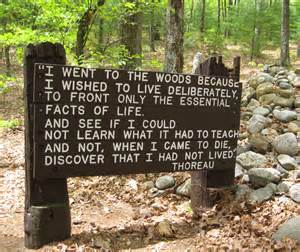
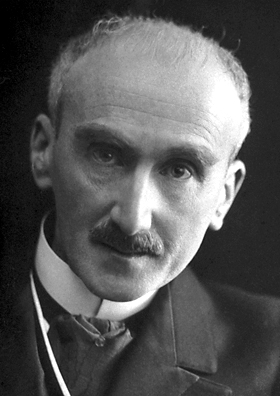


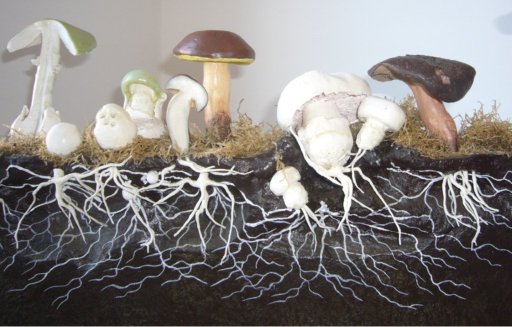
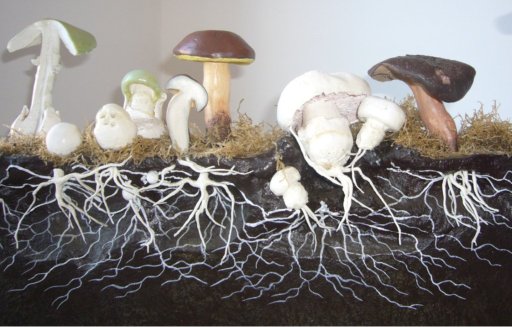


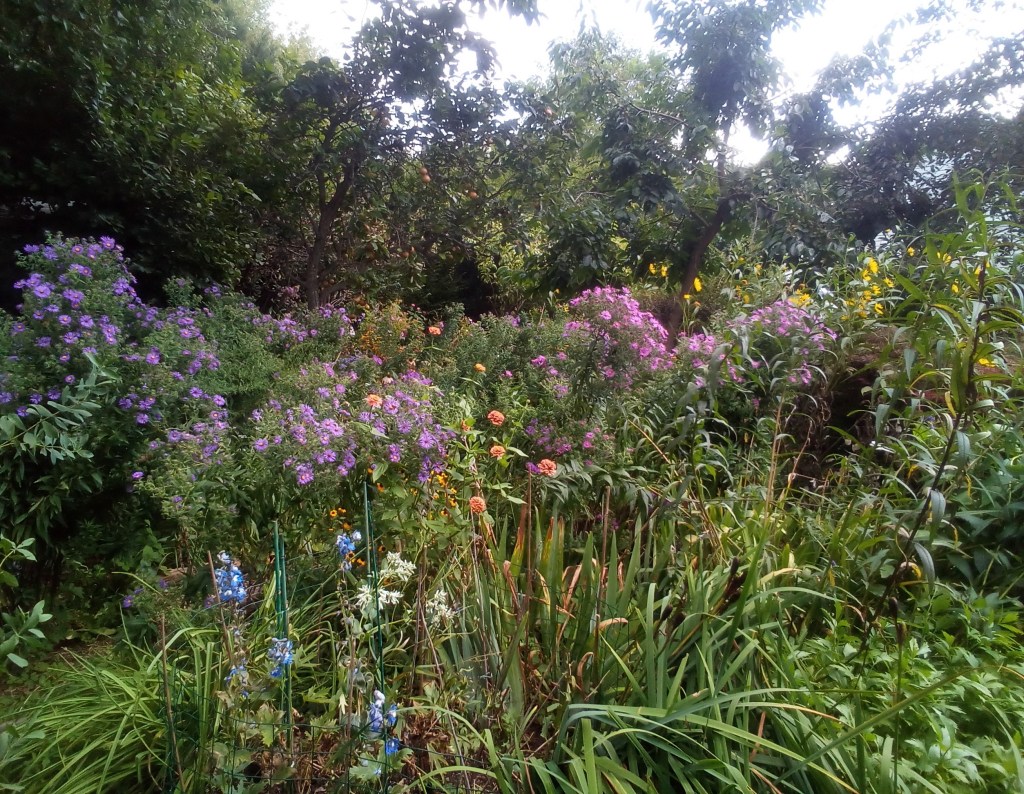





 Phila Back